
Intermap's Strategic Capital Raise and Its Implications for Growth in the Geospatial Market
In September 2025, Intermap Technologies Corporation announced a $25 million capital raise, significantly upsized from its initial $20.1 million offering, to fuel operational scalability and strategic growth in the geospatial intelligence sector. This move underscores the company's ambition to capitalize on surging demand for high-resolution 3D digital Earth solutions, driven by government contracts, commercial partnerships, and technological innovation. For investors, the question remains: How will this capital catalyze growth, and what does it mean for shareholder value?
Operational Scalability: Fueling R&D and Market Expansion
Intermap's capital raise is strategically positioned to address two critical areas: research and development (R&D) and market expansion. While the company has not disclosed a granular breakdown of the $25 million allocation, its recent activities and guidance provide clarity.
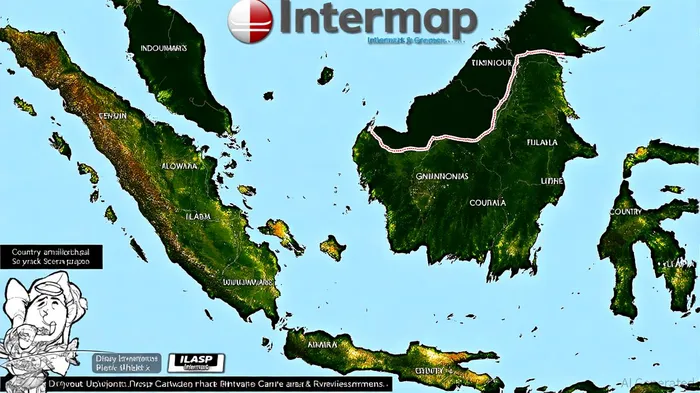
According to a report by Marketscreener, the proceeds will be used for “working capital and general corporate purposes,” with a focus on supporting “strategic initiatives” such as the Indonesian government's Integrated Land Administration and Spatial Planning (ILASP) project and U.S. defense collaborations[1]. These initiatives are pivotal to Intermap's growth. For instance, the ILASP project—a $653 million World Bank-funded program—aims to create a commercial-grade 3D terrain model of Indonesia, leveraging Intermap's proprietary Interferometric Synthetic Aperture Radar (IFSAR) technology[3]. This contract alone is expected to generate recurring revenue and expand the company's addressable market in Southeast Asia.
Additionally, Intermap's involvement in the U.S. DARPA program highlights its R&D focus. The company's internal investments in AI-driven geospatial tools, such as the Insurance Risk Assistant Subsystem (IRAS), demonstrate its commitment to dual-use technology that serves both government and commercial clients[4]. By allocating capital to R&D, Intermap aims to maintain its competitive edge in a market where high-resolution data and AI integration are becoming table stakes.
Shareholder Value: Revenue Growth and EBITDA Momentum
The catalytic impact of the $25 million raise is already evident in Intermap's financial performance. In Q1 2025, the company reported a 153% year-over-year revenue surge to $4.3 million, with a pro-forma adjusted EBITDA margin of 28%—a significant improvement from 23% in 2024[5]. This momentum aligns with its full-year 2025 guidance of $30–35 million in revenue and a sustained 28% EBITDA margin[5].
The capital raise further strengthens liquidity. By Q2 2025, Intermap's operating cash flow had grown by 22% year-to-date to $1.4 million, with total assets reaching $19.2 million as of March 31, 2025[1]. These metrics suggest the company is not only executing on existing contracts but also building a foundation for recurring revenue streams. For example, its $10.5 million Indonesian government contract and expanding insurance partnerships—secured $1.1 million in new contracts in Q1 2025—provide visibility into future cash flows[3].
Geospatial Market Context: A High-Growth Sector
Intermap's strategic positioning is amplified by broader industry trends. The global geospatial market, valued at $5.8 billion in 2024, is projected to grow at a compound annual rate of 12.3% through 2030, driven by applications in defense, urban planning, and climate resilience[6]. Intermap's IFSAR technology, which offers cost-effective, high-resolution data compared to traditional LiDAR, positions it to capture market share in this expanding sector.
Moreover, government spending on geospatial intelligence is accelerating. The U.S. National Geospatial-Intelligence Agency's $200 million Luno B IDIQ contract, awarded to Intermap in 2025, reflects the sector's strategic importance[5]. Such contracts not only provide stable revenue but also enhance the company's credibility, opening doors to follow-on awards and international expansion.
Risks and Considerations
While the capital raise and operational progress are promising, investors should remain cautious. The geospatial market is highly competitive, with players like Maxar Technologies and Planet Labs investing heavily in satellite-based solutions. Additionally, Intermap's reliance on government contracts exposes it to regulatory and budgetary risks. However, its diversified revenue streams—spanning defense, insurance, and commercial licensing—mitigate some of these concerns.
Conclusion
Intermap's $25 million capital raise is a strategic catalyst for operational scalability and shareholder value creation. By funding R&D in AI-driven geospatial tools, expanding into high-growth markets like Indonesia, and securing long-term government contracts, the company is positioning itself to capitalize on the geospatial industry's upward trajectory. With revenue growth projections of 70% in 2025 and EBITDA margins nearing 28%, the investment case for Intermap appears compelling—provided it can maintain execution momentum and navigate sectoral competition.







Comentarios
Aún no hay comentarios