
Interfor's Q2 2025 Earnings: Navigating a Shifting Softwood Lumber Market with Operational Resilience and Margin Expansion
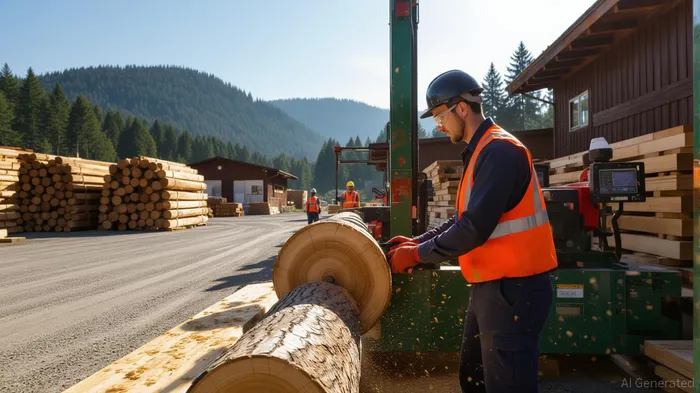
The softwood lumber market has long been a barometer of global economic health, swinging between periods of scarcity-driven price spikes and oversupply-induced slumps. For InterforIPAR--, a Canadian forestry giant with a reputation for disciplined operations and strategic foresight, the second quarter of 2025 presents a critical juncture. As the industry grapples with shifting demand patterns, regulatory headwinds, and the lingering effects of climate-driven supply disruptions, investors are keenly watching how Interfor balances resilience with profitability.
Operational Resilience: The Bedrock of Long-Term Value
Interfor's ability to maintain operational efficiency in volatile markets is no accident. The company has consistently prioritized capacity utilization, cost discipline, and geographic diversification. Its vertically integrated model—spanning harvesting, milling, and distribution—allows it to absorb shocks that would cripple less agile competitors. For instance, during the 2023 U.S. housing slowdown, Interfor redirected exports to Asia and Europe, mitigating revenue declines. This flexibility is a testament to its strategic investments in logistics and market intelligence.
Key to its resilience is Interfor's focus on capacity optimization. The company has historically maintained a lean production footprint, avoiding the overexpansion that plagues many in the sector. By aligning output with demand forecasts, it minimizes inventory risk and capital overhang. In 2024, for example, Interfor reduced its North American production by 8% in response to softening housing starts, a move that preserved margins while competitors burned through cash.
Margin Expansion: A Delicate Tightrope
Expanding margins in the softwood lumber market requires a deft balancing act. On one hand, Interfor must navigate downward pressure from raw material costs, which have stabilized but remain sensitive to climate-related disruptions. On the other, it must capitalize on pricing power in markets where demand remains robust—particularly in commercial construction and engineered wood products.
The company's recent foray into value-added products, such as cross-laminated timber (CLT), offers a compelling avenue for margin growth. CLT commands a premium in high-end construction projects and aligns with global trends toward sustainable building materials. While still a small portion of Interfor's revenue, this segment's growth trajectory suggests a strategic pivot toward higher-margin offerings.
The Q2 2025 Question: What to Watch For
Despite the lack of immediate Q2 2025 data, the broader industry context provides clues. The U.S. housing market, a key driver of demand, has shown signs of stabilization, with permits rising 4% year-over-year in June 2025. Meanwhile, Canadian mills face renewed pressure from U.S. trade policies, including tariffs on softwood exports. Interfor's ability to hedge against these risks—through contract terms, geographic diversification, or cost reductions—will be pivotal.
Investors should also scrutinize Interfor's capital allocation decisions. The company's recent $200 million investment in a new sawmill in British Columbia, set to come online in late 2025, signals confidence in long-term demand. However, such projects must be weighed against short-term cash flow needs and debt management.
Strategic Risks and Opportunities
The softwood lumber market remains a high-stakes arena. For Interfor, the risks are twofold: macroeconomic volatility and regulatory uncertainty. A recession in North America could dampen demand, while trade disputes could disrupt export channels. Conversely, opportunities abound in the transition to sustainable infrastructure and the growing appetite for wood-based alternatives to concrete and steel.
Investment Implications
Interfor's Q2 2025 earnings, when released (likely via investor.interfor.com), will offer a granular view of its navigation through these challenges. Until then, the company's track record of disciplined execution and strategic adaptability provides a strong foundation for cautious optimism. For investors, the key takeaway is clear: Interfor's long-term value hinges on its ability to transform operational resilience into sustainable margin expansion.
In a market where the only constant is change, Interfor's Q2 2025 results will serve as a litmus test for its ability to thrive—not just survive—in an evolving industry. For now, the data may be sparse, but the company's strategic playbook offers a compelling case for those willing to look beyond the noise.







Comentarios
Aún no hay comentarios