
Intel's Valuation and Strategic Direction Post-Nvidia Deal: Assessing Citi's Downgrade and Foundry Ambitions
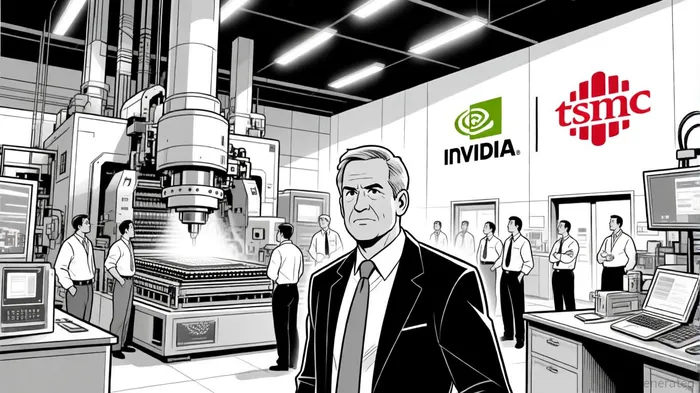
In September 2025, Citi's downgrade of IntelINTC-- from “Neutral” to “Sell” sent ripples through the semiconductor sector, sparking debates about the chipmaker's ability to execute its strategic vision amid fierce competition and evolving market dynamics. The downgrade, led by analyst Christopher Danely, cited skepticism about the limited upside of Intel's $5 billion partnership with NvidiaNVDA-- and the company's struggles to close the gapGAP-- with TSMCTSM-- in foundry capabilities[1]. While Intel's stock had surged over 50% since early August on optimism around the collaboration, Citi's revised price target of $29—from $24—still implied a 5.1% downside, reflecting concerns about valuation and execution risks[2]. This analysis examines the catalysts behind the downgrade, evaluates Intel's strategic moves post-Nvidia deal, and assesses the long-term implications for its foundry ambitions and stock potential.
The Catalyst: Citi's Skepticism and Market Reactions
Citi's downgrade was rooted in three key concerns. First, the bank questioned whether the Nvidia partnership—centered on integrating NVLINK technology and GPU chiplets into Intel's products—would meaningfully differentiate Intel's offerings from AMD's. “The collaboration is more of a financial lifeline than a strategic leap,” Danely noted, emphasizing that Intel's core CPU performance lags behind competitors[1]. Second, CitiC-- highlighted Intel's foundry business as a weak link, citing its years-long delay in catching up to TSMC's advanced node leadership. The bank argued that Intel's 18A manufacturing process, while innovative, faces an uphill battle in securing high-margin clients[2]. Third, Fitch Ratings' concurrent downgrade of Intel's credit rating from BBB+ to BBB underscored broader risks, including weak demand for AI chips and an unclear roadmap for full-stack AI solutions[3].
The market initially shrugged off the downgrade, with Intel shares dipping slightly in pre-market trading but rebounding on speculation about a potential foundry deal with TSMC[4]. However, the downgrade signaled a shift in investor sentiment, with analysts now scrutinizing whether Intel's strategic repositioning can translate into sustainable growth.
Strategic Repositioning: Nvidia Partnership and Foundry Ambitions
Intel's collaboration with Nvidia represents a pivotal pivot toward AI-driven markets. The $5 billion investment from Nvidia—valued at $23.28 per share—provides critical capital to accelerate development of the 18A process node, which features gate-all-around transistors and backside power delivery to enhance efficiency[5]. This partnership also grants Intel access to Nvidia's NVLINK interconnect technology, enabling optimized AI infrastructure platforms and custom data center chips[6]. For Nvidia, the deal expands its reach into PC computing and foundry services, creating a symbiotic relationship that could stabilize Intel's manufacturing pipeline[7].
However, the partnership's success hinges on execution. Intel's 18A node is currently in sampling with laptop manufacturers and is slated for volume production by late 2025[8]. While the process promises competitive advantages over TSMC's N2 node, Intel must secure marquee clients like Nvidia for high-performance AI chips to validate its foundry capabilities. Reports suggest Nvidia is evaluating Intel for gaming GPU production, a potential breakthrough for the foundry segment[9].
Intel's broader foundry strategy includes exploring joint ventures with TSMC, AMDAMD--, and BroadcomAVGO-- to stabilize operations and meet production demands[10]. A proposed joint venture with TSMC, though requiring U.S. government approval, could provide the scale and expertise needed to challenge TSMC's dominance[11]. Additionally, Intel's partnership with United Microelectronics (UMC) aims to bolster foundry capacity, with production expected to begin in late 2026[12].
AI Roadmap and Financial Guidance: A Path to Recovery?
Intel's AI strategy, under newly appointed CEO Lip-Bu Tan, focuses on inference and edge computing rather than direct competition with Nvidia in AI training. The company plans to leverage its x86 ecosystem and full-stack optimization capabilities to deliver low-latency, privacy-enhanced solutions for enterprise and consumer markets[13]. A concrete AI roadmap is expected in the coming months, with collaborations like the MicrosoftMSFT-- custom chip project underscoring Intel's ambitions to capture a share of the AI-driven foundry market[14].
Financially, Intel has set ambitious targets for its foundry segment, aiming for breakeven by 2030 and a position as the world's second-largest foundry[15]. The Intel Products segment, meanwhile, targets 60% non-GAAP gross margin and 40% non-GAAP operating margin by 2030[16]. These goals rely on disciplined cost management, as highlighted by CEO Tan's restructuring efforts, which include streamlining operations and reallocating resources to high-priority projects.
Long-Term Implications and Investment Considerations
Citi's downgrade underscores the risks inherent in Intel's transformation. While the Nvidia partnership and 18A process offer a lifeline, the company's ability to execute on its foundry and AI strategies will determine its long-term viability. Key risks include:
1. Foundry Competition: TSMC's dominance in advanced nodes and Samsung's aggressive investments could limit Intel's market share.
2. AI Execution: Without a clear full-stack AI strategy, Intel risks falling behind in the race for AI-driven growth.
3. Valuation Pressures: A 58% decline in Intel's stock over the past year has left investors wary of overvaluation, even as the company secures high-profile partnerships.
For investors, the path forward hinges on milestones such as the success of the 18A node, progress in securing AI clients, and the outcome of potential joint ventures. If Intel can demonstrate consistent progress in these areas, the stock may regain momentum. However, Citi's cautious stance reflects the reality that the road to recovery is fraught with challenges.
Conclusion
Intel's post-Nvidia deal strategy represents a bold but precarious attempt to reclaim relevance in a rapidly evolving semiconductor landscape. While the partnership provides much-needed capital and technological synergy, Citi's downgrade serves as a reminder that execution—not just ambition—will define Intel's future. For the stock to justify its valuation, the company must deliver on its foundry roadmap, secure high-margin AI clients, and prove that its “systems foundry” approach can compete with TSMC's scale. Until then, investors may remain cautious, balancing optimism about Intel's potential with skepticism about its ability to overcome entrenched challenges.





Comentarios
Aún no hay comentarios