
Intel's Stock Plummets 60% as 18A Chip Becomes Its Last Hope
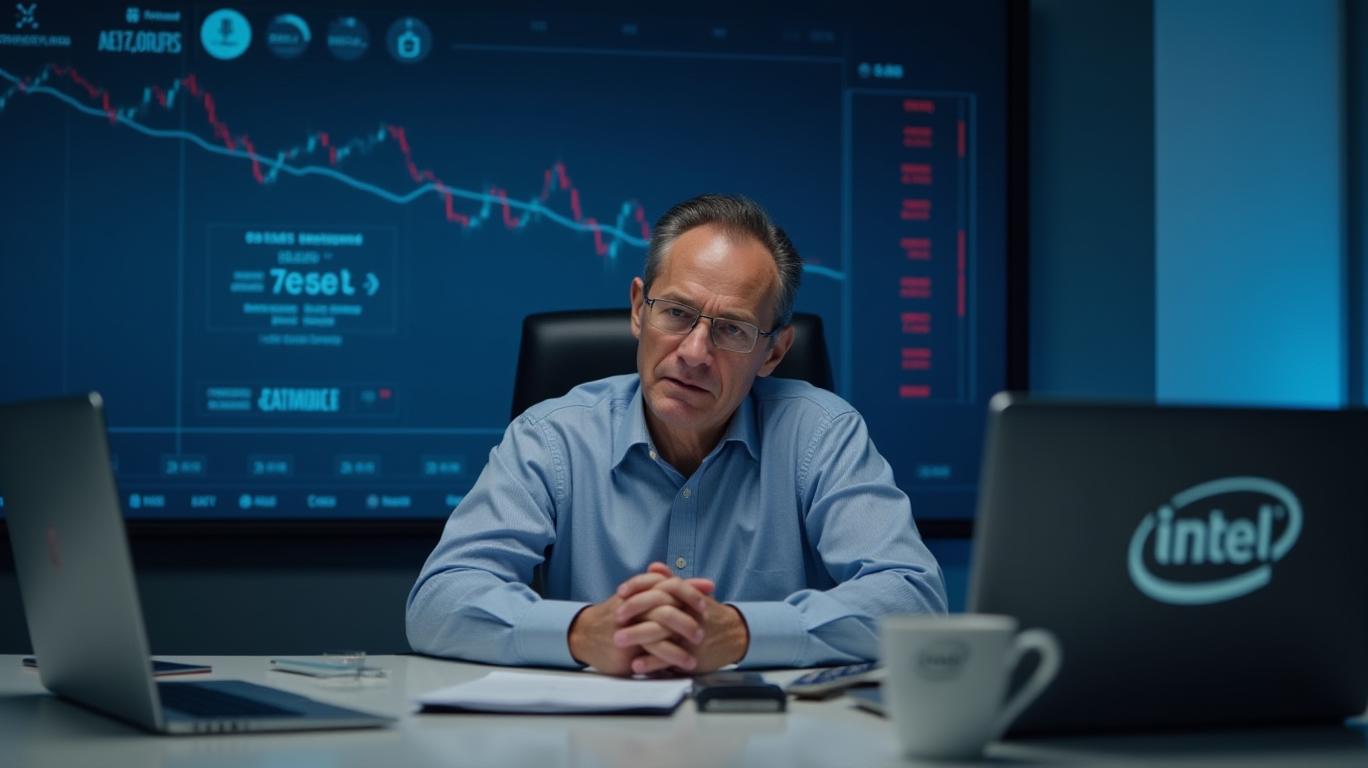
Recently, Intel has faced significant challenges. The company's strategy, which encompasses expansion and R&D, has not delivered the anticipated results, leading to a 60% decline in its stock price over CEO Pat Gelsinger's tenure. The industry titan now stands at a critical juncture, deciding between cost-cutting and betting on the 18A processor as a lifeline.
Intel's financials have shown a stark downturn, with revenue dropping to $53.1 billion, revealing the strains within its operations. Despite plans for redundancy and factory operations in response to market demands, Intel's quest for efficiency seems to be at its limit. It hopes to achieve a turnaround with the forthcoming 18A chip, though a concrete timeline remains elusive.
The company is also embroiled in geopolitical tensions, particularly with the U.S. CHIPS Act, which intended to subsidize American semiconductor production. Yet, financial assistance from the U.S. has been sporadic, with Intel receiving merely $2.2 billion after the initial promise of extensive support.
Market strategies reflect Intel's dual pressure of technology competition with firms like NVIDIA and AMD, and manufacturing rivalry against TSMC and Samsung. As it stands, Intel is considering divesting non-core segments, potentially restructuring to focus on design and innovation.
In the broader tech landscape, rumors persist regarding potential takeovers or partnerships with companies like Broadcom. Despite these uncertainties, Intel's strategy remains under scrutiny as the company attempts to navigate through its restructuring phase amidst mounting global competition.
Intel is gearing up to release its new 18A node by 2025, aiming to cater to current and potential clients such as Amazon's AWS and Microsoft's Azure. This move could solidify Intel's stance in the advanced semiconductor sector, should they successfully attract major partners.
Looking forward, Intel's revival is dependent on its ability to capitalize on its 18A advancements and forge strong industry partnerships amid a shifting technological and political landscape.





Comentarios
Aún no hay comentarios