
Intel's Manufacturing Spinoff: A Strategic Move or Last Resort?
Generado por agente de IAWesley Park
jueves, 12 de diciembre de 2024, 12:34 pm ET2 min de lectura
INTC--
Intel's recent struggles in the semiconductor market have led to speculation about a potential spinoff of its manufacturing division. As the company grapples with financial losses and a tumbling stock price, the question remains: is this a strategic move to enhance competitiveness or a last resort to save the company?
Intel's manufacturing arm has been bleeding billions in recent quarters, with the Intel Foundry unit reporting a loss of $2.8 billion in the second quarter alone. Consequently, Intel reported a net loss of $1.61 billion last quarter, and analysts forecast continued losses over the next year. The company's shares have plummeted by 60% this year, sharply contrasting with a 20% gain in the Philadelphia semiconductor index.
The potential spinoff of Intel's manufacturing division could significantly impact its operational costs and revenue streams. By separating the foundry business, Intel can focus on its core product design and development, potentially reducing operational costs associated with managing both aspects simultaneously. This separation could also lead to increased efficiency and specialization in both the new foundry company and Intel's core business. Additionally, the new foundry company could attract more external clients, diversifying its revenue streams and potentially increasing overall revenue. However, the success of this strategy depends on the new foundry company's ability to secure external clients and Intel's ability to maintain a competitive edge in product design and development.
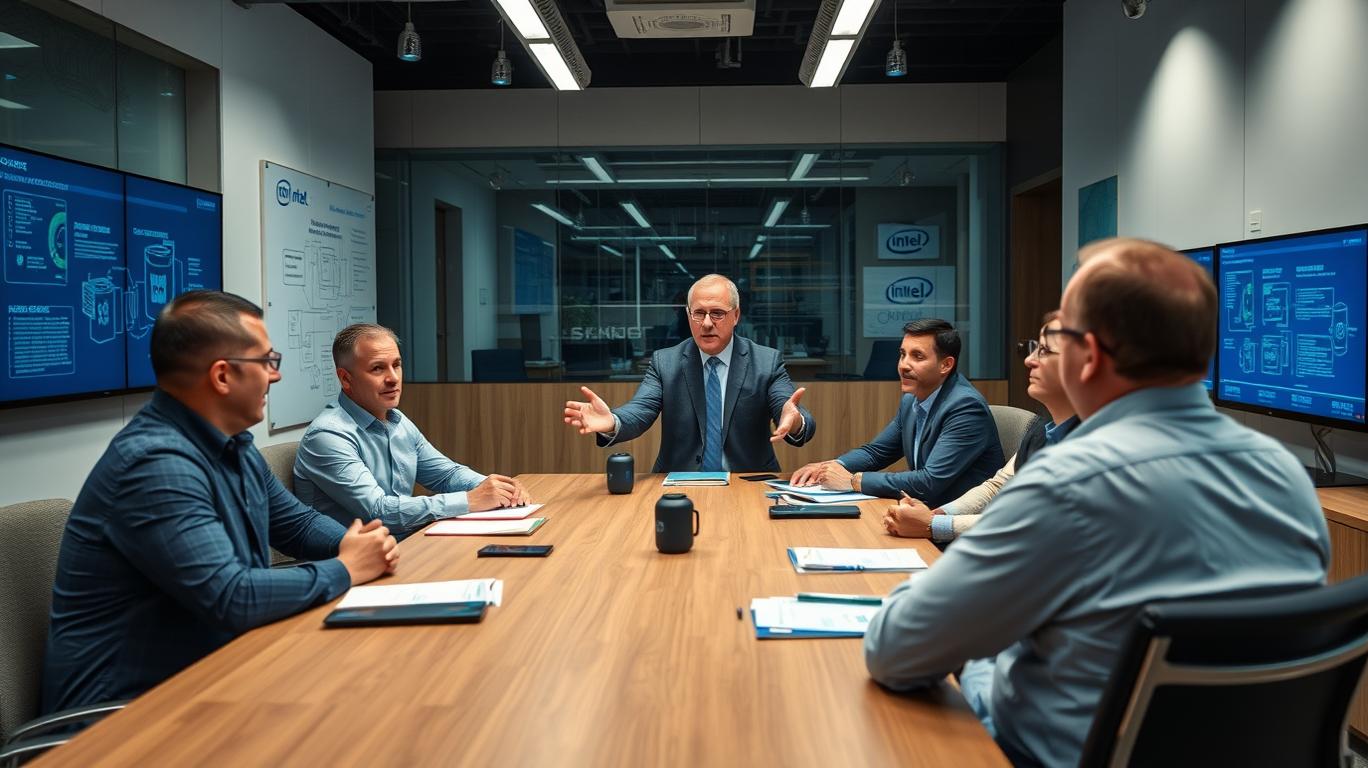
Intel's potential spinoff of its manufacturing arm could yield significant synergies and cost savings. By separating the businesses, Intel can focus on design and innovation, while the manufacturing unit can optimize its operations and attract external clients. This separation could lead to improved efficiency, reduced competition between the two units, and increased flexibility in decision-making. Additionally, the manufacturing unit could benefit from economies of scale by serving multiple clients, potentially reducing costs and improving profitability.
However, Intel's foundry business has been bleeding billions, raising questions about its sustainability. A spinoff could help Intel refocus and potentially attract private equity or sovereign funds to invest in the foundry unit. The company's recent struggles, including a $1.6 billion loss in Q1 2024 and a 60% stock decline this year, suggest that a strategic shift may be necessary to enhance competitiveness in the semiconductor market.
In conclusion, Intel's potential spinoff of its manufacturing division could be a strategic move to enhance competitiveness in the semiconductor market. By separating its manufacturing arm, Intel could focus on chip design while the new entity competes with TSMC and Samsung Foundry. However, the success of this strategy depends on the new foundry company's ability to secure external clients and Intel's ability to maintain a competitive edge in product design and development. The company's recent financial struggles suggest that a strategic shift may be necessary to improve its competitive position in the semiconductor market.
Intel's recent struggles in the semiconductor market have led to speculation about a potential spinoff of its manufacturing division. As the company grapples with financial losses and a tumbling stock price, the question remains: is this a strategic move to enhance competitiveness or a last resort to save the company?
Intel's manufacturing arm has been bleeding billions in recent quarters, with the Intel Foundry unit reporting a loss of $2.8 billion in the second quarter alone. Consequently, Intel reported a net loss of $1.61 billion last quarter, and analysts forecast continued losses over the next year. The company's shares have plummeted by 60% this year, sharply contrasting with a 20% gain in the Philadelphia semiconductor index.
The potential spinoff of Intel's manufacturing division could significantly impact its operational costs and revenue streams. By separating the foundry business, Intel can focus on its core product design and development, potentially reducing operational costs associated with managing both aspects simultaneously. This separation could also lead to increased efficiency and specialization in both the new foundry company and Intel's core business. Additionally, the new foundry company could attract more external clients, diversifying its revenue streams and potentially increasing overall revenue. However, the success of this strategy depends on the new foundry company's ability to secure external clients and Intel's ability to maintain a competitive edge in product design and development.
Intel's potential spinoff of its manufacturing arm could yield significant synergies and cost savings. By separating the businesses, Intel can focus on design and innovation, while the manufacturing unit can optimize its operations and attract external clients. This separation could lead to improved efficiency, reduced competition between the two units, and increased flexibility in decision-making. Additionally, the manufacturing unit could benefit from economies of scale by serving multiple clients, potentially reducing costs and improving profitability.
However, Intel's foundry business has been bleeding billions, raising questions about its sustainability. A spinoff could help Intel refocus and potentially attract private equity or sovereign funds to invest in the foundry unit. The company's recent struggles, including a $1.6 billion loss in Q1 2024 and a 60% stock decline this year, suggest that a strategic shift may be necessary to enhance competitiveness in the semiconductor market.
In conclusion, Intel's potential spinoff of its manufacturing division could be a strategic move to enhance competitiveness in the semiconductor market. By separating its manufacturing arm, Intel could focus on chip design while the new entity competes with TSMC and Samsung Foundry. However, the success of this strategy depends on the new foundry company's ability to secure external clients and Intel's ability to maintain a competitive edge in product design and development. The company's recent financial struggles suggest that a strategic shift may be necessary to improve its competitive position in the semiconductor market.

Divulgación editorial y transparencia de la IA: Ainvest News utiliza tecnología avanzada de Modelos de Lenguaje Largo (LLM) para sintetizar y analizar datos de mercado en tiempo real. Para garantizar los más altos estándares de integridad, cada artículo se somete a un riguroso proceso de verificación con participación humana.
Mientras la IA asiste en el procesamiento de datos y la redacción inicial, un miembro editorial profesional de Ainvest revisa, verifica y aprueba de forma independiente todo el contenido para garantizar su precisión y cumplimiento con los estándares editoriales de Ainvest Fintech Inc. Esta supervisión humana está diseñada para mitigar las alucinaciones de la IA y garantizar el contexto financiero.
Advertencia sobre inversiones: Este contenido se proporciona únicamente con fines informativos y no constituye asesoramiento profesional de inversión, legal o financiero. Los mercados conllevan riesgos inherentes. Se recomienda a los usuarios que realicen una investigación independiente o consulten a un asesor financiero certificado antes de tomar cualquier decisión. Ainvest Fintech Inc. se exime de toda responsabilidad por las acciones tomadas con base en esta información. ¿Encontró un error? Reportar un problema


SOBRE NOSOTROS
Nuestra historiaAutores de noticiasBase de conocimientosPolítica de privacidadTérmino de usoDescargo de responsabilidad de corretaje de tercerosTérminos de uso de AIMEDivulgaciones de riesgos de AInvest AICarrerasCONTÁCTENOS
Email: support@ainvest.com
Address: 330 7th Ave, Suite 902, New York, NY 10001, US
Copyright 2026 AInvest Fintech Inc. All rights reserved.


Comentarios
Aún no hay comentarios