
Intel's Potential Strategic Investment in Apple: A Win-Win for Semiconductor Growth?
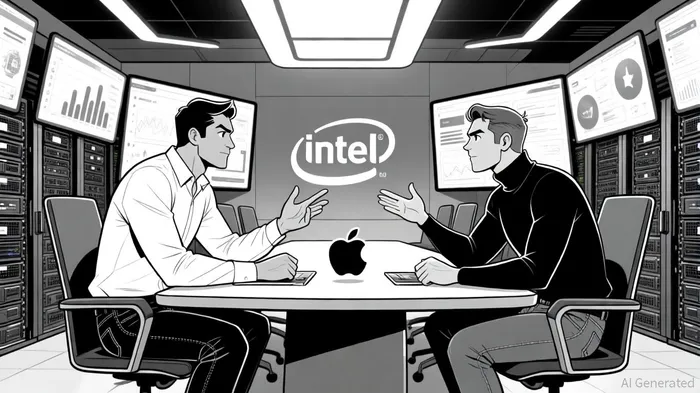
The semiconductor industry is on the brink of a transformative shift as IntelINTC-- reportedly seeks a strategic investment from AppleAAPL--, a move that could redefine supply chain dynamics and market positioning for both tech giants. While no formal agreement has been announced, early-stage discussions highlight a potential partnership that aligns with broader industry trends toward domestic manufacturing and supply chain diversification.
Supply Chain Synergy: Diversification and Domestic Resilience
Apple's reliance on Taiwan Semiconductor Manufacturing Company (TSMC) for its custom Apple Silicon chips has long been a cornerstone of its strategy. However, the company's recent pledge to invest $600 billion in U.S. manufacturing initiatives[1] underscores a growing emphasis on domestic supply chain resilience. Intel, which exited Apple's processor supply chain in 2020, now presents an opportunity to reintroduce a U.S.-based alternative. By leveraging Intel Foundry Services (IFS), Apple could diversify its chip production across TSMC and Intel, mitigating geopolitical risks and reducing dependency on a single supplier[2].
For Intel, securing high-volume orders from Apple would validate its foundry ambitions. The chipmaker has already attracted investments from Nvidia ($5 billion) and SoftBank ($2 billion), but a partnership with Apple—a company known for its exacting design standards—would signal to the market that Intel's manufacturing capabilities are competitive with TSMC[3]. This alignment could also accelerate Intel's adoption of advanced node technologies, as Apple's demand for cutting-edge performance drives innovation in the foundry sector[4].
Semiconductor Market Positioning: A Strategic Rebalance
The potential collaboration reflects a broader realignment in the semiconductor landscape. Intel's turnaround strategy hinges on capturing a significant share of the global foundry market, currently dominated by TSMC. A partnership with Apple would not only provide Intel with a stable revenue stream but also enhance its credibility as a reliable partner for high-stakes, high-volume clients[5].
For Apple, the move could strengthen its leverage in negotiations with TSMC while ensuring access to U.S.-based production capacity. This is particularly relevant given the Trump administration's push for domestic chip manufacturing[6]. By investing in Intel, Apple could align its corporate goals with national policy, potentially securing subsidies or tax incentives under the CHIPS Act[7].
Challenges and Uncertainties
Despite the strategic logic, several hurdles remain. Apple's transition to in-house silicon was driven by a desire for control over performance and power efficiency, and there is no indication it would revert to using Intel-designed chips[8]. Instead, the partnership is more likely to involve Intel manufacturing Apple-designed chips—a scenario that requires significant coordination but avoids compromising Apple's proprietary technology.
Additionally, the political dimension cannot be ignored. While the U.S. government has shown interest in bolstering domestic production, the success of this partnership will depend on whether it can navigate regulatory complexities and align with broader geopolitical priorities[9].
Conclusion: A Win-Win or a High-Stakes Gamble?
The potential Intel-Apple collaboration represents a high-stakes opportunity for both companies. For Intel, it offers a lifeline to its foundry business and a chance to reclaim relevance in the advanced chip manufacturing race. For Apple, it provides a strategic hedge against supply chain vulnerabilities and a pathway to meet its domestic investment commitments. However, the absence of concrete details and the inherent risks of such a partnership mean investors should approach this development with cautious optimism.





Comentarios
Aún no hay comentarios