
Intel's Drop: The Market's High Expectations vs. the Reality Check
The market's reaction to Intel's news yesterday is a textbook case of "sell the news." While the broader S&P 500 ticked higher, the stock fell 3.29%. This divergence is the first red flag: the market is pricing in a much higher bar than the company has yet to clear.
That bar is set by the stock's own extraordinary run. Shares are up 88.2% over the past 52 weeks, a rally that has priced in a dramatic turnaround. For the stock to fall on a day the market rises, the news must have signaled that the promised recovery is not accelerating fast enough to justify that premium. The setup was clear for weeks, and the market is now taking profits.
Analyst sentiment confirms the underlying skepticism. Despite the stock's surge, the consensus rating is a cautious "Reduce" with an average price target of just $35.88. That target implies significant downside from current levels and reflects a view that the company's fundamentals still need to catch up to the valuation.
The stock's Forward P/E ratio of 77.95 is a staggering premium to its industry average, a valuation that demands near-perfect execution from here.
The upcoming earnings report on January 22nd will be the ultimate test. The consensus expects a 38.46% drop in EPS to $0.08 for the quarter. For the stock to hold its ground, IntelINTC-- will need to not just meet that number but also provide a forward guide that justifies the lofty expectations baked into its price. The market has already shown it will sell on any sign of a reset.
The Whisper Number vs. The Print: A Miss on the Bottom Line
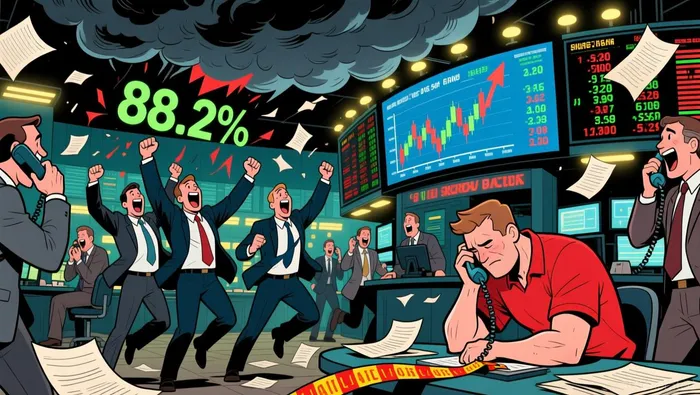
The market's high expectations were met with a stark reality check in the second-quarter results. While revenue held steady at $12.9 billion, the bottom line told a different story. Intel reported a GAAP loss of $(0.67) per share. That miss was significant. The whisper number for the quarter was clearly higher, as the company's own guidance for the third quarter implies a path toward breakeven non-GAAP earnings. The print, however, showed a deep operational hole that the market had not fully priced in.
More telling was the non-GAAP result. Even after stripping out one-time charges, the company posted a loss of $(0.10) per share. This persistent non-GAAP deficit signals that the core business is still struggling to generate profit, despite the announced cost cuts. The market had been pricing in a recovery, but the numbers show the turnaround is lagging. The company's own full-year 2025 EPS forecast of -$0.14 represents an 83.5% year-over-year decline from the prior year. That warning is a stark reset from the narrative of imminent profitability.
The disconnect between the whisper number and the print is the core issue. The stock's massive rally had priced in a swift and decisive improvement. Instead, the results revealed a company still in the midst of a painful restructuring, with its core operations unable to offset massive charges. This expectation gap is why the stock fell even as the broader market rose. The reality of a deep GAAP loss and a persistent non-GAAP deficit reset the trajectory, showing that the promised recovery is not accelerating fast enough to justify the premium valuation.
The Guidance Reset: Setting a Low Bar to Beat
Management's forward view is a classic case of expectation arbitrage. By setting a low bar for the third quarter, Intel is positioning itself for easy beats. The company's guidance for Q3 2025 calls for an EPS of $(0.24), which sits below the current consensus estimate of $0.08. This is a deliberate reset. It signals that the company is not yet ready to raise the bar for profitability, even as it takes steps to discipline its costs.
The real focus for 2026 is the operating expense target. Intel is guiding to $16 billion in non-GAAP operating expenses for 2026, down from $17 billion in 2025. This is a clear discipline move, a tangible lever to improve margins. For the stock to rally on this, the market needs to see this cost control translate into actual profit before the year ends. The guidance sets a path, but the execution is the test.
This cautious outlook contrasts sharply with the positive catalysts already priced into the stock. The launch of the Panther Lake chips and the multibillion-dollar Nvidia partnership are seen as major inflection points. Yet, the guidance does not reflect a surge in near-term earnings from these deals. Instead, it assumes a slow grind toward breakeven. This is the core tension: the market has bought the long-term story, but the guidance is sandbagging the near-term reality.
The bottom line is that Intel is managing expectations downward to avoid another disappointment. The low Q3 EPS target and the 2026 cost discipline are tactical moves to ensure the company can meet or beat its own modest goals. For the stock to move higher, the company will need to start beating these low expectations and then begin raising the bar itself. Until then, the guidance reset is a signal of caution, not confidence.
The Valuation Premium: What's Priced In?
The stock's 88% surge has created a valuation that leaves no room for error. Intel now trades at a Forward P/E of 77.95, a staggering premium to the industry average of 32.02. This isn't just a high multiple; it's a bet that the company's painful restructuring is about to unlock massive, immediate profit. The market is paying a premium for growth that is still largely in the future, as reflected in a PEG ratio of 8.4. This setup is inherently fragile.
For the stock to hold its ground, Intel must not only meet but consistently beat the low expectations baked into its guidance. Any stumble-whether a missed revenue target, a delay in cost savings, or a weaker-than-expected outlook-will be punished severely. The valuation already assumes a successful turnaround. When the reality check comes, as it did with the Q2 loss, the premium evaporates quickly.
The analyst consensus reinforces the risk. Despite the stock's rally, the average price target of $35.88 implies significant downside from current levels. That target is anchored to a full-year 2025 EPS forecast of a loss of $0.14, which itself represents an 83.5% decline from the prior year. The market is pricing in a recovery, but the guidance reset shows management is not yet ready to confirm that the worst is over. The stock's premium is thus a bet on future perfection, making it highly vulnerable to any guidance reset or operational miss.
Catalysts and Risks: What to Watch for the Thesis
The upcoming events are the next moves in this expectation game. The most immediate catalyst is the Q4 earnings report on January 22nd. The market consensus expects a 38.46% drop in EPS to $0.08. For the stock to rally, Intel will need to beat that number and, more importantly, provide a positive shift in its full-year guidance. A beat on revenue or a clearer path to profitability could reset expectations upward. But a miss or a guidance reset would confirm the market's skepticism.
The major risk is that the stock's rally has priced in too much optimism from the Panther Lake launch and the Nvidia deal. These are positive catalysts, but the guidance reset shows management is not yet ready to raise the bar for near-term earnings. The market has bought the long-term story, but the stock's premium valuation leaves no room for error. Any stumble in execution will be punished severely.
To monitor the thesis, watch two key metrics. First, the non-GAAP operating expense trajectory. Intel is targeting $16 billion for 2026, down from $17 billion in 2025. Consistent execution on this cost discipline is the primary lever to improve margins and justify the valuation. Second, monitor gross capital expenditure execution. The company is targeting $18 billion for 2025, a disciplined approach that signals a focus on confirmed customer commitments for its advanced nodes. This shows management is trying to control the cash burn while investing in the future.
The bottom line is that the next few weeks will test whether Intel can start beating its own low expectations. The Q4 print and the guidance for 2026 will be the first real data points on whether the company's cost discipline is translating into the improved financials the market is pricing in. Until then, the stock remains a bet on future perfection.





Comentarios
Aún no hay comentarios