
Intel's 2026 Surge: Is the "Beat" Already Priced In?
The setup was a classic expectation gap. After years of manufacturing delays and missed milestones, the market had grown accustomed to IntelINTC-- hitting roadblocks. The whisper number for its CES 2026 announcement was simple: just get the Core Ultra Series 3 chips out, and hope they work. The company delivered on that low bar, launching the first product built on its new 18A process. In reality, Intel didn't just meet expectations; it cleared a major hurdle that had been priced in as a potential failure for years.
The market's reaction was a textbook "beat and raise" scenario. On the day of the announcement, shares jumped . That pop was just the start. Over the past five trading days, . This isn't a minor tick higher; it's a sustained rally that suggests investors are pricing in a fundamental shift. The event itself-a successful product launch on a new node-was the catalyst, but the magnitude of the move indicates the relief was profound.
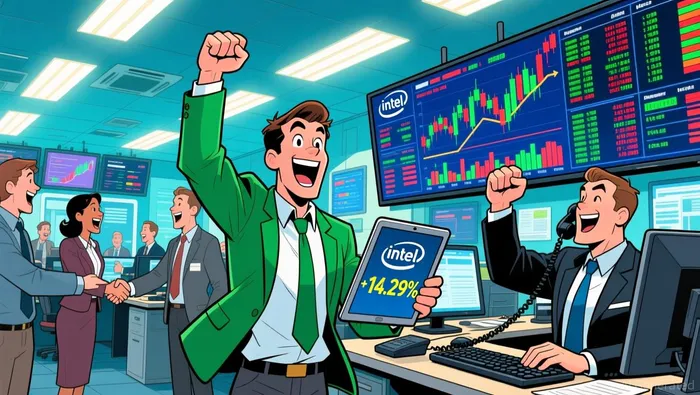
Yet, this surge must be viewed against a backdrop of already sky-high prior optimism. . That massive run has already baked in a lot of hope for a turnaround. The recent jump, therefore, is a reaction to a "beat" against deeply pessimistic expectations, but it also risks being a "sell the news" moment if the underlying business momentum doesn't follow. The market is rewarding the execution of a plan it once doubted, but the bar for future performance has been raised significantly.
The Reality Check: Credibility Gap and Competitive Headwinds
The rally has been powerful, but it now faces a wall of fundamental pressures. The market's relief at Intel's successful CES launch is real, but it's being tested by two major headwinds that could dampen the very demand the company is counting on.
First, soaring memory chip prices threaten to increase PC system costs at a critical moment. The launch of Intel's new Panther Lake and Nova Lake chips coincides with a severe shortage of DRAM memory, driven by insatiable demand from AI data centers. This supply crunch could force PC makers to hike prices, potentially dampening consumer demand for new systems. In other words, even if Intel's new chips are technically superior, a price increase across the board could limit the overall market size and slow adoption. This is a macroeconomic overhang that the company cannot control, and it directly challenges the narrative of a broad-based PC revival.
Second, the competitive landscape remains fiercely contested. While Intel is regaining ground, AMD still controls roughly one-third of the desktop CPU market. That's a significant share that Intel must claw back, and it underscores that the company's manufacturing turnaround is not yet a decisive competitive advantage. The threat from AMD's 3D V-Cache technology, which Intel's Nova Lake is rumored to target, is a reminder that the battle for performance and market share is far from over. Intel's new 18A process is a step forward, but it doesn't instantly erase years of technological and market share erosion.
Finally, the stock's own momentum has become a risk factor. , crushing the broader market. This massive run has already priced in a successful turnaround. For the stock to continue its ascent, Intel will need to deliver not just another "beat," but a series of sustained "beat and raises" that reset expectations higher and higher. The bar for future performance has been raised to an extreme level, making the stock vulnerable to any stumble or slower-than-expected adoption of its new chips. The initial relief rally may have been a "sell the news" moment, but the real test is whether the company can meet the sky-high expectations now baked into the price.
The Valuation Arbitrage: Is the Stock Cheap or Overvalued?
The market has already made its call. Intel's stock is up . That massive run has priced in a successful turnaround. The key risk now is that there's little room for error. Any stumble in execution, any delay in scaling the new 18A process, or any softening in PC demand could trigger a sharp re-rating. The initial relief rally after the CES launch was a "" moment. The next move will depend on whether the company can deliver a "beat and raise" on its financials to match the hype.
The next major catalyst is the Q4 2025 earnings report scheduled for January 22. This report will provide the first concrete financials tied to the new chip launches and the company's manufacturing progress. It's the critical test of whether the operational turnaround is translating into the bottom-line growth the stock now demands. Given the stock's momentum, even a solid report that meets expectations could be seen as a "sell the news" event if it doesn't exceed the sky-high bar set by the recent run.
Valuation signals are deeply conflicted, highlighting a severe expectation gap. On one hand, a standard valuation score gives Intel a , suggesting it screens as undervalued on half the metrics. This view likely focuses on traditional multiples like price-to-sales or book value, which can be misleading for a company in a turnaround phase. On the other hand, a model, which looks at future cash flows, paints a starkly different picture. , . That model sees the current price as a massive premium to the projected cash-generating power of the business.
The bottom line is that the stock is a bet on a future that is not yet priced in. The DCF model's warning of being 180% overvalued is extreme, but it underscores the vulnerability. The market is paying today for the promise of Intel's 18A manufacturing and AI PC platform, not for its current financials. For the stock to hold its ground, Intel must deliver a series of earnings beats that prove the new trajectory is real and sustainable. Until then, the valuation arbitrage is clear: the stock is either a brilliant bet on a successful turnaround, or it's already priced for perfection.







Comentarios
Aún no hay comentarios