
Intact Insurance's Rebranding: A Strategic Pivot for Long-Term Value Creation and Investor Confidence
The rebranding of Intact Financial Corporation's UK-based subsidiaries-RSA and NIG-to Intact Insurance marks a pivotal shift in the company's strategic evolution. By unifying its global operations under a single brand by the end of 2025, Intact aims to leverage its 300-year legacy of RSA's underwriting discipline while modernizing its approach to customer experience and operational efficiency, as shown in the company's Q2 2025 slides. This move is not merely cosmetic; it reflects a calculated effort to position Intact as a dominant player in commercial and specialty insurance, particularly in the UK, where it seeks to double its business by 2030, according to The Financial Analyst. For investors, the rebranding raises critical questions: Does this transformation signal sustainable value creation, or is it a rebranding exercise with limited substance?
Operational Clarity and Efficiency Gains
Intact's rebranding is underpinned by a commitment to operational streamlining. According to Q2 2025 results, the company reported a net operating income per share (NOIPS) of $5.23, an 8% year-over-year increase, alongside a 12% rise in book value per share. These metrics underscore the company's ability to maintain profitability despite challenges like elevated catastrophe costs. Notably, Intact's Canadian operations delivered a combined ratio of 74.0% in commercial lines, driven by disciplined underwriting and favorable prior-year development, according to the Q2 2025 earnings call. However, the UK and Ireland segment lagged, with a 92.9% combined ratio and 5% premium decline, highlighting regional operational asymmetries.
The rebranding's potential to enhance efficiency is further evidenced by Intact's digital transformation. Web-influenced sales surged 54% year-over-year, contributing $350 million in direct premiums written. This shift toward digital channels aligns with broader industry trends and positions Intact to capture a larger share of the increasingly tech-savvy insurance market. Yet, the 2% decline in distribution income to $165 million raises questions about the sustainability of these gains.
Competitive Differentiation in a Fragmented Market
Intact's rebranding is a bold play to differentiate itself in the crowded insurance sector. By repositioning RSA as Intact Insurance, the company emphasizes its global footprint-operating in over 150 countries-while retaining local expertise in key markets, as reported by Insurance Business. This hybrid model is particularly relevant in the UK, where Intact now operates as a commercial lines leader with a workforce of 700 in Ireland and a direct-to-consumer brand, 123.ie. Analysts argue that the rebranding strengthens Intact's ability to serve complex, international risks-a niche where margins are higher and competition is less fragmented.
The strategic focus on specialty lines is another differentiator. Intact aims to grow its Global Specialty Lines platform to $10 billion in direct premiums written by 2030. This ambition is supported by a 16.3% operating return on equity (OROE) in Q2 2025, outpacing industry averages. However, the company's flat U.S. operations and underperformance in large commercial accounts suggest that scaling this strategy will require navigating sector-specific challenges, such as pricing pressures and regulatory shifts.
Investor Confidence: Mixed Signals and Price Targets
Market reactions to the rebranding have been mixed. While Intact's Q2 results showed robust underwriting income of $784 million-a 15% year-over-year increase-its stock fell 6.47% post-earnings, signaling investor skepticism about future growth. Analysts remain divided. A "Moderate Buy" consensus from eight analysts reflects cautious optimism, with a 1-year price target of C$322.20. Notably, BMO Capital Markets and National Bankshares raised their targets to C$335 and C$350, respectively, citing Intact's long-term growth potential. Conversely, Royal Bank of CanadaRY-- cut its target to C$324 with a "sector perform" rating, highlighting risks from volatile catastrophe losses and margin compression.
Fitch Ratings, which monitors Intact's credit profile, has not yet adjusted its outlook post-rebranding, suggesting that the move's financial impact remains under evaluation. For investors, this ambiguity underscores the need to balance Intact's operational strengths-such as its $3.1 billion total capital margin and 18.4% adjusted debt-to-capital ratio-with its regional vulnerabilities, particularly in the UK.
Actionable Insights for Investors
- Monitor Regional Performance: Intact's UK and Ireland segment is a critical test case for the rebranding's success. Investors should track premium growth and combined ratios in these markets closely, as they represent a significant portion of Intact's international ambitions.
- Assess Digital Momentum: The 54% surge in web-influenced sales is a positive signal, but sustainability will depend on Intact's ability to convert digital engagement into long-term customer loyalty.
- Evaluate Analyst Consensus: While the "Moderate Buy" rating is encouraging, divergent price targets (ranging from C$300 to C$359) reflect uncertainty. Investors should weigh these against Intact's execution risks, such as its flat U.S. operations and distribution income declines.
- Factor in Catastrophe Resilience: Intact's 16.3% OROE in Q2 2025 demonstrates resilience amid catastrophe activity, but recurring large losses could erode margins. Diversifying into higher-margin specialty lines may mitigate this risk.
Conclusion
Intact's rebranding from RSA Group is a strategic masterstroke that aligns with its vision of becoming a global insurance leader. While operational efficiencies and digital transformation are already yielding results, the company's long-term success will hinge on its ability to address regional underperformance and capitalize on specialty markets. For investors, the rebranding offers a compelling case for growth-but one that requires careful scrutiny of both its strengths and vulnerabilities.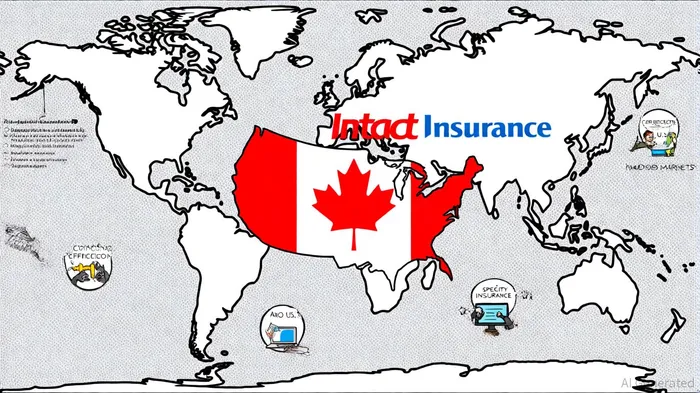







Comentarios
Aún no hay comentarios