
Why Institutional Whales Are Quietly Accumulating Remittix (RTX) Amidst XRP and ETH Inflows
The PayFi Revolution: Bridging DeFi and Traditional Finance
At the heart of this transition is the PayFi (Payments + DeFi) model, which aims to dissolve the friction between blockchain and traditional financial systems. Remittix (RTX) has positioned itself as a leader in this space by enabling users to send cryptocurrencies like BTC, ETHETH--, or XRP directly to bank accounts in over 30 countries within seconds, according to a Coinfomania analysis. This functionality addresses a critical gap in the market: the need for seamless, low-cost cross-border transactions.
According to a Cryptopolitan analysis, RTX has raised over $28.1 million in private funding and sold 684.6 million tokens at a presale price of $0.1166. The project's deflationary tokenomics-burning transaction fees to reduce supply-add a layer of scarcity, potentially driving long-term value. By targeting the $19 trillion global remittance market with a 0.1% fee model, RTX aims to capture 1–2% of this sector within 12 months, according to a Bitget report. This real-world utility, combined with CertiK's audit (ranking RTX #1 among pre-launch tokens, as noted by Coinfomania), has made it a compelling case for institutional diversification.
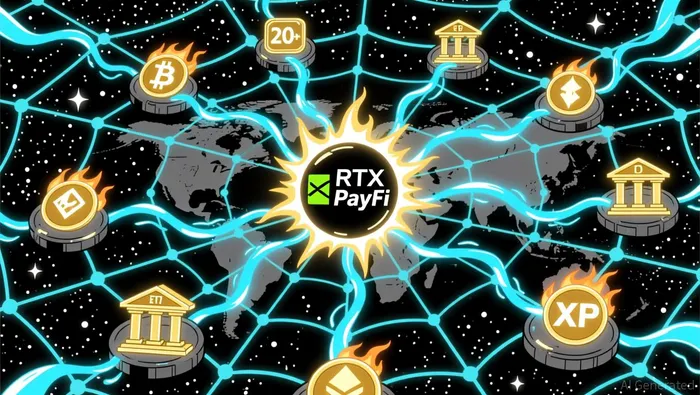
XRP and ETH: Stagnation Amidst Institutional Hype
While XRP and ETH remain institutional favorites, their performance in 2025 reveals structural challenges. XRP, despite 300+ partnerships and a 500% spike in transaction volume, has been range-bound between $2.75 and $3.05, according to a Bitget report. Its utility remains largely institutional, with RippleNet processing $1.3 trillion in Q2 2025 but lacking retail adoption. Similarly, ETH's dominance in DeFi infrastructure has plateaued, with inflows concentrated in high-fee Layer 2 solutions.
In contrast, RTX's beta wallet-now live for iOS users-enables fiat deposits in 40+ countries, according to a Coinfomania analysis, democratizing access to blockchain finance. This retail-focused approach aligns with institutional strategies to tap into underserved markets, where traditional players like Western Union and MoneyGram still dominate.
Institutional Diversification: The PayFi Playbook
The allure of PayFi projects like RTX lies in their ability to combine blockchain efficiency with regulatory compliance. A World Finance analysis highlights that 86% of institutional investors now hold digital assets, with 59% allocating over 5% of their portfolios to crypto. This shift is driven by the need to hedge against macroeconomic volatility and capitalize on the $15.6 trillion annualized transaction volume of stablecoins, according to a PolyFlow report.
RTX's strategic roadmap-featuring upcoming listings on BitMart and LBank-further underscores its institutional appeal. These exchanges provide liquidity and visibility, critical for attracting large-scale investors. Additionally, initiatives like a $250,000 giveaway and 15% referral rewards, as noted by Coinfomania, are fostering community-driven growth, a key metric for institutional due diligence.
Risk Management: Security and Scalability
Institutional investors are acutely aware of the risks associated with crypto assets. RTX mitigates these concerns through CertiK's full audit and a deflationary model that inherently reduces supply volatility, as noted by Coinfomania. The project's focus on low gas fees and scalable infrastructure also aligns with risk management frameworks that prioritize operational resilience.
As noted in a Token Metrics report, AI-driven tools are increasingly used to optimize crypto portfolios by analyzing real-time correlations and rebalancing holdings. RTX's PayFi ecosystem, with its dual focus on cross-border payments and tokenomics, offers a balanced risk-return profile that appeals to algorithmic diversification strategies.
Conclusion: The Future of Institutional Crypto Portfolios
The quiet accumulation of RTX by institutional whales signals a strategic pivot toward utility-driven assets. While XRP and ETH remain cornerstones of institutional portfolios, projects like RTX are redefining the value proposition of crypto investments. By bridging the gap between DeFi and traditional finance, PayFi tokens are notNOT-- just diversifying portfolios-they are reshaping the future of global payments.
As November 2025 approaches, the race to capture the remittance market intensifies. For institutions, the choice is clear: RTX's real-world utility and institutional-grade security make it a formidable contender in the PayFi era.






Comentarios
Aún no hay comentarios