
Institutional On-Ramps to Digital Assets: The OKX-Deltix Partnership and U.S. Market Access
The institutional adoption of digital assets has long been hindered by fragmented infrastructure and regulatory uncertainty. However, 2025 marks a pivotal shift, driven by strategic partnerships like the OKX-Deltix collaboration and evolving U.S. regulatory frameworks. This analysis explores how these developments are creating a robust on-ramp for institutional investors, enabling them to navigate digital-asset markets with the same infrastructure, compliance tools, and operational efficiency they rely on for traditional assets.
Strategic Infrastructure for Institutional Access
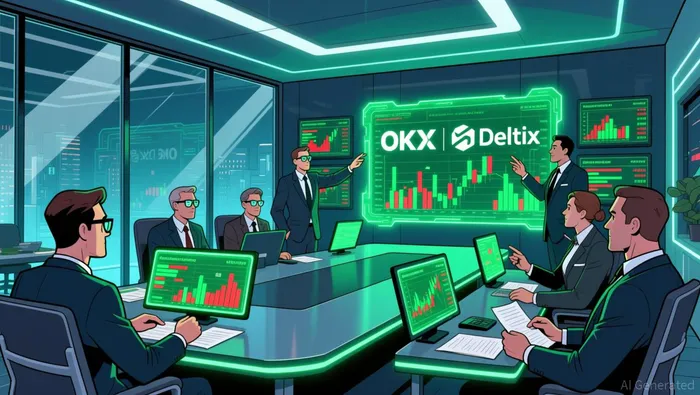
OKX's partnership with Deltix represents a critical step in bridging the gap between traditional and digital-asset trading. By integrating Deltix's low-latency execution platforms with OKX's regulated U.S. entity, the collaboration allows institutional clients to execute digital-asset strategies using workflows identical to those for equities or foreign exchange (FX). This alignment is not merely technical but operational: firms now leverage the integration to manage risk, reporting, and compliance within their existing systems, avoiding the complexities of offshore or unregulated markets.
The partnership's value lies in its ability to address two core institutional pain points: access and compliance. OKX routes all U.S. trading activity through its licensed entity, ensuring adherence to regulatory standards while providing institutional-grade tools such as advanced data analytics and strategy development. For asset managers and hedge funds, this means they can deploy digital-asset strategies without overhauling their operational frameworks-a critical enabler of large-scale adoption.
U.S. Regulatory Clarity: A Catalyst for Growth
The U.S. regulatory landscape in 2025 has undergone a transformation that directly supports institutional on-ramps. The SEC and CFTC are collaborating to harmonize their oversight of digital assets, reducing compliance burdens and fostering innovation. The SEC's "Project Crypto" initiative, for instance, is modernizing securities laws to accommodate blockchain-based financial instruments, while the CFTC's "crypto sprint" aligns with these efforts to accelerate market reforms according to recent reports.
Legislative progress has further stabilized the environment. The Financial Innovation and Technology for the 21st Century Act, though not yet fully enforced, proposes designating the CFTC as the lead regulator for cryptocurrencies, streamlining oversight. Meanwhile, the approval of generic listing standards for digital-asset exchange-traded products (ETPs) has eliminated the need for individual SEC approvals, enabling exchanges to offer standardized, regulated crypto products. These changes reduce entry barriers for institutional investors, who can now access digital assets through familiar, compliant channels.
State-level developments also play a role. The Genius Act, which standardized U.S. stablecoin regulations, has enhanced confidence in stablecoin-backed products, a cornerstone of many institutional strategies. Such legislative clarity positions the U.S. as a global leader in digital-asset innovation, attracting capital that might otherwise flow to less-regulated jurisdictions.
Strategic Implications for Institutional Investors
The OKX-Deltix partnership and regulatory advancements collectively create a strategic infrastructure for institutional crypto adoption. By integrating digital-asset trading into existing workflows, institutions can avoid the operational friction of managing separate systems for traditional and crypto markets. This integration is particularly valuable for firms with multi-asset portfolios, as it allows them to hedge, diversify, and allocate capital across asset classes seamlessly.
Moreover, the regulatory environment's shift from enforcement-driven to innovation-focused policies reduces the risk of abrupt regulatory shocks. For example, the CFTC's reorganization of its enforcement division into task forces targeting fraud and manipulation-rather than stifling innovation-signals a more balanced approach. This stability encourages institutions to allocate capital to digital assets with greater confidence.
Conclusion: A New Era of Institutional On-Ramps
The convergence of strategic infrastructure and regulatory clarity is unlocking a new era for institutional crypto adoption. The OKX-Deltix partnership exemplifies how market infrastructure providers can address the unique needs of institutional investors, while U.S. regulatory developments provide the scaffolding for sustainable growth. As these trends continue, the institutional on-ramp to digital assets will become not just a niche pathway but a mainstream corridor, reshaping the future of global finance.







Comentarios
Aún no hay comentarios