
Institutional DeFi Yield Expansion: Plume's Acquisition of Dinero as a Catalyst for Infrastructure Evolution
The institutionalization of decentralized finance (DeFi) has reached a pivotal inflection point in 2025, driven by strategic mergers and acquisitions (M&A) that bridge regulatory compliance with yield innovation. PlumePLUME-- Network's acquisition of Dinero Protocol exemplifies this trend, positioning itself as a linchpin in the evolution of institutional-grade DeFi infrastructure. By integrating Dinero's liquid staking products-such as ipxETH, pxSOL, and pxBTC-into its tokenized real-world asset (RWA) ecosystem, Plume is not only expanding its yield offerings but also addressing critical gaps in scalability, compliance, and institutional trust.
Strategic Rationale: From Yield Expansion to Ecosystem Synergy
Plume's acquisition of Dinero is underpinned by a dual strategy: leveraging Dinero's $125 million in total value locked (TVL) across major assets like EthereumETH-- (ETH), SolanaSOL-- (SOL), and BitcoinBTC-- (BTC), while accelerating its institutional onboarding efforts, according to a Coindesk report. Dinero's ipxETH product, which offers compliant access to staking yields through partnerships with Galaxy and Laser Digital, serves as a foundational asset for Plume's RWAfi ecosystem, as reported in a Blockworks article. This integration allows Plume to diversify its yield-generating primitives, catering to institutional demand for diversified returns in a regulated framework.
The deal's terms further underscore its strategic intent. A 10% premium for Dinero token holders, executed via a USDC contract, reflects strong community support (99% approval in a Snapshot vote) and signals confidence in Plume's ability to scale Dinero's products, according to a Blocmates post. Crucially, Plume's recent SEC approval as a regulated transfer agent-a first for an RWA-focused blockchain-enables it to handle tokenized securities onchain and interface with traditional financial infrastructure like DTCC's settlement network, as reported by Coindesk. This regulatory alignment is a critical enabler for institutional adoption, reducing friction between DeFi protocols and legacy systems.
Broader Market Trends: DeFi M&A as a Force for Institutional Integration
Plume's move aligns with a broader surge in DeFi M&A activity, driven by institutional demand for sophisticated, compliant yield strategies. According to a Pinnacle Digest report, 83% of institutional investors plan to increase digital asset allocations in 2025, with regulatory clarity acting as a key catalyst. The same report notes that 24% of institutions are already engaging with DeFi protocols, while another 50% intend to do so within two years. This shift is reshaping the competitive landscape, as traditional finance (TradFi) entities acquire crypto-native firms to access technology, talent, and customer segments.
The Plume-Dinero acquisition is emblematic of this trend. By combining Dinero's institutional-grade staking products with Plume's RWA infrastructure, the merged entity creates a hybrid model that appeals to both retail and institutional investors. For example, Plume's partnership with World Liberty FinancialWLFI-- (WLFI) to integrate the USD1USD1-- stablecoin-a 1:1 USD-backed asset-into its ecosystem further solidifies its role as a bridge between TradFi and DeFi. USD1's integration as a reserve asset for Plume's chain-native pUSD stablecoin unlocks new use cases, including stable collateral for RWA positions and cross-chain yield strategies, according to a Plume blog post.
Implications for Institutional DeFi Infrastructure
The acquisition's success hinges on its ability to address three key challenges in institutional DeFi: liquidity, regulatory alignment, and composability.
- Liquidity: Dinero's ipxETH product, with $125 million in TVL, provides a liquidity anchor for Plume's yield strategies. This is critical for institutions seeking predictable returns in a market where volatility remains a concern, as reported by Coindesk.
- Regulatory Alignment: Plume's SEC approval as a transfer agent mitigates compliance risks, enabling institutions to deploy capital without navigating fragmented regulatory frameworks, as noted by Blockworks.
- Composability: By integrating Dinero's products into its EVM-compatible infrastructure, Plume enhances the interoperability of DeFi primitives. This allows institutions to layer strategies-such as staking yields combined with RWA-backed loans-without sacrificing transparency or security, as discussed in the Plume blog post.
Future Outlook: A Maturing Market and the Role of M&A
As DeFi transitions from niche experimentation to institutional mainstay, M&A will remain a primary driver of innovation. The Plume-Dinero acquisition is not an isolated event but part of a larger narrative: institutions are no longer merely observers but active participants in reshaping DeFi's infrastructure.
A visualEY report). Include metrics such as percentage of institutions using DeFi, planned allocations, and key use cases (e.g., staking, derivatives).
Conclusion
Plume's acquisition of Dinero underscores a fundamental shift in DeFi: the convergence of yield innovation with institutional-grade infrastructure. By leveraging Dinero's products, SEC-compliant frameworks, and cross-chain partnerships, Plume is positioning itself as a critical node in the institutional DeFi ecosystem. As regulatory clarity and market demand continue to align, strategic M&A will remain a cornerstone of DeFi's evolution, enabling protocols to scale, diversify, and meet the demands of a rapidly maturing market.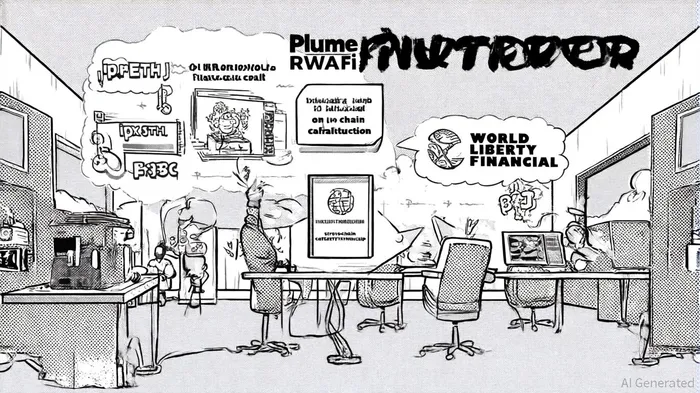






Comentarios
Aún no hay comentarios