
Institutional Confidence and Westgold Resources Limited (ASX:WGX): A Blueprint for Sustainable Outperformance
Institutional ownership is often a silent barometer of market confidence, and for Westgold Resources Limited (ASX:WGX), the data paints a compelling picture of sustained institutional support. With institutions holding approximately 67–68% of the company's shares, the weight of institutional influence on Westgold's stock price and governance decisions is undeniable[1]. This level of ownership—among the highest in the ASX-listed gold sector—suggests that institutional investors view Westgold not merely as a speculative play but as a strategically positioned player in the global gold market[2].
The Institutional Ownership Structure: Diversified Yet Concentrated
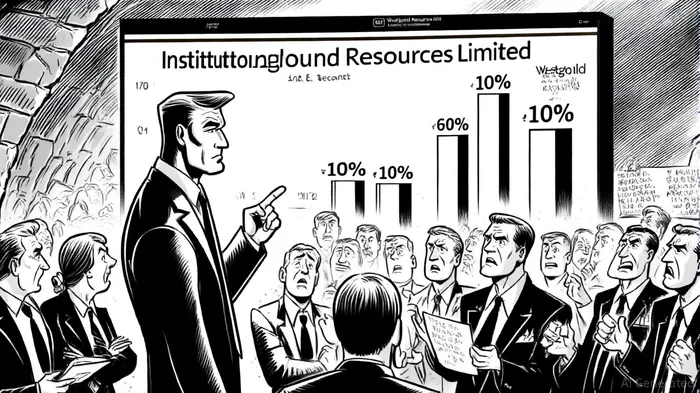
The top 14 institutional shareholders collectively own 50% of Westgold, with no single entity holding a majority stake[3]. This structure mitigates the risk of over-reliance on a single investor while ensuring that institutional sentiment remains a cohesive force. L1 Capital Pty. Limited, the largest institutional holder, commands 11% of shares, followed by two other major stakeholders at 6.8% and 6.0%[4]. This diversified yet concentrated ownership model balances stability with flexibility, allowing Westgold to navigate market volatility without being beholden to a single institutional agenda.
Notably, recent changes in ownership have added nuance to this picture. For instance, MUFG's decision to cease being a substantial holder in Q3 2025[5] signals a strategic rebalancing among large institutional players. However, the absence of a single dominant shareholder ensures that such shifts do not destabilize the company's institutional base. Instead, they reflect a dynamic ecosystem where confidence is distributed across multiple stakeholders.
Financial Performance: A Catalyst for Institutional Confidence
Westgold's Q3 FY2025 results underscore why institutions remain bullish. The company reported a record operational cash build of $80 million, driven by gold production of 80,107 ounces at an average realized price of $4,630 per ounce[6]. This performance was further bolstered by the divestment of the Lakewood Mill for $85 million, which not only improved liquidity but also streamlined operations[7]. With $232 million in cash, bullion, and liquid investments as of March 2025, Westgold's financial resilience is a key factor in institutional calculus[8].
Institutional investors are acutely aware that gold's role as a safe-haven asset remains intact in a macroeconomic environment marked by inflationary pressures and geopolitical uncertainty. Westgold's unhedged position—fully exposed to gold price fluctuations—positions it to capitalize on upward trends in the metal's value[9]. Analysts have noted that the company's all-in sustaining cost (AISC) of $2,829 per ounce[10] provides a wide margin of safety, even in a lower-price scenario.
Analyst Ratings: A Mixed but Optimistic Outlook
While institutional ownership is a leading indicator, analyst ratings offer additional context. The average price target for Westgold stands at AU$4.60, with estimates ranging from AU$3.75 to AU$5.95[11]. Recent revisions to earnings and revenue estimates—tightening around AU$0.31 per share and AU$1.94 billion, respectively—reflect growing confidence in the company's operational discipline[12].
Coverage from major firms like Ord Minnett and Canaccord Genuity, which maintain "Buy" ratings[13], reinforces the idea that Westgold's institutional base is not a passive observer but an active participant in shaping the company's trajectory. Even "Hold" or "Neutral" ratings, such as those from Euroz Hartleys and Macquarie[14], acknowledge the company's structural strengths, albeit with caution about near-term volatility.
The Road Ahead: Sustaining Institutional Momentum
For Westgold to maintain institutional confidence, it must continue executing on its strategic priorities. The company's focus on infrastructure upgrades at Beta Hunt and Bluebird South Junction[15] is critical to sustaining production growth in Q4 FY2025. Additionally, the recent share buyback program—allowing repurchases of up to 5% of shares—signals management's alignment with shareholder value, a factor that resonates with institutional investors prioritizing governance quality[16].
However, challenges remain. The exit of MUFG and potential shifts in institutional sentiment could test Westgold's ability to retain its high ownership concentration. Yet, given the company's operational performance and the broader macroeconomic tailwinds for gold, these risks appear manageable.
Conclusion: A Model of Institutional-Driven Resilience
Westgold Resources Limited exemplifies how institutional confidence can serve as a leading indicator of sustainable outperformance. With a diversified institutional base, robust financials, and a strategic alignment with gold's macroeconomic role, the company is well-positioned to navigate both sector-specific and global headwinds. For investors, the message is clear: when institutions bet big on a company, it's often a sign of long-term value creation in motion.







Comentarios
Aún no hay comentarios