
Institutional Adoption of XRP: Ripple's Strategic Moves and C1 Fund's Stake Signal Mainstream Momentum
The institutional adoption of XRPXRP-- and blockchain finance is accelerating, driven by strategic developments at Ripple and growing interest from major players like C1 FundCFND-- Inc. (NYSE: CFND). These moves are notNOT-- just reshaping Ripple's trajectory but also signaling a broader shift in how institutional capital views blockchain-based financial infrastructure.
Ripple's SEC Waiver: A Regulatory Rebirth
Ripple's recent removal of the SEC's "bad actor" designation marks a pivotal regulatory victory. By securing a waiver under Regulation D, the company can now raise private capital from accredited investors without the burden of full SEC registration, as reported by Elevenews. This development, facilitated by the SEC's acknowledgment of "good cause" post-settlement, has been noted by XRP Right Now, and reduces fundraising costs and accelerates Ripple's ability to execute strategic goals, such as its national bank charter application and expansion of the RippleUSD (RLUSD) stablecoin. Analysts argue this regulatory flexibility could catalyze a new era of institutional trust, as CoinCentral notes.
C1 Fund's Strategic Bet on Ripple
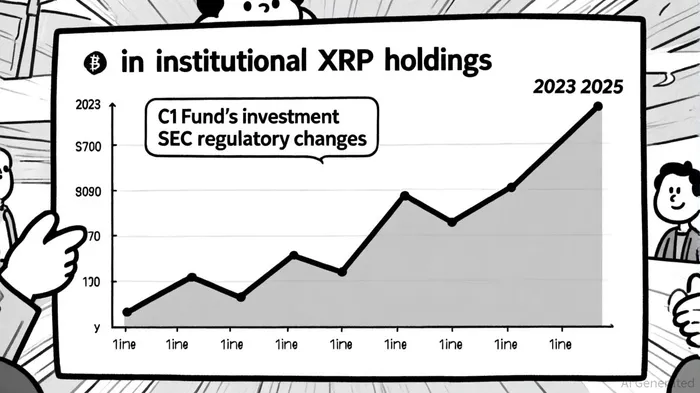
C1 Fund, a closed-end investment company focused on digital assets, has positioned itself at the forefront of this trend by acquiring an equity stake in Ripple, according to CoinTrust. While the exact investment size remains undisclosed, this move aligns with C1 Fund's strategy to back "mature digital asset infrastructure providers" and diversify its 30-company portfolio, as the Elevenews report observed. The fund's decision underscores Ripple's value proposition: its XRP Ledger (XRPL) and stablecoin solutions are already adopted by global financial institutions for cross-border payments, offering a proven infrastructure that aligns with institutional risk appetites, CoinTrust reported.
This institutional validation is not isolated. Publicly traded companies like Quantum Biopharma, Flora Growth, and Hyperscale Data have also increased XRP allocations, with some planning to use the asset for cross-border settlements, CoinCentral reported. Notably, VivoPower became the first firm to establish a dedicated XRP treasury, signaling a growing recognition of XRP's utility beyond speculative trading, according to CoinCentral.
XRP ETFs: The Next Catalyst
The institutional narrative is further amplified by the surge in XRP ETF applications. The REX-Osprey XRP ETF (XRPR), launched in September 2025, has already attracted $37.7 million in day-one trading, according to a CoinPedia report. With applications from Grayscale, Bitwise, and 21Shares pending, analysts project potential inflows of $5–$15 billion if approved, the CoinPedia analysis suggests. The SEC's November 14 decision on Franklin Templeton's XRP ETF application will be a critical inflection point, CoinPedia adds.
Strategic Implications for Blockchain Finance
Ripple's regulatory progress and institutional backing reflect a maturing blockchain finance ecosystem. The company's focus on stablecoins and cross-border solutions addresses real-world pain points for banks and payment providers, differentiating it from speculative crypto projects. Meanwhile, C1 Fund's investment and the XRP ETF pipeline highlight a shift in institutional risk assessment-XRP is increasingly viewed as a strategic asset rather than a volatile token, CoinTrust asserted.
However, challenges remain. Regulatory uncertainty persists, particularly with the SEC's evolving stance on crypto assets. Additionally, the success of XRP ETFs hinges on market sentiment and macroeconomic conditions.
Conclusion: A Tipping Point for XRP?
The confluence of Ripple's regulatory victories, C1 Fund's strategic investment, and the XRP ETF race suggests that XRP is nearing a tipping point in institutional adoption. As more corporations allocate XRP to treasuries and ETFs gain traction, the asset's utility and liquidity could rival traditional settlement mechanisms. For investors, this represents a unique opportunity to capitalize on blockchain finance's next phase-provided they navigate the regulatory landscape with caution.





Comentarios
Aún no hay comentarios