
Why Institutional Adoption and Vertical Integration Will Drive Crypto's Next Bull Run in 2026
The crypto asset class is on the cusp of a seismic shift. By 2026, institutional adoption and vertical integration will not just be buzzwords-they'll be the bedrock of a new bull market. The convergence of rising venture capital (VC) investment, crypto-native ETFs, and blockchain-enabled infrastructure is creating a flywheel effect that will redefine the industry's value proposition. Let's break down how this is unfolding-and why now is the time to position for the next wave.
Institutional Adoption: From Skepticism to Sovereign Air Cover
Institutional participation in crypto has evolved from niche curiosity to mainstream inevitability. By Q3 2025, 172 publicly traded companies held BitcoinBTC-- on their balance sheets, a 40% quarter-over-quarter surge. This shift was catalyzed by regulatory clarity, including the repeal of SAB 121 and the creation of the Strategic Bitcoin Reserve-a U.S. policy move that provided "sovereign air cover" for institutional investors.
The result? $29.4 billion in inflows into crypto-native ETFs by August 2025, with spot Bitcoin ETFs alone holding over 800,000 BTC. BlackRock's IBIT, for instance, briefly hit $100 billion in assets under management, becoming the fastest-growing ETF in history. These figures aren't just numbers-they signal a structural shift in how institutions view crypto, from speculative risk to strategic asset allocation.
VC Investment and Infrastructure: Building the Rails for Mass Adoption
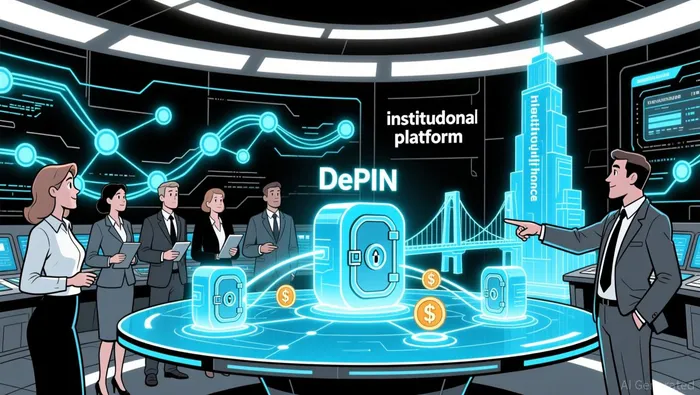
The infrastructure layer of crypto is no longer a "side project." In 2025, $7.9 billion in VC capital flowed into U.S. crypto companies, a 44% increase from 2024. This capital is concentrated in high-utility projects: custody solutions, blockchain services, and decentralized physical infrastructure networks (DePIN). For example, JPMorgan and Citi are now integrating blockchain-based tools into their traditional finance offerings, while companies like BitGo are scaling institutional-grade custody platforms.
The median VC check size also jumped 1.5 times to $5 million, reflecting a shift toward projects with proven traction and defensible moats. This trend is critical: infrastructure is the unsung hero of any bull market. Just as the internet's rise was powered by companies like Cisco and F5, crypto's next phase will be driven by those building the rails-blockchain protocols, node networks, and security layers.
M&A Consolidation: Vertical Integration as a Strategic Imperative
The crypto space is undergoing a wave of M&A consolidation, with crypto-native companies expanding into traditional finance to create full-stack solutions. In 2025, 140 VC-backed companies were acquired, a 59% year-over-year increase. Notable deals include Coinbase's $2.9 billion acquisition of Deribit and Kraken's $1.5 billion purchase of NinjaTrader, both of which signal a broader trend-crypto firms are no longer content to operate in silos.
Ripple, too, has embraced vertical integration. Over two years, it acquired seven startups to expand beyond cross-border payments into brokerage and treasury services. This playbook-acquiring complementary assets to build end-to-end ecosystems-is now a blueprint for success. As these companies consolidate, they reduce friction for institutional clients, creating a self-reinforcing cycle of adoption and revenue growth.
Crypto-Native ETFs: Legitimacy, Liquidity, and Leverage
The approval of crypto-native ETFs in 2025 was a watershed moment. With 76 spot and futures ETPs now in the U.S. alone, the asset class has crossed a psychological threshold. These products are not just vehicles for retail investors-they're tools for institutions to hedge, allocate, and leverage exposure without navigating the complexities of direct custody.
Consider the $156 billion in assets under management in North American crypto ETPs as of 2025. This liquidity is a magnet for macro funds, pension funds, and sovereign wealth entities. And as the GENIUS Act and executive orders promoting digital assets in retirement plans take effect, the addressable market for crypto ETFs will expand exponentially.
The 2026 Bull Case: Infrastructure, Utility, and Institutional Flow
By 2026, the bull run will be driven by three forces:
1. Institutional-grade infrastructure (custody, security, compliance) reducing entry barriers.
2. Vertical integration via M&A creating defensible ecosystems.
3. ETF-driven liquidity attracting capital at scale.
High-utility tokens-those with real-world applications in payments, identity, or data-will outperform speculative assets. Similarly, infrastructure-focused equities (e.g., companies building blockchain tools or DePIN networks) will benefit from the same tailwinds as cloud computing in the early 2010s.
The data is clear: crypto is no longer a fringe asset. It's a foundational layer of the global financial system. And in 2026, the winners will be those who built the rails-and those who rode them.





Comentarios
Aún no hay comentarios