
Institutional Adoption of Stablecoins: Balancing Systemic Risk Mitigation and Cross-Border Payment Efficiency
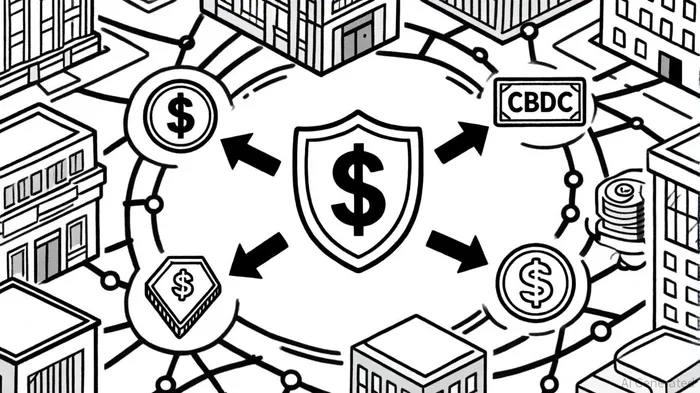
The institutional adoption of stablecoins has emerged as a pivotal force in reshaping global finance, driven by their dual promise of mitigating systemic risks and enhancing cross-border payment efficiency. As central banks and financial institutions navigate the complexities of a post-pandemic economy, stablecoins—cryptoassets pegged to fiat currencies—have become both a solution and a challenge. This analysis explores how institutional actors are leveraging stablecoins to address systemic vulnerabilities while optimizing cross-border transactions, drawing on insights from the Bank for International Settlements (BIS) and emerging decentralized finance (DeFi) innovations.
Systemic Risk Mitigation: Centralization vs. Decentralization
Systemic risk, the threat of cascading failures across interconnected financial systems, remains a top priority for regulators. Centralized stablecoins like TetherUSDT-- (USDT) and Circle's USDCUSDC-- have raised concerns due to their reliance on opaque reserves and the potential for sudden liquidity freezes[1]. In contrast, decentralized stablecoins such as DAIDAI--, which are over-collateralized and algorithmically governed, offer a counterpoint. DAI's design, for instance, ensures that no single entity can freeze transactions, thereby reducing counterparty risk[5].
The BIS has underscored the importance of addressing such risks through its 2024 research initiatives, which emphasize the need for robust governance frameworks and transparency in stablecoin operations[2]. Central banks are increasingly exploring central bank digital currencies (CBDCs) as a complementary tool to stabilize cross-border flows while maintaining monetary sovereignty. According to a 2024 BIS survey, over 90% of central banks are actively developing CBDCs, with some accelerating timelines in response to stablecoin proliferation[2]. This dual-track approach—leveraging both stablecoins and CBDCs—reflects a strategic effort to balance innovation with systemic stability.
Cross-Border Payment Efficiency: A New Paradigm
Cross-border payments, long plagued by high fees, slow settlement times, and fragmented infrastructure, represent a fertile ground for stablecoin adoption. Traditional systems like SWIFT often incur costs exceeding 6% of the transaction value, while stablecoins can reduce fees to less than 1% by bypassing intermediaries[3]. The BIS has highlighted this efficiency in its innovation projects, noting that stablecoins could enable near-instant settlements and real-time reconciliation across jurisdictions[2].
Emerging projects like Venera and Zephyr Protocol exemplify this potential. Venera, a hybrid proof-of-work (PoW) and proof-of-stake (PoS) stablecoin platform, combines sharded ZK-SNARKs with over-collateralized stablecoins (USDV, EURV) to address scalability and privacy concerns[2]. Similarly, Zephyr Protocol's ZEPHUSD stablecoin leverages a privacy-focused, over-collateralized model to ensure stability without sacrificing decentralization[4]. These innovations suggest that institutional-grade stablecoins can achieve both efficiency and resilience, provided they are designed with regulatory compliance in mind.
Challenges and the Path Forward
Despite their promise, stablecoins face hurdles. Regulatory uncertainty, particularly around anti-money laundering (AML) and know-your-customer (KYC) requirements, has dampened adoption in sectors like gambling, where stablecoins' pseudonymity clashes with compliance demands[6]. Moreover, the BIS has warned that poorly designed stablecoins could amplify systemic risks if they trigger bank runs or liquidity crises[3].
To mitigate these risks, institutions must prioritize collaboration with regulators. The BIS's data portal, which aggregates global financial metrics, offers a model for transparency and risk monitoring[3]. Additionally, hybrid models that blend stablecoin efficiency with CBDC oversight—such as the BIS's “multi-CBDC bridge” experiments—could provide a middle ground[2].
Conclusion
The institutional adoption of stablecoins is not a binary choice between innovation and regulation but a nuanced interplay of both. By addressing systemic risks through decentralized governance and leveraging cross-border efficiency gains, stablecoins can complement CBDCs in building a more resilient financial ecosystem. As the BIS and forward-thinking projects like Venera demonstrate, the future of global payments lies in hybrid systems that balance speed, stability, and transparency. Investors and policymakers alike must remain vigilant, ensuring that the next wave of stablecoin adoption serves both innovation and systemic integrity.






Comentarios
Aún no hay comentarios