
Instacart's Strategic Board Expansion: A Catalyst for Long-Term Growth in the Evolving Grocery Tech Landscape
The grocery technology sector is undergoing a seismic shift, driven by AI integration, digital transformation, and the relentless pursuit of convenience. At the forefront of this evolution is Instacart, a company that has redefined how consumers interact with food retail. Its recent appointment of Josh Silverman, the seasoned CEO of EtsyETSY--, to its Board of Directors signals a bold strategic pivot. This move is not merely a symbolic gesture but a calculated step to harness Silverman's unparalleled expertise in marketplace innovation, positioning Instacart to outperform in a sector where margins are thin, competition is fierce, and technological differentiation is king.
Silverman's Track Record: A Blueprint for Marketplace Mastery
Josh Silverman's career is a case study in scaling consumer technology platforms. As CEO of Etsy, he transformed the platform from a niche marketplace for handmade goods into a global e-commerce powerhouse, growing its revenue from $1.2 billion in 2017 to over $3.5 billion by 2024. His ability to balance the needs of independent sellers with the expectations of tech-savvy buyers has been a cornerstone of Etsy's success. Prior to Etsy, Silverman led Shopping.com (an eBay company), Skype, and Evite, each time leveraging his knack for understanding consumer behavior and optimizing two-sided marketplaces.
Instacart's CEO, Chris Rogers, has emphasized that Silverman's “passion for empowering independent entrepreneurs” aligns with the company's mission to connect retailers, brands, and shoppers. This is no small alignment. Instacart's business model relies on a delicate equilibrium: it must satisfy retailers seeking to expand their digital footprints, brands aiming to reach consumers at the point of purchase, and shoppers demanding speed and convenience. Silverman's experience in managing such ecosystems—particularly his work at Etsy, where he navigated regulatory challenges and scaled a community-driven platform—positions him to address these complexities.
Instacart's Strategic Imperatives: Innovation and Scale
Instacart's recent financials underscore its potential. In Q2 2025, the company reported a 17% year-over-year increase in orders (to 82.7 million) and a 11% revenue rise to $914 million. Its gross transaction value (GTV) hit $9.08 billion, reflecting a growing reliance on its platform by both consumers and retailers. These figures are not just numbers; they represent a company that is winning the race to digitize grocery retail.
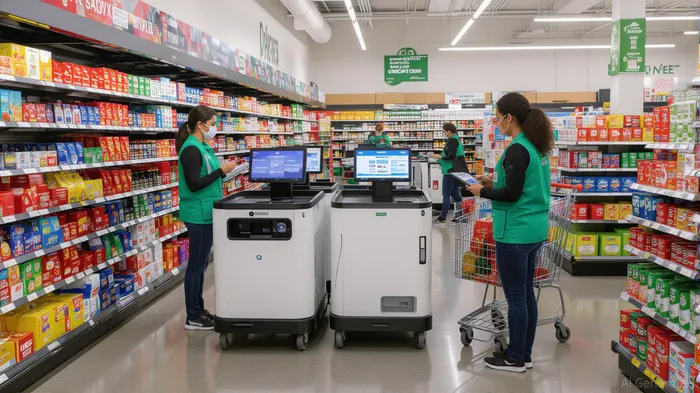
However, growth alone is not enough. The grocery tech sector is crowded, with AmazonAMZN--, WalmartWMT--, and DoorDashDASH-- all vying for dominance. Instacart's differentiator lies in its ability to innovate at scale. Its AI-driven solutions—such as tools that double the pace of onboarding new retail partners—demonstrate a commitment to operational efficiency. The introduction of Caper Carts, which use computer vision and machine learning to enhance in-store experiences, is another example of how Instacart is blurring the lines between physical and digital retail.
Silverman's appointment adds a layer of strategic depth. His tenure at American ExpressAXP--, where he oversaw consumer products and services, and his venture capital experience at Greylock Partners, provide him with a unique lens to evaluate partnerships, investments, and market trends. For Instacart, this means a board member who can help navigate the next phase of growth while mitigating risks in a sector prone to volatility.
Industry Trends: The AI-Driven Grocery Revolution
The broader grocery tech landscape is being reshaped by AI and data analytics. Companies are investing heavily in tools that personalize shopping experiences, optimize supply chains, and improve nutrition security. For example, AI-powered recommendation engines are now standard in grocery apps, while predictive analytics help retailers manage inventory. Instacart's recent focus on AI-driven onboarding and Caper Carts aligns with these trends, but the company's ability to sustain its edge will depend on its capacity to innovate faster than rivals.
Investment Implications: A Buy for the Long Haul
For investors, Instacart's board expansion and strategic direction present a compelling case. The company's revenue growth, expanding GTV, and technological advancements suggest a business that is not only surviving but thriving in a competitive market. Silverman's appointment adds credibility to its long-term vision, particularly as the grocery sector becomes increasingly tech-centric.
However, caution is warranted. The company's profitability remains a question mark, and the grocery delivery market is still unproven in terms of sustained profitability. That said, Instacart's focus on sustainable growth—evidenced by its partnerships with over 1,800 retail banners and its role in facilitating flexible earning opportunities for 600,000 shoppers—suggests a model that prioritizes ecosystem health over short-term gains.
Investment Advice: Investors with a medium- to long-term horizon should consider adding Instacart to their portfolios. The company's strategic alignment with AI-driven retail trends, coupled with Silverman's board-level expertise, positions it to outperform in a sector where innovation is the only path to differentiation. However, monitor its quarterly earnings and capital expenditures closely to ensure it remains on track to achieve profitability.
In the end, Instacart's board expansion is more than a leadership play—it's a signal that the company is betting big on its ability to redefine grocery retail. With Silverman's guidance, it may well emerge as the sector's most formidable player.





Comentarios
Aún no hay comentarios