
Insights from Korea Blockchain Week 2025: Why Asia is Shaping the Future of Bitcoin and Web3
Asia's Blockchain and Financial Technology Landscape in Early 2026
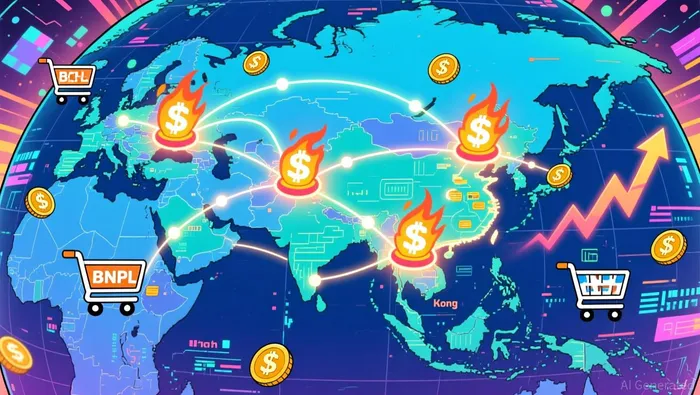
Asia remains at the forefront of blockchain and financial technology development in early 2026. The region continues to expand its alternative lending markets, driven by innovations like Buy Now, Pay Later (BNPL) and AI-powered underwriting. According to market analysis, institutional interest in crypto is also rising, supported by evolving regulatory frameworks and growing institutional capital inflows.
Recent developments highlight the accelerating convergence between traditional finance and digital assets. The Asia-Pacific alternative lending market, for example, is projected to reach $477.5 billion by 2029 at a 13.1% compound annual growth rate. This trend is being driven by BNPL services, embedded finance platforms, and AI-based credit assessments according to market reports.
Institutional investors are also increasing their exposure to crypto, with 71% of asset managers planning to raise their allocations in the next 12 months. Regulatory clarity has emerged as a primary catalyst, with 32% of institutions identifying it as the key factor in adoption.
Why Did This Happen?
Regulatory clarity and institutional backing have played major roles in shaping this environment. In the U.S., the Digital Asset Market Clarity Act and the appointment of a federal crypto coordinator helped reduce uncertainty. These developments have made it easier for institutional players to enter the space according to industry analysis.
Meanwhile, China has also adapted its approach, allowing commercial banks to pay interest on digital yuan deposits. This move expands the utility of the country's central bank digital currency (CBDC) and signals a shift toward broader digital finance adoption according to financial reports.
Market responses have been mixed. While crypto ETFs have gained traction—bitcoin ETFs alone reached $115 billion in assets by the end of 2025—price movements have lagged behind these gains. SolanaSOL--, for instance, has seen rising real-world asset (RWA) activity but has not matched its 2025 peak price.
XRP also faced volatility in early 2026, despite regulatory progress. Although spot ETFs introduced a new channel for inflows, the token's price has remained below its 2025 high. This suggests that while market structure is improving, broader adoption is still evolving according to market analysis.
What Are Analysts Watching Next?
Analysts are focusing on several key areas in the coming months. Institutional participation in crypto is expected to grow, especially as new regulatory frameworks take effect. The U.S. market-structure bill, if passed, could further accelerate adoption and bring more clarity to tokenization and stablecoin operations according to industry projections.
At the same time, fintech platforms are expanding their digital infrastructure across Asia. Qatar has become a new hub for financial technology, with VoPay establishing its global headquarters in the country. The move aims to support cross-border financial modernization and connect regional markets to global systems according to business reports.
Web3 adoption is also seeing a boost from user-friendly innovations. LightLink's launch of a chain-abstracted wallet, Stella, is one example. The platform aims to simplify multichain interactions and reduce the technical barriers to blockchain use according to product announcements.
As 2026 unfolds, the interplay between regulatory clarity, institutional investment, and technological innovation will remain central to the evolution of Asia's blockchain and financial ecosystems.







Comentarios
Aún no hay comentarios