
Insider Selling and Market Sentiment at Radian Group: A Strategic Analysis of Investor Confidence
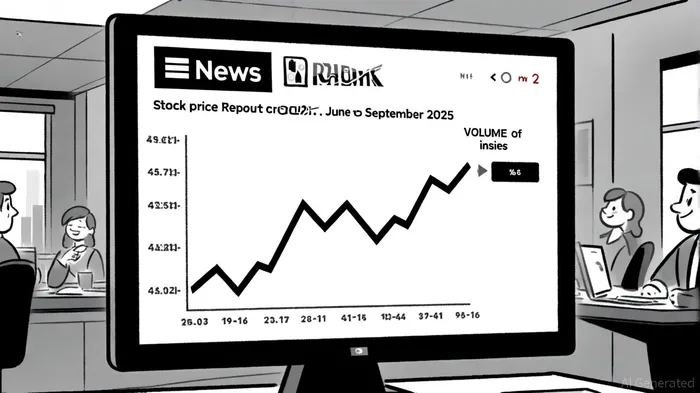
In the world of equity markets, insider transactions often serve as a barometer for investor sentiment and corporate health. At Radian Group Inc.RDN-- (NYSE: RDN), recent insider selling activity has sparked debates about its implications for market confidence and stock performance. While the company remains a profitable player in the diversified financial sector, the pattern of insider transactions—particularly the absence of insider buying—raises questions about alignment between executives and shareholders.
A Surge in Insider Selling: Key Transactions
Over the past quarter, Radian Group's executives and directors have engaged in significant stock sales. For instance, CEO Richard G. Thornberrry sold 734,160 shares at $36.71 per share on June 24, 2025, and 737,200 shares at $36.00 per share on June 23, 2025 [1]. Similarly, General Counsel Edward J. Hoffman sold 10,000 shares at $37.00 per share on September 18, 2025, under a pre-arranged 10b5-1 trading plan [2]. These transactions, coupled with a Form 144 filing for the proposed sale of 20,000 shares through Fidelity Brokerage Services, underscore a trend of liquidity extraction by insiders [3].
Notably, the cumulative value of insider sales exceeds $14 million in the past year, with no recorded insider purchases during the same period [4]. This imbalance has drawn scrutiny, as it may signal that executives perceive the stock as overvalued or are prioritizing personal portfolio diversification. According to Simply Wall St, such patterns—while not inherently negative—warrant caution, particularly when selling is concentrated among high-ranking officials [4].
Strategic Implications for Investor Confidence
The lack of insider buying contrasts sharply with Radian Group's public narrative of growth and profitability. While the company's SEC filings emphasize transparency and compliance [5], the absence of insider capital commitment could erode trust. For example, Independent Director Gregory Serio sold $134,000 worth of shares in the last quarter alone, with no corresponding purchases [6]. This behavior, as noted by TipRanks, may be “uninformative” in some cases (e.g., automated sales or derivative exercises) [4], but the cumulative effect remains a red flag for investors.
Market reactions to these transactions have been mixed. On June 23–24, 2025, RDN's stock traded near $36.00–$36.71, aligning with Thornberrry's sale prices. However, post-transaction data reveals limited immediate price volatility, suggesting that the market may not have interpreted the sales as bearish signals [1]. Conversely, Hoffman's September 18 sale coincided with a $37.00 price point, a 6.11% drop in his holdings, and a 1.1% insider ownership stake remaining [2]. These dynamics highlight the complexity of interpreting insider activity in isolation.
Balancing Risk and Opportunity
Despite the selling, Radian Group's fundamentals remain robust. The company's profitability and strategic positioning in the mortgage insurance sector provide a buffer against short-term sentiment shifts. However, investors must weigh these strengths against the risk of misalignment between insiders and shareholders. As stated by a report from Simply Wall St, “The absence of insider buying in a period of significant selling suggests a potential disconnect between management's actions and the company's stated growth trajectory” [4].
For investors, the key lies in contextualizing insider transactions within broader market trends. While RDN's stock price has shown resilience, the lack of insider capital commitment—a proxy for confidence—demands closer scrutiny. A diversified approach, combining fundamental analysis with monitoring of future insider activity, may mitigate risks associated with this pattern.
Conclusion
Radian Group's recent insider selling activity reflects a nuanced interplay of personal financial strategies and market dynamics. While the company's operational performance remains strong, the absence of insider buying and the scale of sales raise valid concerns about alignment with shareholders. Investors should approach RDNRDN-- with a balanced perspective, recognizing both its growth potential and the cautionary signals embedded in insider behavior. As always, due diligence and a long-term horizon remain critical in navigating such scenarios.





Comentarios
Aún no hay comentarios