
Insider Selling at Bowman Consulting Group: Governance Reforms and Market Sentiment in Focus
Insider selling is often a double-edged sword for investors. While it can signal executive confidence in a company's long-term prospects when conducted under structured plans, it may also raise red flags if perceived as opportunistic. At Bowman ConsultingBWMN-- Group Ltd. (NASDAQ: BWMN), recent insider transactions and corporate governance reforms offer a nuanced case study. On September 24, 2025, CEO Gary Bowman sold 20,000 shares under a Rule 10b5-1 trading plan, netting $847,800. This sale, part of a pre-established framework to avoid insider trading allegations, occurred amid broader governance reforms aimed at aligning with mature public company standards [1].
Corporate Governance as a Mitigating Factor
Bowman's leadership transition in May 2025—separating the roles of chairman and CEO—has been pivotal in addressing investor concerns. Independent director James Laurito was elected as Board Chair, while founder Gary Bowman retained the CEO role. This structural change, as noted by analysts, enhances board independence and aligns with best practices for established public companies [2]. The reforms also included reassigning key committee roles, such as appointing Patricia Mulroy as Compensation Committee Chair, to ensure robust oversight. These steps, according to a report by Investing.com, signal a proactive approach to governance evolution, particularly as the company transitions out of its “emerging growth company” status [3].
Insider Sales: Routine or Red Flag?
Historical data reveals a pattern of insider sales at Bowman ConsultingBWMN-- Group. From 2021 to 2025, insiders sold shares valued at $20,204,209, compared to mere $78,400 in purchases [4]. While this net outflow might concern some investors, the use of Rule 10b5-1 plans—adopted when no material nonpublic information was known—mitigates legal risks. Gary Bowman's recent sale, for instance, was executed under a plan adopted on June 6, 2025, and allows for further sales through September 2026. Post-transaction, Bowman retains direct ownership of 919,024 shares and indirect ownership of 1,390,838 shares via a Family LLC, underscoring continued alignment with shareholder interests [1].
Market Reactions and Analyst Optimism
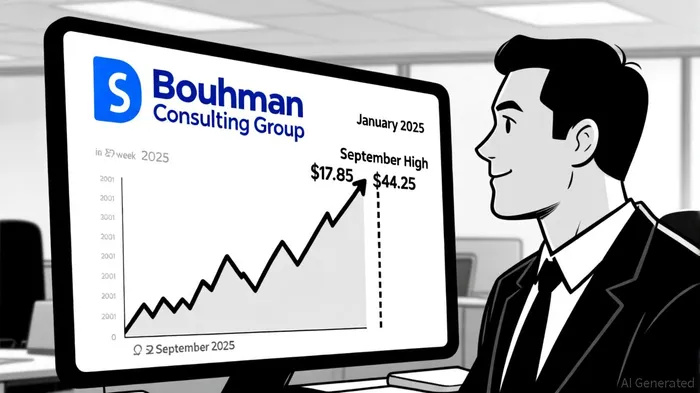
Despite insider activity, Bowman's stock reached a 52-week high of $44.25 on September 22, 2025, closing at $42.57 by September 24 [5]. Analysts have upgraded the stock, with B. Riley raising its price target to $55.00 and Zacks Research labeling it a “strong-buy.” This optimism is partly fueled by the company's 22% year-over-year revenue growth and a $25 million stock buyback program announced in September 2025 [6]. The buyback, coupled with governance reforms, suggests management's belief in the stock's undervaluation.
Balancing Governance and Investor Sentiment
The interplay between corporate governance and insider selling is critical. As highlighted in a 2025 study on corporate governance and investor trust, firms that adopt transparent structures—such as independent board chairs—see improved market confidence [7]. Bowman's reforms, including the ratification of Ernst & Young LLP as its auditor, further reinforce transparency. While insider sales persist, the governance upgrades provide a framework that reduces the perception of self-serving behavior, aligning executive actions with long-term value creation.
Conclusion
Bowman Consulting Group's insider sales, while notable, must be contextualized within its governance evolution and financial performance. The separation of chairman and CEO roles, combined with Rule 10b5-1 compliance, addresses potential conflicts of interest. Analysts' bullish outlook and the company's strategic buyback program indicate that the market views these transactions as part of routine financial planning rather than a lack of confidence. For investors, the key takeaway is that robust governance can mitigate concerns around insider selling, provided it is executed transparently and in alignment with shareholder interests.





Comentarios
Aún no hay comentarios