
Insider Selling at Atlassian: Short-Term Sentiment vs. Long-Term Fundamentals
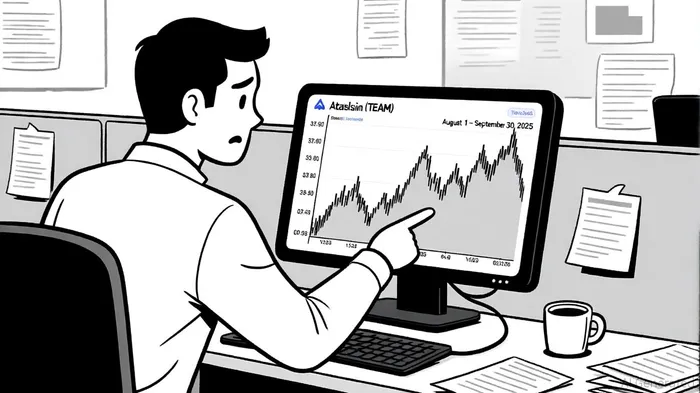
In recent months, Atlassian CorporationTEAM-- (NASDAQ: TEAM) has drawn investor attention due to a series of insider transactions, particularly by co-founders and top executives. These sales, coupled with robust financial performance, present a nuanced picture for investors weighing short-term market sentiment against long-term fundamentals.
Insider Selling: Strategy or Signal?
Atlassian's insider activity in 2025 has been both frequent and methodical. CEO Michael Cannon-Brookes and Director Scott Farquhar executed multiple Rule 10b5-1 plan sales between August and September, collectively disposing of over 50,000 shares of Class A stock. For instance, on September 3, 2025, both sold 7,665 shares at an average price of $171.14, totaling $1.31 million per transaction [1]. These sales followed similar transactions in late August, including a $1.42 million sale on August 6 at $185.81 per share [2]. Notably, Scott Belsky, another director, bucked the trend by purchasing 1,455 shares at $173.00 on August 28, signaling cautious optimism [3].
Such structured selling plans, established under Rule 10b5-1 to ensure compliance with insider trading laws, suggest premeditated portfolio management rather than reactive decision-making. However, the cumulative impact—reducing Farquhar's holdings by 12.5% and Cannon-Brookes' by 11.1%—has raised questions about insider confidence [4].
Short-Term Market Reactions
The stock price of TEAM reflected mixed signals during this period. On September 19, 2025, following a wave of insider sales at prices ranging from $169.32 to $173.56, the stock plummeted 3.8% to $164.08 [5]. This decline occurred despite strong fundamentals, illustrating how insider activity can temporarily overshadow corporate performance. Earlier, in late August, the stock traded as high as $192.64 but had fallen to $165.68 by September 23, a 14% drop over three weeks [6]. Analysts attributed part of this volatility to investor skepticism about the sustainability of insider selling [7].
Long-Term Fundamentals: A Story of Growth
Contrast this with Atlassian's Q4 2025 results, which underscored its dominance in the enterprise software sector. Total revenue hit $1.38 billion, a 22% year-over-year increase, with cloud revenue surging 26% to $928 million [8]. Non-GAAP operating income reached $335.9 million, with a 24% margin, and free cash flow remained robust at $360.3 million [9]. These figures, coupled with a 15% year-over-year rise in customers with over $10,000 in Cloud ARR (to 49,449), highlight Atlassian's ability to scale amid macroeconomic headwinds [10].
Analyst sentiment, though mixed, leans constructive. Twenty-one analysts covering TEAM set an average price target of $275.24, with some upgrading their ratings despite recent volatility [11]. For example, Wall Street Zen raised its stance to “buy,” while Canaccord Genuity cut its target to $230, reflecting divergent views on valuation [12].
Balancing the Equation
The key challenge for investors lies in reconciling short-term jitters with long-term potential. Insider selling, particularly by founders, often correlates with portfolio diversification strategies rather than bearish outlooks. Atlassian's executives have historically emphasized transparency, and their adherence to Rule 10b5-1 plans suggests a disciplined approach to liquidity needs.
However, the market's reaction—exemplified by the 3.8% drop post-September sales—reveals lingering concerns. Investors may fear that insiders are capitalizing on overvaluation or anticipating near-term challenges, even as financials suggest otherwise. This tension underscores the importance of contextualizing insider activity within broader corporate narratives.
Conclusion: A Call for Nuanced Analysis
Atlassian's stock presents a compelling case study in the interplay between insider behavior and corporate performance. While the recent selling by top executives has dented short-term sentiment, the company's financials and growth trajectory remain robust. For long-term investors, the dip in share price following insider sales could represent an opportunity to acquire shares in a fundamentally strong business.
That said, prudence is warranted. Investors should monitor future insider activity, particularly whether selling continues at similar volumes, and assess how AtlassianTEAM-- executes its AI-driven platform strategy. For now, the data suggests that while insiders are lightening their holdings, they remain committed to the company's long-term vision.





Comentarios
Aún no hay comentarios