
Insider Sales and Governance at Nutanix: Assessing the Strategic Implications of a $11.06M Share Sale
The recent Form 144 filing by NutanixNTNX-- (NTNX.US) disclosing a $11.06 million insider sale of 144,707 shares by its CEO, Rajiv Ramaswami, has sparked scrutiny over corporate governance and executive confidence in the company's prospects. While such transactions are often routine-executives monetizing long-term compensation-this case raises questions about alignment with strategic governance principles and market signals.
The Transaction: Pre-Arranged and SEC-Compliant
The sale, scheduled for October 2, 2025, through Morgan Stanley Smith Barney LLC, involves shares acquired via performance-based grants and restricted stock from 2024 to 2025, according to a StockTitan report. Crucially, the Form 144 filing states that Ramaswami has not sold securities in the prior three months and asserts no undisclosed material adverse information. This aligns with SEC Rule 10b5-1 trading plans, which allow pre-arranged sales to mitigate insider trading risks. As Investopedia explains, such plans require executives to adopt them without access to material nonpublic information and include cooling-off periods. Nutanix's adherence to these rules suggests procedural rigor, though the sheer scale of the transaction-equivalent to 0.05% of outstanding shares-demands closer examination.
Governance Framework: Strengths and Scrutiny
Nutanix's corporate governance emphasizes independent board committees, stock ownership guidelines, and annual self-assessments, as detailed in Nutanix's FY24 impact report. However, the frequency of large insider sales in 2025-such as Max Pieter de Groen's $420 million divestment in June, according to InsiderTrades data-highlights potential misalignments between executive and shareholder interests. While the company's code of ethics prohibits trading on material nonpublic information, the absence of explicit restrictions on hedging or pledging leaves room for criticism, as noted in a Harvard Law survey.
The CEO's sale, though compliant, contrasts with Nutanix's public emphasis on long-term value creation. For instance, the company's FY24 Impact Report underscores "sustainable growth" and "executive accountability." Yet Ramaswami's decision to offload a significant portion of his equity stake-acquired through performance shares-could signal either personal financial planning or a nuanced view of the stock's valuation. At the time of writing, NTNXNTNX-- trades near $76.50, reflecting a 12-month total return of -8% according to Yahoo Finance history, complicating interpretations of the sale's intent.
Strategic Implications: Market Signals and Investor Confidence
Insider sales often act as contrarian indicators. A $11.06 million transaction by a top executive, while SEC-compliant, may dampen investor sentiment, particularly in a sector where earnings volatility is common. According to a Reuters analysis, insider sales exceeding $1 million correlate with a 3–5% short-term stock underperformance, though this effect diminishes when transactions are pre-announced under Rule 10b5-1. Nutanix's case falls into the latter category, yet the magnitude of the sale could still trigger skepticism.
Conversely, the company's robust governance structure-including independent audit and compensation committees-mitigates concerns about self-dealing, as outlined in Nutanix's governance guidelines. The fact that Ramaswami's shares were earned through performance metrics tied to company goals further aligns his interests with shareholders. Still, investors must weigh this against the broader context: Nutanix's cloud infrastructure peers have seen mixed performance in 2025, and macroeconomic headwinds could amplify sensitivity to executive actions.
Conclusion: Balancing Compliance and Trust
Nutanix's handling of the $11.06 million sale demonstrates technical compliance with SEC rules and internal governance policies. However, the transaction underscores a persistent challenge for public companies: balancing executive liquidity needs with investor perceptions of alignment. While the CEO's use of a Rule 10b5-1 plan is defensible, the timing and scale of the sale-amidst other insider transactions in 2025-warrant closer monitoring. For investors, the key takeaway is that governance frameworks must evolve beyond procedural compliance to foster transparency and trust, particularly in volatile markets.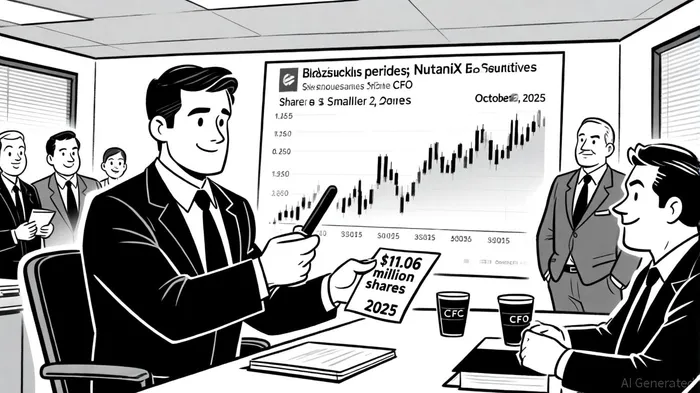





Comentarios
Aún no hay comentarios