
Insider Risk and Governance in DeFi: Lessons from the Pump.fun Breach and Systemic Vulnerabilities
The decentralized finance (DeFi) ecosystem, once heralded as a bastion of trustless innovation, has increasingly exposed vulnerabilities that challenge its foundational principles. The 2025 Pump.fun breach, orchestrated by former developer Jarett Dunn, serves as a stark case study of how insider risks and governance flaws can destabilize even high-profile platforms. By siphoning $2 million in SolanaSOL-- (SOL) through admin key exploitation and manipulating bonding curves, Dunn highlighted critical weaknesses in internal controls, while the platform's broader failure to enforce KYC/AML checks amplified systemic risks according to reports. This incident, coupled with regulatory and institutional responses, underscores a pivotal inflection point for DeFi governance and investor protection.
The Pump.fun Breach: A Microcosm of DeFi's Governance Gaps
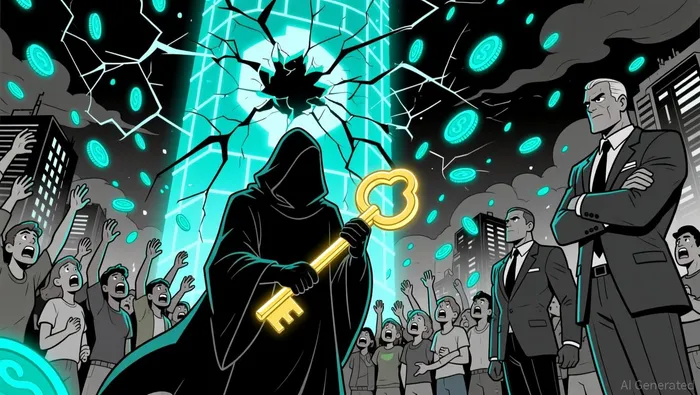
Dunn's attack was not a technical exploit of Pump.fun's smart contracts but a deliberate abuse of administrative privileges-a distinction that reveals the platform's reliance on centralized operational structures despite its decentralized branding according to industry analysis. The breach occurred just weeks after Dunn joined the team, exploiting a lack of oversight in key administrative roles. By draining funds over 100 minutes and airdropping them to random Solana users, he demonstrated how insider access can bypass even the most robust on-chain security mechanisms as revealed in court documents.
The financial fallout was severe: Pump.fun estimated total damages at $12.8 million, factoring in lost revenue from a nine-hour trading halt and reputational costs according to the company's report. This case exemplifies a broader trend in DeFi-projects often prioritize rapid growth over governance rigor, leaving them exposed to insider threats. As one industry analyst noted, "The Pump.fun incident is a wake-up call for DeFi platforms to treat internal controls with the same scrutiny as code audits" as reported by Blockworks.
Systemic Vulnerabilities and Regulatory Reckonings
The Pump.fun breach has accelerated regulatory scrutiny of DeFi governance models. In the EU, the Markets in Crypto-Assets (MiCA) framework now mandates stricter obligations for token issuers, including whitepaper disclosures and market integrity rules according to regulatory filings. Meanwhile, U.S. regulators have taken a more aggressive stance, with the SEC and CFTC applying existing financial laws to crypto projects. A proposed Senate bill even seeks to classify DeFi platform operators as "digital asset intermediaries," subjecting them to federal oversight according to legal analysis.
These developments reflect a growing recognition that many DeFi platforms-despite their decentralized rhetoric-retain centralized control points. For instance, Pump.fun's pseudonymous operation and lack of KYC/AML checks drew class-action lawsuits in the U.S., with plaintiffs accusing the platform of facilitating unregistered securities and pump-and-dump schemes as detailed in legal filings. Such legal challenges have forced regulators to grapple with the enforceability of securities laws in the context of automated token creation and memecoins.
Institutional Risk Management: Adapting to a New Normal
Institutional investors, increasingly wary of DeFi's inherent risks, have adopted more sophisticated risk management frameworks. By 2025, 78% of global institutional investors reported having dedicated crypto risk strategies, with 48% integrating DeFi-specific protocols according to market research. The adoption of AI-driven tools for real-time risk assessment has surged, with 60% of institutions deploying these technologies by early 2025 according to industry data.
However, counterparty risk remains a persistent concern. A 2025 survey found that 90% of institutional crypto investors identified this as their top priority, underscoring the fragility of DeFi's interconnected ecosystems according to investor reports. The Pump.fun case has further emphasized the need for robust due diligence, particularly in evaluating the operational governance of platforms. As one institutional investor stated, "The days of assuming DeFi is inherently secure are over. We now demand the same level of transparency as traditional finance" according to institutional analysis.
Investment Implications and the Path Forward
For investors, the Pump.fun breach and its aftermath highlight three critical considerations:
1. Due Diligence on Governance Models: Platforms must demonstrate transparent, decentralized operational structures with no single points of failure. Projects that rely on pseudonymous teams or lack formal governance frameworks should be approached with caution.
2. Regulatory Alignment: Investors should favor projects that proactively comply with emerging regulations, such as MiCA or U.S. AML requirements. Non-compliance signals systemic risk, as seen in Pump.fun's legal battles according to regulatory filings.
3. Diversification and Hedging: Given the volatility and interconnectedness of DeFi ecosystems, diversifying across asset classes and hedging against governance risks (e.g., through insurance protocols) is essential according to institutional research.
The DeFi space is at a crossroads. While the Pump.fun breach exposed vulnerabilities, it also catalyzed a necessary reckoning with governance and regulatory frameworks. For investors, the challenge lies in balancing innovation with risk mitigation-a task that demands both technical acumen and a nuanced understanding of evolving regulatory landscapes.






Comentarios
Aún no hay comentarios