
Insider Confidence and Undervaluation: A Strategic Analysis of The Colonial Motor Company Limited (NZSE:CMO)
In the world of equity investing, few signals carry as much weight as insider buying activity. When executives and board members of a publicly traded company use their own capital to purchase shares, it often signals a vote of confidence in the business's long-term prospects. For The Colonial Motor Company Limited (NZSE:CMO), recent insider transactions and ownership patterns suggest a compelling case for undervaluation and strategic growth potential.
Insider Buying: A Barometer of Confidence
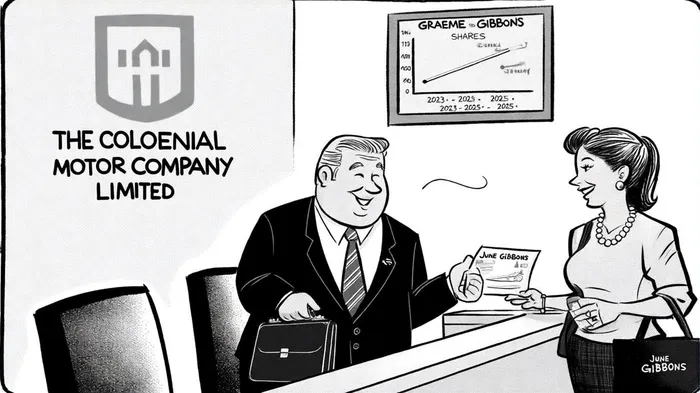
Data from Simply Wall St and Yahoo Finance reveals that CMO insiders have been net buyers of shares over the past three months, with purchases significantly outpacing sales, according to Simply Wall St ownership data. Notably, Graeme Gibbons, an Executive Director, invested NZ$145,000 in October 2023 to acquire shares at NZ$6.70 apiece, according to a Simply Wall St valuation, while Group Manager of People June Gibbons recently added NZ$83,000 worth of stock at NZ$8.34 per share, according to a Webull report. These transactions, coupled with the fact that insiders collectively own 66% of the company (valued at NZ$144 million), underscore a strong alignment between leadership and shareholder interests.
The concentration of ownership further reinforces this alignment. Insiders, including the Gibbons family (Graeme at 10%, James at 6.9%, and Stuart at 6.4%), hold the largest stakes in the company, retaining 73% of shares despite some recent selling activity, according to a Journal of Financial Economics analysis. This level of commitment suggests that executives view CMO's challenges-such as the 23.8% decline in half-year trading profit after tax to NZ$6.9 million in December 2024, according to a Simply Wall St analysis-as temporary rather than structural.
Financial Metrics: A Discounted Opportunity
CMO's valuation metrics paint a picture of a company trading at a significant discount to its intrinsic value. As of recent reports, the stock carries a P/E ratio of 14.2x, well below the Oceanian Specialty Retail industry average of 21.1x. More strikingly, CMO's current price of NZ$7.94 is over 20% below its estimated fair value of NZ$44.21, a gap that appears at odds with insider optimism.
This disconnect may reflect broader market skepticism about the retail automotive sector, which has faced headwinds from supply chain disruptions and shifting consumer preferences. However, CMO's recent cost management initiatives and pivot toward used vehicles-credited for the December 2024 performance rebound-suggest a strategic recalibration that insiders clearly endorse.
Academic Validation: Insider Trading as a Predictive Signal
While skeptics may dismiss insider buying as opportunistic, academic research provides a stronger rationale for its predictive power. A 2025 study from Virginia Tech's Pamplin College of Business found that insiders often time trades around fluctuations in retail investor attention, leveraging market sentiment to maximize gains, according to a Virginia Tech study. This behavior, observed in speculative stocks, implies that insider activity can reflect both private information and strategic market timing.
Moreover, a Journal of Financial Economics analysis highlighted that insiders' access to asymmetric information leads to post-trade returns that consistently outperform outsiders'. For CMO, this dynamic could mean that recent insider purchases-particularly those by executives like Graeme Gibbons-are not merely defensive but forward-looking, signaling confidence in the company's ability to capitalize on its cost discipline and used-vehicle focus.
Conclusion: A Case for Strategic Investment
The interplay of insider confidence, discounted valuation, and strategic operational shifts positions CMO as a compelling case study in undervaluation. While the stock's 14.2x P/E ratio and 20% discount to fair value suggest underappreciation of its long-term potential, the sustained insider buying activity-especially by top executives-provides a counter-narrative of optimism.
For investors, the key question is whether the market will eventually recognize the alignment between insider actions and CMO's strategic direction. Given the academic consensus on insider trading as a predictive indicator and the company's recent operational adjustments, the risk-reward profile appears skewed toward upside. As one insider aptly demonstrated, when executives bet their own money on a stock, it's often a sign that the best is yet to come.







Comentarios
Aún no hay comentarios