
Insider Confidence and Strategic Value in GO Residential REIT
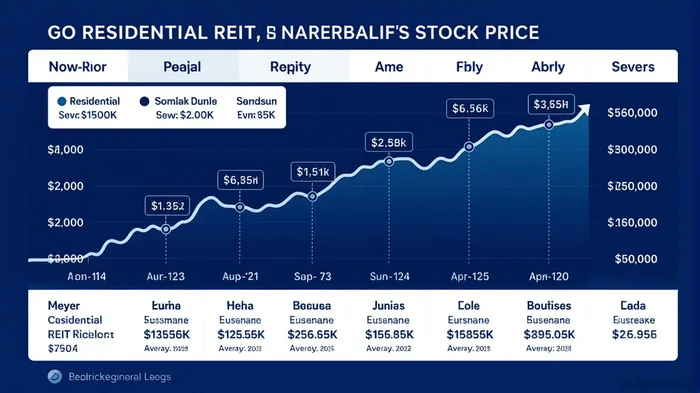
In the dynamic world of real estate investment trusts (REITs), insider transactions often serve as a critical barometer of corporate health and future potential. For GO Residential REIT (GO-U.TO), recent open market purchases by its leadership team—particularly by co-founder and director Meyer Orbach—have sparked renewed interest among investors. These transactions, coupled with the company's strategic initiatives and robust financial metrics, present a compelling case for long-term value creation.
Insider Purchases: A Signal of Conviction
According to a report by GO Residential REIT's investor relations division, Meyer Orbach and Joshua Gotlib, the REIT's co-founder and president respectively, executed significant open market purchases in August and September 2025[1]. Orbach acquired 100,000 units in August at an average price of $12.64–$12.65 per unit, followed by an additional 50,000 units in early September at $12.3656, totaling 250,000 units and a $1.748 million investment[2]. Gotlib, meanwhile, purchased 10,000 units in August at $12.65 per unit[1]. These purchases, concentrated in a narrow price range, suggest management's belief in the REIT's undervaluation and its ability to outperform broader market trends.
Such insider activity is not merely symbolic. Research from Investopedia underscores that insider buying is often interpreted as a bullish signal, as it reflects confidence in the company's operational and strategic direction[3]. For GO Residential REIT, this confidence is further reinforced by its recent capital recycling and value-add initiatives.
Strategic Initiatives: Enhancing Portfolio Resilience
GO Residential REIT's Q3 2025 strategic focus has centered on capital recycling and value-added renovations to drive returns. As detailed in a report by Independence Realty TrustIRT--, the company completed 454 unit renovations under its value-add program, achieving a 16.2% average return on investment[6]. These efforts contributed to a 2.0% increase in net operating income (NOI) for the same-store portfolio in Q2 2025[6]. Additionally, the REIT is pursuing acquisitions, with two Orlando, Florida properties under contract for $155 million, while identifying three properties for sale to optimize its capital structure[6].
These initiatives align with broader REIT sector trends. A J.P. Morgan analysis notes that U.S. REITs are increasingly prioritizing cash flow management and balance sheet flexibility, with 18 REITs projected to raise dividends in Q3 2025[1]. GO Residential REIT's conservative net debt-to-asset ratio of 33.1%[6] and 95.2% occupancy rate[6] position it to capitalize on such opportunities without overleveraging.
Financial Metrics: A Low-Valuation High-Yield Play
GO Residential REIT's financials further justify the optimism. As of Q2 2025, the REIT reported diluted funds from operations (FFO) per unit of $0.18, consistent with prior-year performance[6]. Its enterprise value/EBITDA ratio of 2.71 and enterprise value/revenue ratio of 11.32[1] are significantly lower than historical averages for the S&P 500 and peer REITs, suggesting undervaluation. This is particularly attractive in a market where REITs are trading at slightly elevated cash flow multiples but remain more compelling than equities[3].
Moreover, the REIT's focus on luxury high-rise multifamily properties in high-growth U.S. markets—such as New York, Dallas-Fort Worth, and Cincinnati—positions it to benefit from sustained demand for premium rental housing[1]. J.P. Morgan Research anticipates REIT earnings growth to accelerate to nearly 6% in 2026, driven by improved capital market conditions[4], a trend GO Residential REIT is well-positioned to exploit.
Broader Market Context and Investor Implications
The REIT sector's strategic activity in 2025, including the $10.80-per-unit acquisition of Dream Residential REIT by Morgan Properties[5], highlights the potential for value unlocking through mergers and acquisitions. While GO Residential REIT has not pursued such a path, its insider purchases and disciplined capital allocation suggest a preference for organic growth and shareholder alignment.
For investors, the combination of insider confidence, strategic agility, and attractive valuation metrics creates a compelling risk-reward profile. However, as with any investment, due diligence is essential. The REIT's exposure to interest rate fluctuations and regional economic shifts—particularly in its Sunbelt and Midwest markets—requires ongoing monitoring.
Conclusion
GO Residential REIT's recent insider purchases, strategic initiatives, and financial discipline collectively signal a strong foundation for long-term value creation. Management's willingness to invest in its own shares at current price levels, coupled with its focus on capital recycling and NOI growth, underscores its conviction in the REIT's trajectory. For investors seeking exposure to a well-positioned, undervalued REIT with insider-aligned incentives, GO Residential REIT offers a compelling opportunity in the evolving real estate landscape.







Comentarios
Aún no hay comentarios