
Inpex's Strategic Share Buyback: A Catalyst for Enhanced Shareholder Value?
Inpex's Strategic Share Buyback: A Catalyst for Enhanced Shareholder Value?
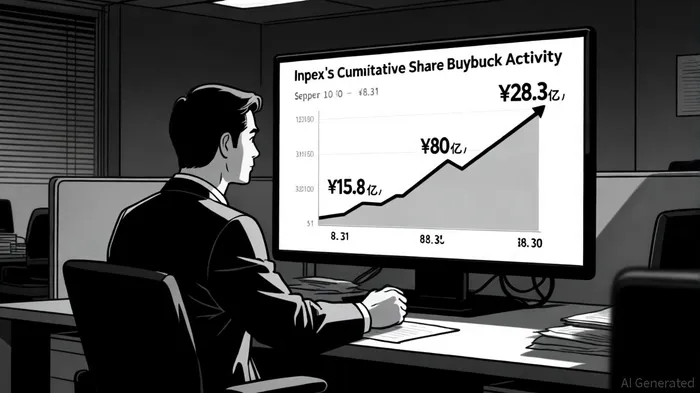
Inpex Corporation's recent share buyback program has reignited debates about its strategic value in enhancing shareholder returns while balancing long-term financial stability. The company announced a ¥80 billion buyback initiative on August 8, 2025, authorizing the repurchase of up to 50 million shares (4.17% of issued capital) through December 31, 2025. By September 30, Inpex to repurchase 11.4 million shares, including a ¥12.5 billion acquisition in September alone. This aggressive capital return strategy, coupled with a Pestel Analysis report noting a raised 2025 net profit forecast of ¥370 billion (a 23% increase), underscores confidence in its liquidity and operational performance.
Financial Rationale and Funding Strategy
The buyback aligns with Inpex's broader capital allocation priorities, which emphasize optimizing shareholder returns while funding growth projects. According to a Marketscreener report, the company plans to allocate over ¥1.8 trillion to growth initiatives (e.g., LNG expansion) and ¥400 billion to shareholder returns during 2025–2027. The current buyback program, which has increased from ¥50 billion to ¥80 billion, reflects a recalibration of priorities amid strong cash flow generation.
Funding for the buyback appears to rely on Inpex's robust liquidity position. As of June 2025, the company held ¥60.7 million in treasury shares and reported a net debt-to-EBITDA ratio of 0.58, indicating conservative debt management, according to a Simplywall.st analysis. However, analysts caution that Inpex's free cash flow conversion rate of 42% of EBIT-a metric that measures how effectively earnings translate into cash-could strain its ability to sustain large buybacks without impacting growth investments, per Inpex's Consolidated Financial Results.
Debt Implications and Risk Assessment
While Inpex's debt profile remains stable, the buyback's scale raises questions about long-term financial flexibility. A report by Simplywall.st notes that the company's interest coverage ratio stands at 36.2 times EBIT, a strong buffer against refinancing risks. Yet, the buyback's cumulative cost-nearly 35% of its ¥80 billion authorization-could pressure cash reserves if market conditions deteriorate. For context, Inpex's March 2025 revenue fell 10% year-on-year to ¥536.8 billion, signaling potential volatility in energy markets Inpex H1 revenue falls 14.5%.
Market Reaction and Strategic Impact
The buyback has already influenced investor sentiment. Inpex's stock surged 15.2% in the month following the announcement, trading at a P/E ratio of 7x-well below the industry average of 12.4x. A discounted cash flow (DCF) analysis further suggests the stock is undervalued by 16.2%, implying the buyback could accelerate value realization for shareholders.
Strategically, the program reinforces Inpex's commitment to capital efficiency. By reducing shares outstanding, the company aims to boost earnings per share (EPS) and signal confidence in its long-term prospects. This aligns with its LNG-focused growth strategy, particularly projects like Ichthys, which benefit from favorable currency exchange rates, according to a Filingreader report.
Conclusion: A Calculated Move or Overreach?
Inpex's share buyback represents a calculated effort to reward shareholders while maintaining financial discipline. The program's success hinges on its ability to balance buybacks with growth investments and navigate potential cash flow constraints. For investors, the key question is whether this strategy will sustain Inpex's competitive edge in a volatile energy sector-or if it risks overleveraging its balance sheet in pursuit of short-term gains.
For now, the data suggests a cautiously optimistic outlook. With over ¥51.7 billion remaining in the buyback authorization as of September 30, Inpex has ample room to execute its plan without compromising its debt metrics. If the company can maintain its strong EBIT margins and free cash flow generation, the buyback could prove a pivotal catalyst for long-term value creation.







Comentarios
Aún no hay comentarios