
Innovent's Mazdutide: A Dual-Action Disruptor in China's GLP-1 Market
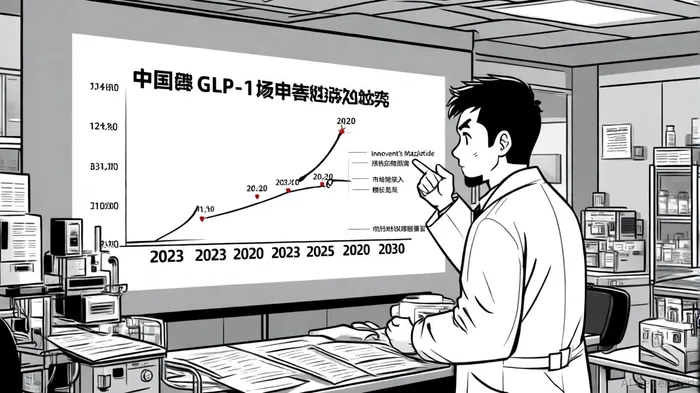
Innovent Biologics' recent National Medical Products Administration (NMPA) approval of mazdutide for glycemic control in adults with type 2 diabetes (T2D) marks a pivotal moment in China's metabolic disease landscape. As the first dual glucagon (GCG)/glucagon-like peptide-1 (GLP-1) receptor agonist to secure regulatory clearance, mazdutide combines the glucose-lowering benefits of GLP-1 with the fat-burning properties of glucagon, offering a novel mechanism to address the intertwined epidemics of diabetes and obesity. With China's GLP-1 market projected to grow at a compound annual rate of 25.2% through 2030[1], Innovent's entry could redefine competitive dynamics and accelerate its ascent as a biotech leader.
Regulatory Milestone and Clinical Efficacy
Mazdutide's NMPA approval for T2D, announced on September 19, 2025[2], was underpinned by robust Phase 3 trials—DREAMS-1 and DREAMS-2—which demonstrated its superiority over existing therapies. In DREAMS-1, the 6 mg mazdutide group achieved a mean HbA1c reduction of -2.15% at Week 24, compared to -0.14% in the placebo group[3]. Similarly, DREAMS-2 reported a -1.73% HbA1c drop in the 6 mg group versus -1.38% with dulaglutide[3]. These results, coupled with a -7.81% to -9.24% body weight reduction in the same trials[3], underscore its dual therapeutic potential.
The drug's safety profile aligns with established GLP-1 agonists, with no new signals identified in clinical trials[3]. This is critical in a market where patient adherence is often hindered by gastrointestinal side effects. Innovent's innovative injection device—a hidden-needle, single-use design—further enhances user experience[3], a key differentiator in a crowded field.
Market Dynamics and Competitive Positioning
China's GLP-1 market is a high-stakes arena dominated by global giants like Novo NordiskNVO-- (Wegovy) and Eli LillyLLY-- (Zepbound), but it is also witnessing a surge in domestic innovation. Innovent's mazdutide enters this fray with a dual mechanism that not only outperforms monotherapy GLP-1 drugs but also addresses comorbidities like non-alcoholic steatohepatitis (NASH) and cardiorenal complications[4].
For context, Zepbound (tirzepatide) has shown 20.2% average weight loss in trials[5], while Wegovy (semaglutide) achieves 13.7%[5]. Mazdutide's 14.8% weight reduction in the 6 mg GLORY-1 trial[3] positions it competitively, particularly in China, where liver fat reduction (up to 80.24% in the 6 mg group[3]) is a pressing unmet need.
However, pricing and reimbursement will determine mazdutide's market penetration. While no official pricing has been disclosed, Innovent's strategy to seek inclusion in the National Reimbursement Drug List (NRDL) is crucial. The 2024 NRDL negotiations saw an average price reduction of 63%[6], a precedent that could pressure Innovent to lower list prices for broad accessibility. Yet, its dual mechanism and clinical differentiation may justify a premium, especially for patients with comorbidities.
Strategic Expansion and Growth Trajectory
Innovent is not resting on its laurels. The company is pursuing expanded indications for mazdutide, including adolescent obesity and metabolic dysfunction-associated steatotic liver disease (MASH)[3]. A head-to-head trial against Novo Nordisk's semaglutide in early T2D is also in the pipeline[3], signaling a bold move to challenge market leaders.
Financially, mazdutide's potential is staggering. Evaluate Intelligence estimates it could reach $1.3 billion in sales by 2030[3], capitalizing on China's 140 million T2D patients and 540 million overweight/obese adults[7]. This aligns with the “Healthy China 2030” initiative, which prioritizes early pharmacological intervention for chronic diseases[3].
Risks and Considerations
Despite its promise, mazdutide faces headwinds. The entry of biosimilars post-Wegovy's patent expiry in 2026 could erode margins[3]. Additionally, NRDL negotiations may force steep discounts, impacting profitability. However, Innovent's collaboration with Eli Lilly—a global GLP-1 leader—provides a strategic buffer, leveraging Lilly's global expertise while retaining Chinese market control[3].
Conclusion
Innovent's mazdutide represents a paradigm shift in China's GLP-1 landscape. Its dual mechanism, clinical efficacy, and patient-centric design position it to capture significant market share, particularly in a healthcare system increasingly prioritizing metabolic health. For investors, the drug's potential to disrupt a $4.778 billion market by 2030[1]—coupled with Innovent's aggressive label expansion strategy—makes it a compelling long-term bet.





Comentarios
Aún no hay comentarios