
Infrastructure Safety Risks and Their Implications for Construction and Engineering Firms in China
The collapse of the newly constructed Hongqi Bridge in Sichuan province in November 2025 has sent shockwaves through China's infrastructure sector, exposing critical vulnerabilities in engineering quality and regulatory oversight. This incident, which occurred months after the bridge's completion, underscores the urgent need for investors to scrutinize ESG (Environmental, Social, and Governance) compliance and safety protocols in construction projects. As Chinese authorities tighten regulations and the insurance market adapts to rising risks, strategic investments in ESG-compliant firms and infrastructure insurance could offer both risk mitigation and growth opportunities.
A Wake-Up Call: The Hongqi Bridge Collapse
The Hongqi Bridge, a vital link to Tibet, partially collapsed after early warning signs-such as cracks in surrounding slopes-prompted authorities to close it just hours before the disaster, according to a BBN Times report. Built by the Sichuan Road & Bridge Group, the structure was designed to withstand magnitude 8.0 earthquakes but failed under the combined stress of landslides, heavy rains, and pre-existing geological instability, Reuters reported Reuters report. While no lives were lost, the incident has sparked a national debate on construction safety, with experts calling for AI-driven monitoring systems and more resilient engineering designs, as noted in the BBN Times report.
According to a Reuters report, the collapse has intensified scrutiny of China's infrastructure projects, particularly in high-risk regions. Investigations are underway to determine whether design flaws or substandard materials contributed to the failure, Reuters reported. This event is a stark reminder that even "engineering marvels" can falter without rigorous safety standards and real-time risk monitoring.
Regulatory Responses and ESG Reforms
In the aftermath, Chinese regulators have accelerated efforts to strengthen ESG frameworks. The Ministry of Housing and Urban-Rural Development has introduced stricter mandates for climate risk disclosure and corporate accountability, aligning with international sustainability standards, as reported by RBHR Forum. These policies emphasize not just transparency but proactive risk mitigation, such as enhanced geological surveys and AI-powered structural health monitoring.
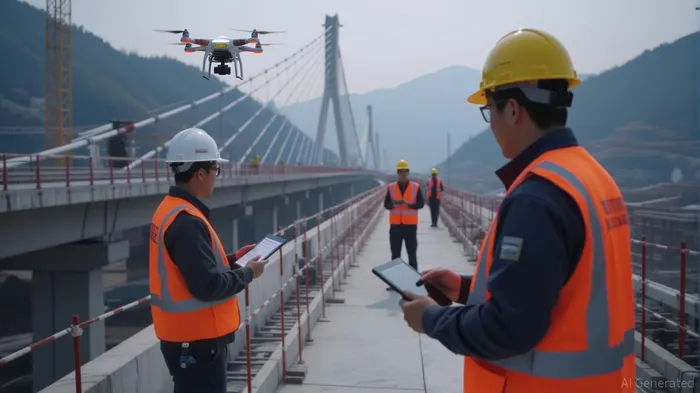
The collapse has also amplified calls for ESG compliance in construction. As noted in the Reuters report, the incident highlights the inadequacy of current safety protocols in high-risk areas. Investors must now weigh whether firms adhere to these evolving standards. For example, companies integrating AI sensors and predictive maintenance into their projects may gain a competitive edge, while those relying on outdated practices could face reputational and financial risks.
Infrastructure Insurance: A Growing Necessity
The collapse has also spotlighted the rising importance of infrastructure insurance. With China's infrastructure market projected to expand significantly, insurers are recalibrating risk models to account for geological instability and climate-related threats. For instance, the concrete block making machines market-critical for sustainable construction-is expected to grow at a 5.7% CAGR through 2035, driven by government-led projects, according to a OpenPR report. However, this growth comes with heightened exposure to disasters like the Hongqi Bridge collapse.
Experts argue that infrastructure insurance is no longer optional but essential. As highlighted in a GlobeNewswire report, partnerships between insurers and pharmaceutical firms-such as MediTrust Health and Sino Biopharm-are pioneering models that integrate risk management with innovation. While this example focuses on healthcare, the principle applies to infrastructure: proactive insurance strategies can cushion financial losses and ensure project continuity.
Strategic Investment Opportunities
For investors, the key takeaway is clear: prioritize firms that embed ESG compliance and advanced safety measures into their operations. Construction companies adopting AI-driven monitoring, such as those leveraging real-time geological data, are better positioned to navigate regulatory scrutiny and avoid costly failures. Similarly, infrastructure insurers with expertise in climate risk modeling-like those adapting to China's evolving ESG mandates-stand to benefit from increased demand.
The Hongqi Bridge collapse is a cautionary tale, but it also presents an opportunity. By aligning with firms that prioritize safety and sustainability, investors can mitigate risks while capitalizing on China's infrastructure boom. As the country refines its ESG framework, those who act swiftly will find themselves ahead of the curve.







Comentarios
Aún no hay comentarios