
Infrastructure Safety Risks in Emerging Markets: Investor Due Diligence in China's Public Works Sector
Regulatory Risks: A System in Flux
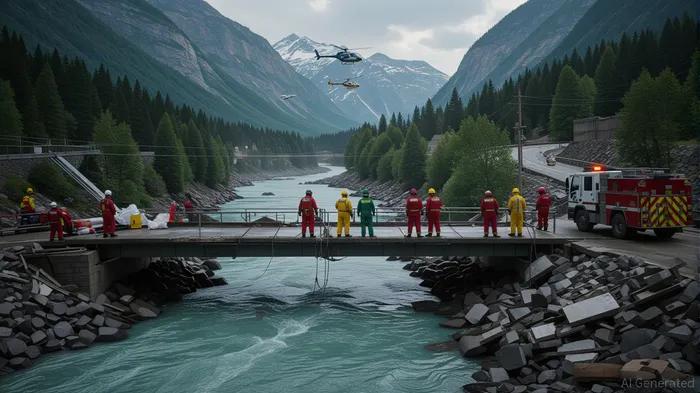
The Hongqi Bridge collapse has reignited debates about China's infrastructure safety protocols. Preliminary investigations point to a combination of heavy rainfall, unstable terrain, and potential construction oversight as contributing factors, according to a Zoombangla video. Experts like Dina Tang and Minshui Huang have long warned of recurring issues in Chinese bridge projects, including rushed timelines, insufficient geotechnical surveys, and environmental neglect, as reported by a IBTimes article. The bridge's proximity to the Shuangjiangkou Hydropower Station reservoir further complicates the analysis, as fluctuating water levels and sedimentation may have exacerbated instability, the same article notes.
Chinese authorities have responded by launching a full investigation and emphasizing the need for stricter geotechnical monitoring, as noted in a Meyka blog post. However, the incident highlights a broader challenge: balancing rapid infrastructure expansion with long-term safety. Regulatory reforms, if implemented, could increase compliance costs for developers and delay projects, directly impacting investor returns.
Economic Impacts: Costs of Complacency
The economic fallout from the Hongqi Bridge collapse is multifaceted. While no casualties were reported-thanks to the bridge's preemptive closure-similar incidents elsewhere have led to costly legal battles and operational disruptions. For instance, the 2024 collapse of Baltimore's Francis Scott Key Bridge resulted in $3 billion in lawsuits and a three-month port closure, illustrating the financial risks of infrastructure failures, as reported by a CBS News article. In China, the Hongqi Bridge collapse may trigger increased scrutiny of construction firms, leading to higher insurance premiums, extended project timelines, and greater capital expenditures for safety upgrades.
Moreover, the incident could deter foreign investment in China's public works sector. A 2024 study by Bloomberg noted that infrastructure quality concerns have already led to a 15% decline in private equity inflows into Chinese construction projects, as noted in a Hellenic Shipping News article. If regulatory reforms are delayed or poorly enforced, global investors may face heightened exposure to project-specific risks, such as cost overruns and reputational damage.
Reputational Risks: Trust in the Balance
Reputational damage is perhaps the most insidious risk for investors. The Hongqi Bridge collapse has eroded public confidence in China's infrastructure quality, particularly in regions prone to geological instability. Social media videos of the bridge's collapse went viral, amplifying scrutiny of the Sichuan Road & Bridge Group and the broader construction sector, as noted in a BBN Times article. Such incidents can strain relationships with international stakeholders, especially as Chinese-built infrastructure becomes a cornerstone of global connectivity initiatives like the Belt and Road.
For example, the collapse has already prompted calls for transparency in projects across Southeast Asia and Africa, where Chinese firms dominate. A Reuters analysis found that 30% of Belt and Road infrastructure projects in high-risk zones lack publicly available geotechnical assessments, as reported in a Reuters article. This opacity could deter partnerships with local governments and private investors, further complicating capital flows.
Conclusion: Navigating the New Normal
The Hongqi Bridge collapse is not an isolated event but a symptom of systemic challenges in emerging market infrastructure. For investors, the key takeaway is clear: due diligence must extend beyond financial metrics to include rigorous geotechnical evaluations, regulatory alignment, and reputational risk assessments.
Global investors should prioritize projects with transparent governance structures and third-party safety audits. Additionally, diversifying exposure across regions and sectors can mitigate the impact of localized failures. As China's infrastructure sector evolves, those who adapt to the new safety paradigm will be best positioned to navigate the risks-and opportunities-of emerging markets.







Comentarios
Aún no hay comentarios