
Infrastructure Safety Risks in China's Rapid Development: Assessing the Impact on Construction and Engineering Sectors
The Hongqi Bridge Collapse: A Case Study in Geotechnical Challenges
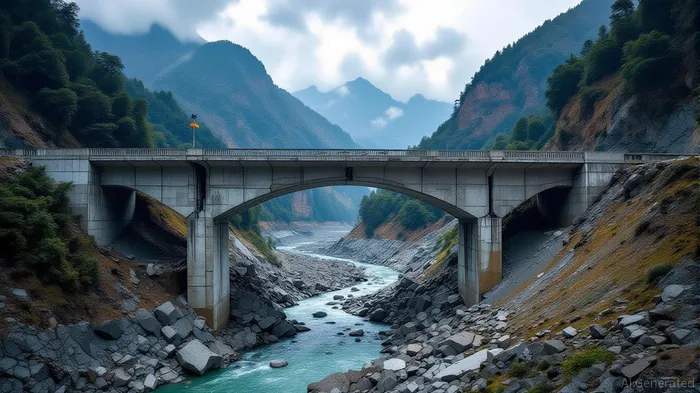
The Hongqi Bridge, a 758-meter structure connecting Sichuan to Tibet, partially collapsed in November 2025 due to mountain slope instability and landslides, as reported. Engineers had observed cracks in the roadbed and surrounding slopes days prior, prompting a preemptive closure of the bridge, as ZoomBangla reported. Despite its design to withstand magnitude-8.0 earthquakes, the structure succumbed to ground shifts exacerbated by heavy rainfall and water accumulation from a nearby reservoir, as BBN Times reported.
The incident highlights the unique challenges of building in China's mountainous western regions, where geological instability and seasonal weather patterns create a volatile environment for infrastructure projects, as ZoomBangla reported. According to a report by Bloomberg, the collapse has intensified scrutiny over the adequacy of design standards, material quality, and construction oversight in such projects, as Economic Times reported.
Sector-Wide Vulnerabilities: From Design to Oversight
Experts have identified three key vulnerabilities in China's construction sector:
1. Geotechnical Risks: Mountainous regions like Sichuan are prone to landslides and terrain shifts, which can compromise even well-engineered structures, as ZoomBangla reported.
2. Construction Oversight: The Hongqi Bridge, built by the Sichuan Road & Bridge Group, had shown early warning signs that were addressed but not fully mitigated, as Times Now News reported. This raises questions about the rigor of risk assessments and real-time monitoring during operations.
3. Material Quality: While no direct structural defects were cited in the collapse, public skepticism persists about the use of substandard materials in cost-driven projects, as Economic Times reported.
A recent analysis by Reuters notes that such incidents could trigger a broader review of infrastructure projects in geologically sensitive areas, potentially leading to stricter safety inspections and revised design codes, as ZoomBangla reported. However, the absence of immediate policy changes post-collapse suggests that regulatory reforms may lag behind public demand for accountability, as BBN Times reported.
Investment Risks: Navigating a Shifting Landscape
The Hongqi Bridge collapse has already impacted investor sentiment. According to Marketscreener, firms like Longjian Road & Bridge Co., Ltd.-which recently secured a 441-million-yuan highway contract in Heilongjiang-now face heightened scrutiny over their project management and safety records, as Marketscreener reported. This could delay approvals for new projects and increase insurance and compliance costs.
For the broader sector, the incident underscores the need for robust risk management frameworks. Investors must weigh the following:
- Regulatory Scrutiny: Potential policy shifts toward stricter safety standards could increase project costs and timelines.
- Reputational Damage: Companies linked to high-profile failures may struggle to secure future contracts.
- Geographical Exposure: Projects in unstable regions like Sichuan or Yunnan carry inherently higher risks, necessitating diversified portfolios.
Conclusion: Balancing Growth and Safety
China's infrastructure ambitions remain vital to its economic strategy, but the Hongqi Bridge collapse serves as a stark reminder of the perils of rapid development. For the construction and engineering sectors, the path forward requires a delicate balance between innovation and caution. Investors must prioritize firms with transparent safety protocols, advanced geotechnical expertise, and a track record of navigating complex environments.
As the Sichuan provincial government initiates its investigation, as Times Now News reported, the coming months will reveal whether this incident catalyzes meaningful reforms-or merely becomes another cautionary tale in China's infrastructure saga.







Comentarios
Aún no hay comentarios