
Infrastructure Risk in Financial Markets: The CME Data Center Outage and Its Implications for Market Resilience
The November 2025 CME GroupCME-- data center outage, triggered by a cooling system failure at CyrusOne's Aurora, Illinois facility, has exposed critical vulnerabilities in the infrastructure underpinning global financial markets. This 10-hour disruption, which halted trading in futures, options, and commodities-including contracts tied to the S&P 500 Index and U.S. Treasury futures-underscored the fragility of systems reliant on concentrated infrastructure. The incident not only froze price discovery for key benchmarks but also amplified volatility in safe-haven assets like gold, sending prices to record highs. For investors and regulators alike, the outage serves as a stark reminder of the systemic risks posed by overreliance on centralized data centers and the urgent need for diversification in critical financial infrastructure.
Systemic Risk and the Fragility of Centralized Infrastructure
The CMECME-- outage highlights a broader trend: the increasing concentration of financial market infrastructure in a handful of geographically limited data centers. CyrusOne's Aurora facility, a primary hub for CME for nearly two decades, became a single point of failure when its chiller plant malfunctioned. While CME's disaster recovery plan included a secondary data center in New York, the exchange opted to attempt recovery in Aurora, underestimating the complexity of restoring cooling systems. This decision, coupled with CyrusOne's delayed response, prolonged the outage and exacerbated market instability.
Such events amplify systemic risk by creating cascading effects across interconnected markets. During the outage, liquidity dried up for critical derivatives, forcing traders to seek alternative platforms for hedging and position adjustments. The disruption also exposed the limitations of current contingency protocols, as even a well-established exchange like CME struggled to maintain continuity. According to a Bloomberg report, the incident "revealed how a single infrastructure failure can paralyze essential financial operations, particularly for high-frequency trading firms and institutional investors".
Diversification as a Mitigation Strategy
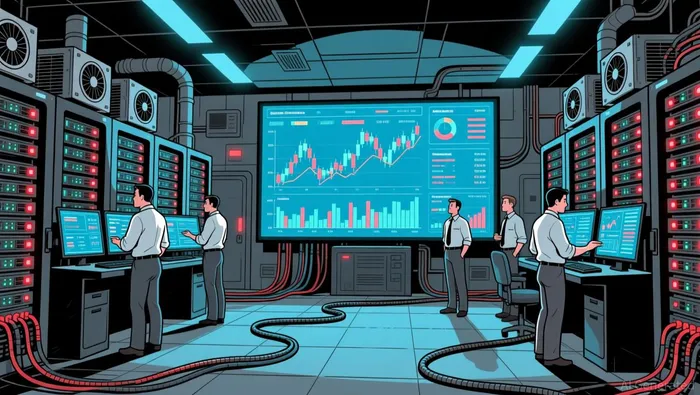
The CME outage has reignited debates about the need for geographic and technological diversification in financial infrastructure. Best practices now emphasize distributed systems, cloud-based redundancy, and the use of alternative trading venues to avoid overreliance on a single exchange or data center. For instance, market participants are increasingly advised to hedge across over-the-counter (OTC) markets and regional exchanges for commodities and derivatives, reducing exposure to infrastructure-specific risks.
Moreover, the incident has highlighted the importance of robust disaster recovery protocols. While CME's existing plan included a secondary data center, the failure to activate it promptly underscores the need for more rigorous testing of contingency measures. Regulatory bodies are now expected to push for stricter requirements, including mandatory geographic diversification of critical systems and real-time monitoring of infrastructure resilience.
Regulatory Responses and the Path Forward
In the wake of the outage, regulatory scrutiny has intensified, with calls for reforms aligned with frameworks like the EU's Digital Operational Resilience Act (DORA). According to a Financial Times report, regulators are likely to mandate enhanced redundancies, stricter disaster recovery timelines, and greater transparency in infrastructure management. These measures aim to ensure that market operators can withstand disruptions without compromising liquidity or price discovery.
For investors, the implications are clear: portfolios must account for infrastructure risk as a non-traditional but critical factor. This includes not only diversifying across asset classes but also evaluating the resilience of the underlying infrastructure supporting those assets. As demand for AI and high-performance computing drives up energy and cooling demands for data centers, the pressure to modernize infrastructure will only grow.
Conclusion
The CME data center outage is a wake-up call for the financial industry. It has exposed the vulnerabilities of centralized infrastructure and the cascading risks that follow when systems fail. While diversification and regulatory oversight can mitigate these risks, the incident underscores a deeper truth: in an era of hyper-connected markets, resilience is not optional—it is a necessity. Investors, regulators, and market operators must act swiftly to ensure that the lessons of November 2025 are not repeated.







Comentarios
Aún no hay comentarios