
Infrastructure Risk and Engineering Oversight in Emerging Markets: The Impact of China's BRI Failures on Global Investor Sentiment and Funding Flows
Engineering Oversights and Structural Failures: A Catalyst for Distrust
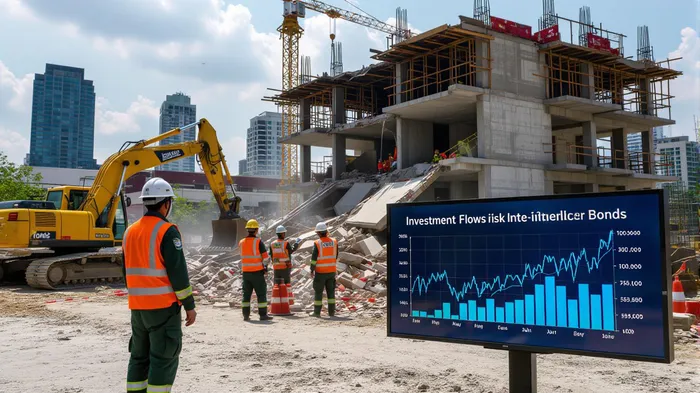
The collapse of a 33-story building in Bangkok, Thailand, constructed by China Railway No. 10 Engineering Group during a 2024 earthquake, underscored alarming technical shortcomings. Thai investigators linked the disaster to substandard steel and lax safety protocols, raising questions about the quality of materials and oversight in BRI-linked projects, according to a SweetTNT report. Similarly, the 2024 roof collapse at Serbia's Novi Sad train station, built by China Railway Construction Corp, killed 14 people and highlighted recurring issues of poor design and execution, as noted in a Mizzima analysis. These incidents, coupled with the underutilization of Pakistan's Gwadar Port and Kenya's loss-making Standard Gauge Railway, have eroded confidence in the reliability of Chinese infrastructure, according to a VRF Bharat analysis.
The root causes of these failures are multifaceted. Corruption, cost-cutting, and weak regulatory enforcement in host countries have enabled subpar construction practices, as SweetTNT has detailed. In Kenya, a bridge collapsed shortly after being inspected by the president, while in Angola, a Chinese-built hospital was evacuated due to structural cracks, as SweetTNT has reported. Such incidents amplify concerns about the long-term viability of BRI assets, deterring investors who prioritize durability and transparency.
Financial Market Reactions: Credit Downgrades and Funding Shifts
The financial implications of BRI failures are increasingly evident in credit rating downgrades and shifting capital allocations. Moody's has flagged growing debt burdens in BRI-partner countries like Zambia and Ecuador, where unsustainable loans have led to defaults and renegotiations, according to a FDD analysis. Zambia's debt-to-GDP ratio, inflated by BRI projects, reached 120% by 2018, culminating in a 2020 sovereign default, as FDD noted. Similarly, Ecuador's Coca Codo Sinclair hydroelectric dam, plagued by structural flaws and operational inefficiencies, has become a symbol of BRI's financial risks, FDD reported.
Credit rating agencies have responded cautiously. S&P Global notes that while the net rate of sovereign downgrades in emerging markets has slowed, structural vulnerabilities-particularly in frontier economies-remain a concern, as noted in an S&P Global research. Moody's has also highlighted the risks of geopolitical realignments and trade tensions, which amplify uncertainties for BRI-linked economies, according to a S&P Global report. These dynamics have prompted investors to recalibrate their portfolios, favoring projects with clearer governance frameworks and sustainability metrics.
Investor Sentiment and the Rise of Alternatives
The BRI's challenges have accelerated a shift in investor sentiment toward alternative infrastructure financing models. Competing initiatives, such as the India-Middle East-Europe Economic Corridor (IMEC) and the G7's Partnership for Global Infrastructure and Investment, are gaining traction due to their emphasis on transparency and local ownership, as VRF Bharat has noted. By 2025, Chinese overseas infrastructure lending had declined by 40% compared to 2016 levels, VRF Bharat reported, signaling a loss of momentumMMT-- for the BRI.
Private sector participation in China's domestic infrastructure-such as green energy and smart city projects-has also emerged as a counterbalance. The Chinese government's push for private stakes in energy and hydropower projects, including allowing stakes above 10%, reflects an attempt to diversify funding sources, as noted in a TradingView analysis. However, these efforts may not fully offset the reputational damage caused by overseas missteps.
Conclusion: Navigating the New Risk Landscape
For investors, the BRI's failures underscore the importance of rigorous due diligence in emerging market infrastructure. Technical oversights, debt sustainability risks, and geopolitical tensions now demand a more nuanced approach to capital allocation. While China's domestic infrastructure market continues to grow, the global BRI's credibility hinges on addressing systemic issues in project quality and governance. As alternative initiatives gain ground, the era of "debt diplomacy" may give way to a more competitive, standards-driven landscape-one where transparency and sustainability, rather than scale, dictate investment success.







Comentarios
Aún no hay comentarios