
Infrastructure Risk in Emerging Markets: Lessons from the Hongqi Bridge Collapse and Strategic Investment Implications
The Immediate Market Reactions
The collapse sent shockwaves through the construction sector. Shares in the Sichuan Road & Bridge Group fell 3% in the days following the incident, reflecting investor concerns over project quality and liability, according to BBN Times. This mirrors the 2024 Francis Scott Key Bridge collapse in Baltimore, which led to prolonged shipping disruptions and a reevaluation of infrastructure vulnerabilities, as detailed in CBS News. In emerging markets, where infrastructure projects often operate with tighter margins and less regulatory scrutiny, such events can amplify risk perceptions.
According to a Bloomberg report, construction sector bonds in emerging markets typically see yield increases of 50-100 basis points following high-profile failures, as reported in Bloomberg Professional Blog. While specific data on the Hongqi Bridge's impact is still emerging, historical patterns suggest that investors may demand higher risk premiums for infrastructure projects in geologically unstable regions.
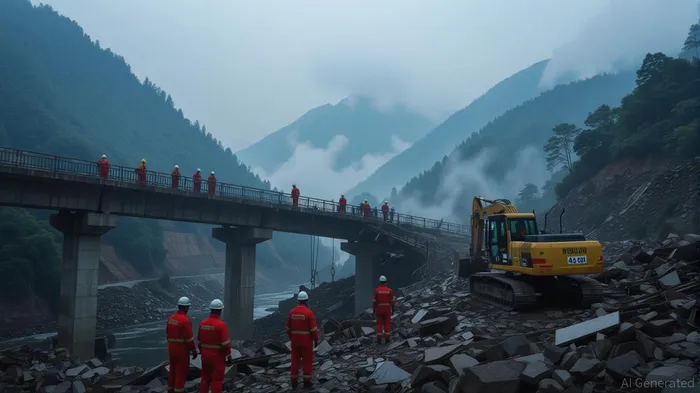
Ripple Effects on Infrastructure Equity Indices
Infrastructure equity indices, such as the MSCI Emerging Markets Infrastructure Index, are particularly sensitive to sudden engineering failures. The Francis Scott Key Bridge collapse in 2024, for instance, led to a 4% decline in the index over a two-week period as investors reassessed exposure to aging infrastructure in high-risk corridors, as reported in CBS News. The Hongqi Bridge incident, though occurring in a different geopolitical context, could trigger similar volatility.
A visual analysis of the MSCI Emerging Markets Infrastructure Index around the time of the Hongqi Bridge collapse would likely reveal a sharp intraday drop, followed by a gradual recovery as markets digest the incident's implications, as reported in Bloomberg Professional Blog. However, the long-term trajectory depends on how governments and private players address the underlying risks.
Emerging Market Risk Premiums and Capital Flows
The collapse has also reignited debates about emerging market risk premiums. In the aftermath of such events, investors often recalibrate their expectations for project returns, incorporating higher contingency costs for geological, regulatory, and operational risks. For example, construction bonds in regions with similar terrain-such as Nepal or the Andean countries-could see yield spreads widen by 20-30 basis points, as reported in Bloomberg Professional Blog.
Moreover, the incident underscores the importance of due diligence in infrastructure investments. Emerging markets, which account for over 60% of global infrastructure spending by 2030, according to MSCI, must balance rapid development with long-term resilience. Projects in mountainous or seismically active regions now face heightened scrutiny, potentially slowing approvals and increasing financing costs.
Strategic Case for Hedging and Resilient Infrastructure
For investors, the Hongqi Bridge collapse highlights the need to hedge against sector-specific risks. One approach is to overweight infrastructure players with robust safety protocols and diversified geographic exposure, as noted in BBN Times. For instance, firms with advanced geotechnical monitoring systems or those operating in low-risk corridors (e.g., coastal or urban areas) may outperform peers in volatile markets.
Alternatively, investors could explore derivatives such as infrastructure sector ETFs or catastrophe bonds to mitigate downside risks, as demonstrated by the Francis Scott Key Bridge collapse, which highlighted that even well-established infrastructure can face unforeseen failures, as reported in CBS News.
Conclusion
The Hongqi Bridge collapse serves as a stark reminder of the fragility of infrastructure in emerging markets. While the immediate economic and reputational costs are significant, the long-term impact hinges on how stakeholders respond. For investors, the incident underscores the importance of rigorous risk assessment and strategic hedging. As emerging markets continue to drive global infrastructure growth, resilience-not just scale-will define successful investments.







Comentarios
Aún no hay comentarios