
Infrastructure Resilience and Revenue Stability: Transurban's Post-Pandemic Traffic Growth as a Model for Long-Term Investors
In the post-pandemic era, infrastructure operators face a dual challenge: restoring pre-pandemic traffic volumes while adapting to shifting mobility patterns. For long-term investors, the resilience of toll road operators like Transurban Group offers a compelling case study. According to Transurban's FY25 results, the company reported a 2.7% increase in average daily traffic (ADT) during Q1 2025, signaling sustained urban mobility demand and operational predictability. This growth, despite regional disruptions like Ex-Tropical Cyclone Alfred in Queensland, underscores the structural advantages of toll road infrastructure in a recovering economy.
Post-Pandemic Recovery: A Structural Tailwind
Transurban's Q1 2025 traffic growth reflects broader trends in urban mobility. The company's network averaged 2.5 million trips per day, driven by strong performance in Sydney (+2.4%), Melbourne (+2.0%), and North America (+3.8%), the March quarter update reported. These figures align with global data showing a return to pre-pandemic travel behavior, particularly in discretionary and airport-related traffic, as the same update highlights. For instance, the 10.3% surge in traffic on Sydney's WestConnex and the 6.6% increase on North America's 495 Express Lanes demonstrate how new infrastructure projects amplify demand.
The 2.7% ADT increase is not an isolated event but part of a broad-based recovery. Transurban's proportional toll revenue rose 6.2% in H1 FY25, while operating EBITDA grew 9.4%, demonstrating the revenue stability inherent in toll road assets, according to the FY25 results. This stability stems from inelastic demand for reliable, time-saving infrastructure-a critical factor for investors wary of cyclical industries.
Regional Variability and Operational Resilience
While Transurban's overall traffic growth is robust, regional disparities reveal the company's operational agility. Queensland's ADT declined 0.4% in Q1 2025 due to cyclone impacts, yet underlying growth remained strong at 4.5% when excluding the cyclone period, the March quarter update notes. Such resilience is a hallmark of diversified infrastructure operators, as underperforming regions are offset by high-growth corridors like Sydney's Rozelle Interchange and North America's 95 Express Lanes.
North America's 3.8% ADT increase, driven by investments in the 95 corridor, further illustrates how strategic capital allocation enhances value. As noted in the March quarter update, these projects not only attract traffic but also justify premium toll pricing by reducing congestion.
Risks and Mitigants: Balancing Weather and Finance
Transurban's FY25 results also highlight risks to revenue stability. A 52.4% drop in statutory net profit after tax was attributed to rising finance costs and construction revenue declines. However, the company's focus on cost control and its 7.4% EBITDA growth mitigate these risks, per the FY25 results. For investors, the key takeaway is that while macroeconomic headwinds exist, Transurban's asset base and operational discipline provide a buffer.
Investment Implications: Predictability in an Uncertain World
For long-term investors, Transurban's 2.7% Q1 ADT increase is more than a quarterly figure-it is a signal of predictable cash flows in an unpredictable world. Toll roads, by their nature, offer recurring revenue streams with low marginal costs. Transurban's FY26 distribution guidance, announced alongside its FY25 results, reinforces this predictability, providing a forward-looking anchor for valuation models.
Moreover, the company's post-pandemic performance suggests that urban mobility demand is not only recovering but evolving. As cities invest in congestion-reducing infrastructure, toll road operators with diversified geographies and modernized assets-like Transurban-are well-positioned to capture long-term value.
Conclusion
Transurban's Q1 2025 traffic growth exemplifies the resilience of infrastructure assets in a post-pandemic economy. While regional disruptions and financial pressures persist, the company's ability to deliver consistent traffic increases and revenue stability makes it a compelling case for investors seeking predictable returns. As urban populations grow and mobility needs evolve, toll road operators with strategic assets and disciplined operations will remain critical to both economic and portfolio resilience.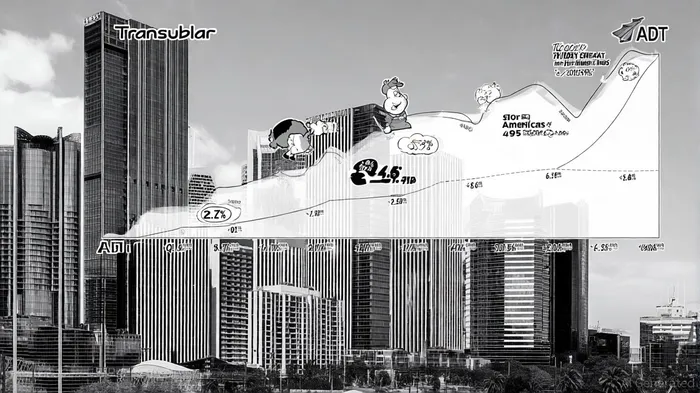







Comentarios
Aún no hay comentarios