
Infrastructure Resilience and Flood Management: Evaluating Long-Term ROI in Climate Adaptation Projects
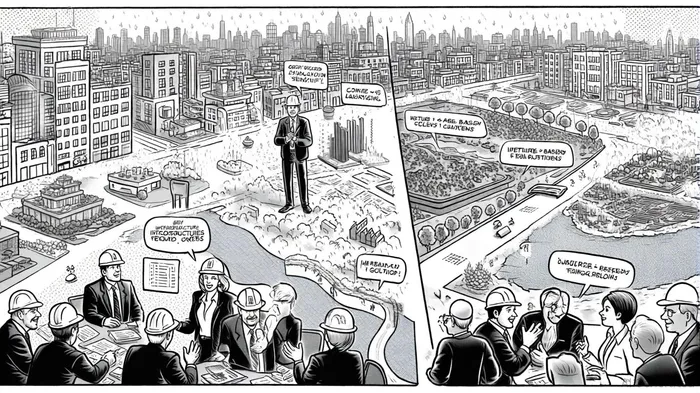
The escalating threats of climate change have transformed infrastructure resilience and flood management from reactive necessities into strategic investments. Recent studies underscore that these projects not only mitigate disaster risks but also deliver substantial long-term economic and social returns. However, evaluating their return on investment (ROI) requires navigating complex trade-offs between traditional cost-benefit frameworks and the broader, often intangible, benefits of climate adaptation.
The Economic Case for Climate Adaptation
According to a report by the World Resources Institute (WRI), every €1 invested in climate adaptation and resilience generates over €10 in benefits over a decade, with an average return of 27% across 320 projects in 12 countries [1]. This figure is corroborated by Swiss Re, which found that flood adaptation measures yield returns 10 times greater than the costs of post-disaster rebuilding [5]. For instance, the Congressional Budget Office (CBO) estimates that U.S. federal flood adaptation projects reduce flood damage by $2 to $3 per dollar spent [4]. These metrics highlight the economic efficiency of proactive investments, particularly as climate-related disasters become more frequent and severe.
Yet, the value of these projects extends beyond disaster avoidance. Over 50% of the benefits from climate adaptation initiatives occur even in the absence of climate-related disasters, as they enhance everyday infrastructure functionality, improve water supply reliability, and support ecosystem services [3]. For example, the Wuxikou Integrated Flood Management Project in China demonstrated that probabilistic risk analysis and resettlement benefits could be quantified to justify investments in both flood risk reduction and long-term environmental stewardship [2].
Challenges in Quantifying ROI
Traditional Benefit-Cost Analysis (BCA) frameworks, while useful, often fall short in capturing the full spectrum of climate adaptation benefits. Grey infrastructure—such as levees and dykes—focuses narrowly on property risk reduction but may impose environmental costs, such as habitat destruction [1]. In contrast, nature-based solutions (NBS), like wetland restoration and green roofs, offer ancillary benefits including biodiversity enhancement and carbon sequestration. However, these co-benefits are difficult to monetize within conventional BCA models, leading to their underrepresentation in project prioritization [1].
The U.S. Army Corps of Engineers (USACE) has begun addressing this gap through its “Engineering with Nature” initiative, which integrates ecosystem services and distributional equity into project evaluations [1]. Similarly, the European Floods Directive mandates that flood risk assessments consider long-term environmental and social impacts [1]. Despite these advancements, non-structural measures—such as early warning systems and community education—remain challenging to quantify, often excluded from economic rankings due to their indirect and intangible benefits [1].
Case Studies and Policy Implications
The Wuxikou project in China exemplifies how refined BCA frameworks can better capture the multifaceted impacts of flood management. By incorporating probabilistic risk analysis and resettlement benefits, the project demonstrated that investments in integrated flood management yield both direct (e.g., reduced property damage) and indirect (e.g., improved water quality) returns [2]. Such approaches are critical for aligning climate adaptation with sustainable development goals.
In the U.S., the CBO's findings on flood adaptation ROI underscore the importance of federal policy in scaling effective interventions [4]. Meanwhile, the European Union's emphasis on long-term environmental and social analyses in flood risk management highlights the need for holistic metrics that transcend narrow economic calculations [1]. These examples suggest that successful climate adaptation requires not only financial innovation but also institutional frameworks that prioritize equity and sustainability.
Conclusion
Infrastructure resilience and flood management investments are no longer optional—they are imperative for safeguarding economic stability and social welfare in a warming world. While traditional BCA remains a cornerstone of project evaluation, its limitations necessitate the adoption of multi-criteria analysis and ecosystem-based metrics. Policymakers and investors must prioritize frameworks that account for both market and non-market benefits, ensuring that climate adaptation projects deliver equitable, long-term value. As the WRI aptly notes, “We don't need a disaster to justify resilience”—climate adaptation is an investment in the future, not a reaction to the past [3].







Comentarios
Aún no hay comentarios