
Infrastructure Finance in the Post-Pandemic Recovery Era: Capitalizing on Construction-Ready Transport Projects in Politically Stable Markets
The post-pandemic era has ushered in a transformative phase for infrastructure finance, with construction-ready transport projects emerging as a cornerstone of economic recovery in politically stable markets. As governments and private investors prioritize resilience, sustainability, and connectivity, the transportation infrastructure construction market is poised to grow from USD 3.8 trillion in 2025 to USD 5.7 trillion by 2035, driven by a compound annual growth rate (CAGR) of 4.0%, according to a Future Market Insights report. This surge reflects a strategic alignment of public and private capital to address aging systems, urbanization, and climate resilience-a trend underscored by the dominance of public-private partnerships (PPPs) and the rise of blended finance models, as highlighted in a Modern Diplomacy analysis.
The Shift in Infrastructure Finance: From Greenfield to Brownfield
Post-pandemic caution has reshaped infrastructure investment strategies, with sponsors and lenders favoring brownfield and refinancing projects over high-risk greenfield developments, as noted in Dragulin's analysis. This shift is evident in the transport PPP sector, where road projects remain the most popular, though airport PPPs are gaining traction while urban rail projects face declining interest, according to Dragulin's analysis. The extended project preparation period-from eight months in 2019 to 27.3 months in 2024-highlights the complexity of aligning regulatory, environmental, and financial requirements in today's risk-averse climate, a point also raised in Dragulin's analysis.
Blended finance, combining public grants, private equity, and multilateral support, has become a critical tool to mitigate risks and attract capital. For instance, the integration of intelligent transport systems (ITS) and eco-friendly materials in projects like Denmark's Copenhagen metro expansion not only enhances efficiency but also aligns with ESG criteria, making them more attractive to institutional investors, according to an ITF data update.
Case Studies: U.S. and Global Markets in Motion
United States: Urban Transit as a Catalyst for Growth
In politically stable U.S. markets, construction-ready transport projects are driving urban revitalization. Kansas City's Main Street streetcar extension, nearing completion in Q3 2025, exemplifies this trend. The $351 million project has spurred over 1,400 new apartment units and catalyzed developments like the Streetcar Lofts and Arrive KC, which combine residential and commercial spaces with tax incentives, as reported in a Beacon News report. By linking the University of Missouri-Kansas City to Union Station, the extension is projected to boost property values and economic activity in Midtown, a historically underdeveloped area, as described in the Beacon News report.
Meanwhile, Seattle's Light Rail Line 2 extension, set to open in early 2026, faces unique challenges. The Homer M. Hadley floating bridge integration and electrification systems require meticulous engineering to preserve structural integrity. Despite delays and budget overruns-particularly for the West Seattle Link Extension, which now costs $6.8–7.4 billion-the project underscores the long-term value of regional connectivity, as noted in a Sound Transit update.
Global Perspectives: Denmark and Serbia as Strategic Models
Denmark's Timemodellen initiative, aiming to reduce inter-city travel times to under 60 minutes, reflects a national commitment to shifting freight and passenger transport from road to rail, as outlined in an ITF comparison. This policy, supported by increased public funding and political consensus, aligns with Denmark's green transport goals and offers a replicable model for other stable markets.
In Serbia, the development of Pan-European Corridor X-a key transport link connecting Austria, Bulgaria, and Hungary-highlights the role of infrastructure in regional integration. By upgrading roads and rail networks, Serbia positions itself as a logistics hub in the Balkans, attracting foreign investment and aligning with EU standards, as noted in the ITF comparison.
The Role of Technology and Sustainability
Advanced technologies are redefining infrastructure finance. Intelligent transport systems (ITS), such as real-time traffic management and predictive maintenance, reduce operational costs and improve user experience. For example, the Kansas City streetcar's integration with ITS has optimized route efficiency, while Serbia's Corridor X upgrades include smart tolling systems to enhance cross-border trade, according to a Delphos blog.
Sustainability is no longer optional. Projects incorporating low-carbon materials, renewable energy, and circular economy principles are increasingly favored by investors. The U.S. Infrastructure Investment and Jobs Act (IIJA), for instance, allocates $1.2 trillion for climate-resilient infrastructure, including EV charging networks and flood-resistant roadways, as noted in a ConstructionPlacements analysis.
Conclusion: Strategic Opportunities in Stable Markets
The post-pandemic infrastructure landscape offers compelling opportunities for investors willing to navigate regulatory complexity and embrace innovation. Politically stable markets-whether in the U.S., Denmark, or Serbia-demonstrate that construction-ready transport projects can drive economic growth, sustainability, and connectivity. By leveraging PPPs, blended finance, and technology, stakeholders can capitalize on a $5.7 trillion market while addressing global challenges like urbanization and climate change.
As the world moves toward a more interconnected and resilient future, infrastructure finance will remain a linchpin of recovery-and a fertile ground for strategic investment.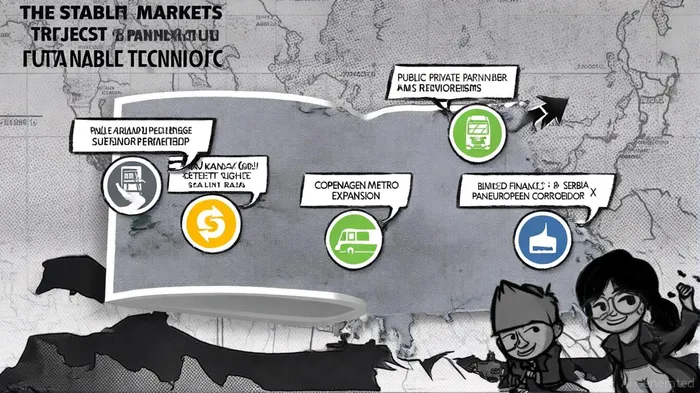







Comentarios
Aún no hay comentarios