
Infrastructure-Driven Growth in Brazil's Logistics Sector: A High-Conviction Play on Port Modernization
Brazil's logistics sector is undergoing a seismic transformation, driven by a national push to modernize port infrastructure and unlock the country's vast export potential. At the heart of this shift is the dragagem do Porto de Suape—a R$199.7 million dredging project that has deepened the port's internal and external channels to accommodate Suezmax oil tankers and 366-meter container ships. This initiative, backed by federal and state funding, is not just a local upgrade but a harbinger of a broader strategy to position Brazil as a global logistics hub. For investors, the implications are clear: infrastructure-led growth is creating a fertile ground for long-term, high-conviction investments in logistics and industrial real estate.
The Suape Dredging Project: A Catalyst for National Ambition
The Porto de Suape project, completed in phases by 2025, is a masterclass in strategic infrastructure planning. By deepening the internal channel to 16.2 meters and the external channel to 20 meters, the port can now handle vessels that were previously restricted by shallow waters. This expansion is part of a R$20 billion national infrastructure agenda for 2025, with R$18 billion sourced from private investors. The project's success is underpinned by a public-private partnership (PPP) model, where the federal PAC3 program and Pernambuco state government share funding and risk, ensuring alignment with global standards.
The environmental and operational rigor of the project—such as transporting dredged sediments to licensed disposal areas—has minimized ecological risks while maximizing efficiency. This approach has attracted global dredging giants like Van Oord/Jan De Nul, whose involvement signals confidence in Brazil's infrastructure ambitions. For investors, the project's completion by Q1 2025 marks a critical milestone: Suape will become the deepest Brazilian public port for container ships and the second-deepest for liquid bulk, directly enhancing its competitiveness against regional rivals like Santos and Paranaguá.
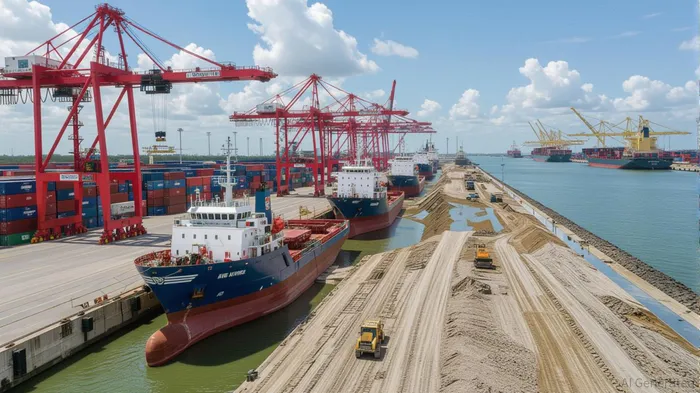
From Ports to Real Estate: Industrial Development in Suape
The dredging project is already catalyzing industrial real estate demand in the Suape Industrial Port Complex. A prime example is Ultracargo's R$155 million expansion, which will add four 10,000 m³ storage tanks for gasoline and ethanol. This project, set to begin in 2025 and operational by 2028, underscores the port's role as a liquid bulk hub. With Suape's existing storage capacity at 157,910 m³ and plans for further expansion, the region is becoming a magnet for logistics and energy infrastructure.
The port's strategic Atlantic location—proximate to the U.S. East Coast and Caribbean trade routes—further amplifies its appeal. By 2026, APM Terminals Suape's R$1.6 billion electrified container terminal will boost capacity by 55%, creating a ripple effect on adjacent real estate. Developers are now eyeing opportunities in warehousing, cold storage, and multimodal hubs, driven by the port's ability to handle post-Panamax vessels and integrate with highway corridors like Bahia's Rota 2 de Julho.
National Infrastructure Momentum: A Multiplier Effect
The Suape project is part of a larger national infrastructure wave. Brazil's logistics market is projected to grow to USD 172.9 billion by 2025, fueled by R$31.7 billion in highway upgrades and R$250 million in grain export infrastructure in Santa Catarina. These projects are interconnected: improved port access reduces logistics costs by 15–20%, making Brazil's agricultural and energy exports more competitive.
For investors, the key is to identify underpenalized assets in regions benefiting from this network. For instance, the R$920 million BNDES-approved program for Suape's infrastructure development includes dredging for new piers and shipyards, creating a pipeline of opportunities in construction and industrial land. Similarly, the R$1.24 billion modernization plan for Santos' passenger terminals highlights the sector's breadth.
Risk Mitigation and Long-Term Conviction
While regulatory uncertainty and environmental scrutiny remain challenges, the government's emphasis on PPPs and performance metrics is mitigating risks. For example, the Merchant Marine Fund and Green Ports Partnership with the Netherlands are attracting ESG-focused capital. Additionally, digitalization—such as Suape's Port Operations Management Information System (PMIS)—has already reduced operational activity time by 50%, offering a blueprint for efficiency.
Investors should prioritize assets with clear alignment to these trends. The Ultracargo expansion, APM Terminals' electrified terminal, and BNDES-backed dredging projects are all high-conviction plays. These investments benefit from both public funding and private-sector execution, reducing exposure to execution risks.
Conclusion: A Strategic Inflection Point
Brazil's logistics sector is at a strategic inflection pointIPCX--. The Suape dredging project exemplifies how infrastructure modernization can unlock export potential, drive industrial real estate demand, and attract global capital. For investors with a long-term horizon, the combination of government-led initiatives, private-sector innovation, and strategic location makes Brazil's ports a compelling case study in infrastructure-driven growth. The time to act is now—before the next wave of dredgers arrives.







Comentarios
Aún no hay comentarios