
Infrastructure-Driven Economic Development in Webster, NY
The FAST NY Grant: A Catalyst for Shovel-Ready Development
The FAST NY Shovel-Ready Grant Program has been pivotal in positioning Webster for growth. The $9.8 million awarded to WEDA is being used to upgrade critical infrastructure near the Xerox campus, including road reconstruction, sanitary sewer systems, and electrical master planning according to WEDA. These improvements are not just about modernization-they are about readiness. By making the area "shovel-ready," the town is signaling to investors that it can accommodate large-scale projects with minimal delays. According to a report by the New York State Department of Economic and Social Development, such grants are part of a broader $283 million initiative to prepare sites across the state for high-tech manufacturing and logistics.
The timing of these upgrades is strategic. With infrastructure work slated for completion by 2025–2026, Webster is creating a window of opportunity for developers to capitalize on newly available land and upgraded utilities. As stated by the Webster Supervisor in August 2025, these improvements will "facilitate Xerox's plans to subdivide and sell parcels of its campus," unlocking 300 acres of brownfield land for industrial use.
Xerox Campus Redevelopment: A Blueprint for Industrial Revitalization
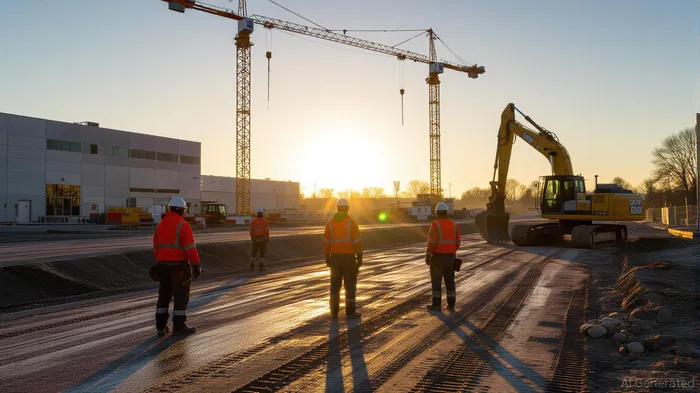
The Xerox campus redevelopment is the cornerstone of Webster's economic strategy. Originally a 300-acre brownfield site, the area is being transformed into a 1 million square foot industrial hub by 2025, targeting sectors like advanced manufacturing and food processing. The project includes the construction of a $650 million fairlife® dairy facility, which is expected to create 250 jobs and become operational by the end of 2025.
Infrastructure upgrades are central to this vision. Road realignment and sewer system enhancements are ensuring the site can support high-tech industries with demanding utility requirements. For example, the realignment of roads around the Xerox campus is improving access for large trucks and machinery, a critical factor for manufacturers evaluating site locations. These changes are not just incremental-they are redefining Webster's competitive edge in the regional industrial market.
Blight Removal and Road Realignment: Unlocking Undervalued Assets
Blight removal efforts, particularly at the 600 Ridge Road site, are another key component of Webster's strategy. The demolition of the long-abandoned building at this location, completed in August 2025, has cleared the way for mixed-use development in the West Webster Hamlet. This project aligns with broader goals to repurpose underutilized properties and create a more walkable, vibrant downtown.
Road realignment projects, such as those funded by the Webster Economic Access Project (a $1.838 million initiative), are further enhancing connectivity. By rehabilitating industrial roadways, the town is reducing logistical bottlenecks and making its infrastructure competitive with other industrial markets. These efforts are particularly important for attracting logistics and distribution companies, which prioritize efficient transportation networks.
WEDA and Municipal Leadership: Building a Strategic Investment Case
The Webster Economic Development Alliance (WEDA) has played a central role in aligning infrastructure improvements with business attraction goals. Beyond securing the FAST NY grant, WEDA has actively promoted Webster as a destination for advanced manufacturing and food processing. For instance, the alliance's 2024 Reimagine Webster BOA Nomination Study outlines a roadmap for transforming vacant properties into productive assets, emphasizing partnerships with private developers.
Local leadership has also been instrumental. The Supervisor's Columns for August 2025 highlight Xerox's efforts to reconfigure municipal boundaries within its campus to streamline land sales and development. This level of coordination between public and private stakeholders is rare and underscores Webster's commitment to creating a business-friendly environment.
Conclusion: A Strategic Window for Capital Deployment
Webster's coordinated approach to infrastructure and real-estate development is creating a unique opportunity for investors. The alignment of FAST NY grants, Xerox's campus redevelopment, and blight-removal efforts has positioned the town as a prime location for industrial, retail, and residential investment. With key projects set to be completed by 2025–2026, now is the time for capital deployment. Investors who act early will benefit from a growing industrial ecosystem, job creation, and a revitalized downtown-factors that are likely to drive property values and economic activity for years to come.





Comentarios
Aún no hay comentarios