
Infrastructure Development in Remote and Extreme Environments: Strategic and Financial Potential of Niche Construction Markets
The global infrastructure sector is undergoing a transformative phase, with remote and extreme environments emerging as critical frontiers for investment. According to a 2025 report by Spherical Insights & Consulting, the market is projected to grow from USD 2.73 trillion in 2024 to USD 5.41 trillion by 2035, driven by urbanization, AI adoption, and climate resilience demands[1]. Firms expanding into niche construction markets—such as digital infrastructure, energy transition projects, and cross-border energy networks—are leveraging strategic innovations and financial agility to capitalize on this growth.
Strategic Expansion: M&A, R&D, and Partnerships
Leading firms like VINCI, FerrovialFER--, and Aecon are redefining infrastructure development through mergers and acquisitions (M&A), R&D investments, and cross-border partnerships. VINCI, for instance, reported a 2024 consolidated revenue of €71.6 billion, with its EBITDA reaching €8,783 million[2]. The company's research arm, Leonard, supported 39 innovation projects in 2024, focusing on sustainable mobility and energy efficiency[3]. Similarly, Ferrovial's U.S. highways division achieved 14.1% revenue growth in Q1 2025, driven by its 407 ETR toll road in Canada, which maintained double-digit EBITDA growth despite adverse weather[4].
Aecon Group Inc., a Canadian firm active in remote infrastructure, demonstrated a 55% increase in backlog to $9,696 million in Q1 2025, though profitability was strained by legacy fixed-price projects, with Adjusted EBITDA dropping to $3.6 million[5]. These examples underscore the dual challenges of scaling operations in remote environments while managing cost overruns and climate-related risks.
Financial Performance and Valuation Dynamics
The financial landscape for infrastructure firms in niche markets is marked by high valuations and evolving risk profiles. Data center investments, for instance, command multiples of up to 30x EV/EBITDA, driven by AI's insatiable power demand. U.S. power consumption for data centers is projected to rise to 8% of total demand by 2030, with AI accounting for 20% of this usage[6]. However, such valuations require strategic evaluation to mitigate entry costs.
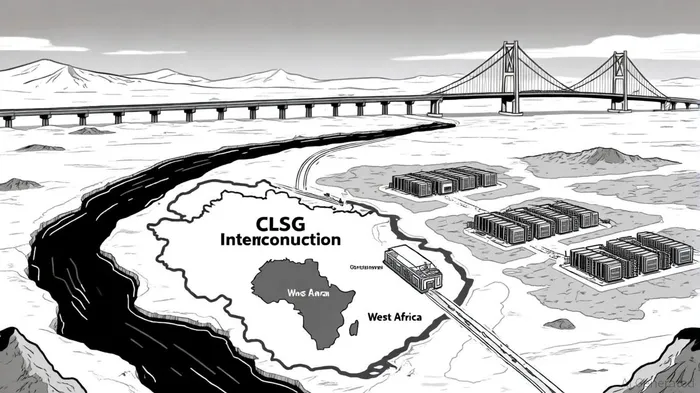
The CLSG Interconnector Project in West Africa, a $508.62 million cross-border initiative, exemplifies the financial complexities of remote infrastructure. As of June 2024, the project reached 99.5% completion but operates at only 40% utilization due to generation shortfalls in Côte d'Ivoire and Guinea[7]. Despite these challenges, the project has delivered 685 GWh of electricity to 2.8 million people and is supported by multilateral financing from the World Bank and African Development Bank[8].
Case Studies: Resilience and Innovation
The Gordie Howe International Bridge Project, a $6.4 billion public-private partnership between the U.S. and Canada, highlights the role of risk management in large-scale remote infrastructure. Managed by the Windsor-Detroit Bridge Authority, the project employs the PMBOK® Guide framework to address risks arising from its scale and cross-border logistics[9]. Aecon, a key consortium member, holds a 20% equity stake and has leveraged its expertise in extreme environments to navigate construction challenges[10].
Meanwhile, VINCI's joint venture with Korean firm GS Engineering & Construction for the Incheon International Airport Terminal 2 project ($3.5 billion) underscores the importance of local partnerships in remote markets[11]. Such collaborations enable firms to mitigate geopolitical risks and access specialized labor pools.
Challenges and Opportunities
Infrastructure in remote environments faces unique challenges, including climate resilience and regulatory uncertainty. A dynamic stochastic model notes that extreme weather events can increase infrastructure costs by 15–30%, necessitating robust contingency planning[12]. Additionally, the circular economy remains an underexploited opportunity, with only 7% of materials currently recycled globally[13]. Firms like Air Products, which invested $1.3 billion in a net-zero hydrogen complex in Alberta, Canada, are pioneering decarbonization strategies that align with long-term investor goals[14].
Future Outlook
The infrastructure sector's resilience is evident in its ability to adapt to macroeconomic shifts. Private infrastructure fundraising grew by 14% in 2025, with 31% of limited partners planning to increase allocations[15]. Digital infrastructure and energy transition projects are expected to dominate growth, supported by federal initiatives like the U.S. Inflation Reduction Act (IRA) and global decarbonization targets[16].
For investors, the key lies in balancing high-growth opportunities with risk mitigation. Firms that integrate AI-driven project management, circular economy principles, and strategic partnerships will likely outperform in this evolving landscape.







Comentarios
Aún no hay comentarios