
Inflation Uncertainty in a Weak Labor Market: Why Investors Should Prioritize Inflation-Hedging Assets Amid Data Gaps
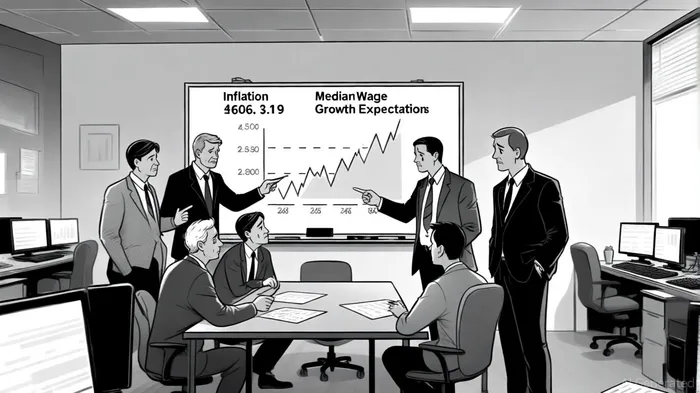
In the evolving economic landscape of 2025, investors face a dual challenge: rising inflation expectations and a labor market marked by fragility and uncertainty. Recent data from the New York Fed survey shows households anticipating a 3.6% annual price increase while median earnings expectations remain stagnant at 2.8%. Simultaneously, mean unemployment expectations have surged to 44.0%, signaling widespread concern over job market stability. This combination of inflationary pressures and weak labor market signals underscores the need for strategic inflation-hedging strategies, particularly as data gaps in economic projections complicate forecasting and decision-making.
The Inflation-Labor Market Disconnect
The U.S. inflation rate reached 2.9% in August 2025, driven by rising costs for food (3.2%), used vehicles (6.0%), and shelter (0.4%), according to the US inflation rates. Core inflation, excluding volatile food and energy, held steady at 3.1%. Yet, despite these pressures, wage growth has failed to keep pace. The Congressional Research Service reports an unemployment rate of 4.3% and average hourly earnings up by $0.10, but these gains are unevenly distributed across sectors and percentiles, as noted in a Congressional Research Service report. The Federal Reserve Bank of New York's Survey of Consumer Expectations highlights this divergence: median inflation expectations rose to 3.2% in 2025, while unemployment expectations spiked to 39.1%. This suggests households perceive a higher risk of job losses outpacing wage gains, creating a precarious environment for both consumers and investors.
Data Gaps and Forecasting Challenges
Economic projections for 2023–2025 reveal persistent data gaps that undermine confidence in inflation and labor market forecasts. The Federal Open Market Committee's FOMC projections put core PCE inflation at 3.1% for 2025, with a gradual decline to 2.0% by 2028. However, historical inaccuracies in inflation forecasting-particularly during the pandemic-highlight the limitations of these models. For instance, FOMC and private sector forecasters underestimated inflation in 2021–2022, with errors three times larger than pre-pandemic averages, according to a Chicago Fed letter. Similarly, labor market forecasts face headwinds from automation, AI-driven workforce shifts, and policy uncertainties: the CBO acknowledges that assumptions about immigration and technological adoption introduce significant volatility into employment projections.
Geopolitical risks further exacerbate these gaps. Tariffs, supply chain disruptions, and wage-price spiral fears create unpredictable inflationary pressures that are difficult to model, as discussed in a Deloitte analysis. Meanwhile, the labor market's response to AI and automation remains unclear, with the Bureau of Labor Statistics noting challenges in projecting how rapidly evolving technologies will reshape occupational demand (BLS employment projections). These uncertainties demand a proactive approach to portfolio protection.
Inflation-Hedging Assets: A Strategic Imperative
Amid this uncertainty, inflation-hedging assets offer a critical buffer. Treasury Inflation-Protected Securities (TIPS), commodities, real estate, and infrastructure have historically outperformed traditional assets during inflationary periods.
TIPS: A Direct Hedge Against CPI Fluctuations
TIPS adjust principal values based on the Consumer Price Index (CPI-U), ensuring returns keep pace with inflation, as explained in a TIPS primer. While TIPS funds can underperform due to investor behavior (e.g., redemptions during market stress), individual TIPS holdings provide more consistent protection, according to a Morningstar analysis. For investors with a long-term horizon, TIPS remain a cornerstone of inflation-resistant portfolios.Commodities: Barometers of Macroeconomic Shifts
Commodities like gold, oil, and industrial metals often correlate with inflation expectations. The Philadelphia Fed's Survey of Professional Forecasters notes that commodities serve as early indicators of inflationary pressures, particularly in sectors sensitive to supply chain disruptions. However, their effectiveness depends on geopolitical stability and demand dynamics.Real Estate and Infrastructure: Diversification Through Tangible Assets
Real estate investment trusts (REITs) and infrastructure equities benefit from inflation through rising rental income and asset values, as detailed in an Investopedia guide. For example, healthcare and renewable energy sectors-projected to grow by 5.2 million jobs from 2024–2034 per the Bureau of Labor Statistics-offer dual exposure to inflationary tailwinds and structural demand. Yet, success hinges on operational flexibility and tenant quality, as highlighted by a McKinsey analysis of labor shortages' impact on GDP.
A Call for Diversified, Adaptive Strategies
Given the data gaps and economic volatility, investors should prioritize diversified exposure to real assets across time horizons. Short-term TIPS strategies, commodity allocations, and sector-specific real estate investments can mitigate risks from unexpected inflation and labor market shocks. As noted by the St. Louis Fed, even imperfect inflation expectations anchoring-such as the 2% target alignment in the third quarter of 2024-can provide directional guidance for hedging decisions.
Conclusion
The interplay of inflation uncertainty and a fragile labor market demands a reevaluation of traditional investment paradigms. By leveraging inflation-hedging assets and maintaining adaptability in the face of data gaps, investors can navigate the 2025 economic landscape with resilience. As the Federal Reserve and policymakers grapple with stabilizing inflation and employment, proactive portfolio strategies will remain essential for preserving purchasing power and long-term wealth.







Comentarios
Aún no hay comentarios