
Inflation-Resistant Retirement Strategies: Leveraging TIPS, Dividend Equities, and Real Assets for 2025 and Beyond
As inflation remains a persistent threat to long-term financial security, retirees and pre-retirees must adopt strategies that preserve purchasing power while generating sustainable income. Suze Orman, a trusted voice in personal finance, has consistently emphasized the importance of diversification and tactical asset allocation to combat inflation's eroding effects. Drawing on her insights and historical market data, this analysis argues for immediate shifts toward Treasury Inflation-Protected Securities (TIPS), dividend-paying equities, and real assets to safeguard retirement portfolios.
TIPS: A Foundation for Inflation Protection
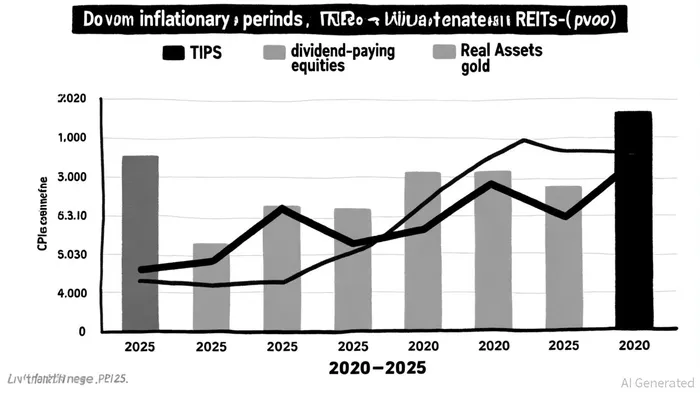
TIPS are explicitly designed to hedge against inflation by adjusting their principal value in line with the Consumer Price Index (CPI). For example, a TIPS issued in October 2020 with a 2025 maturity saw its inflation-adjusted principal rise to over $1,200 by mid-2024—a 20% increase from its original face value, even as secondary market prices fell due to rising yields[5]. While short-term price volatility remains a risk, TIPS offer a critical advantage: if held to maturity, investors receive the inflation-adjusted principal, ensuring real value preservation[5].
Orman's advocacy for TIPS aligns with their role in a balanced portfolio. She recommends integrating them into annual rebalancing plans to counteract inflation's drag on fixed-income assets[1]. However, investors must monitor breakeven inflation rates. As of November 2024, the five-year breakeven rate stood at 2.4%, meaning inflation would need to average at least this level for TIPS to outperform nominal Treasuries[5]. With core CPI remaining above this threshold, TIPS remain a compelling choice for inflation-conscious retirees.
Dividend-Paying Equities: Income That Keeps Pace with Inflation
Dividend-paying equities, particularly those from stable, cash-flow-positive companies, offer another layer of inflation resistance. Historically, value stocks with strong dividends have outperformed during inflationary periods, as their earnings and payouts tend to adjust with rising prices[1]. For retirees seeking income, reinvesting dividends can compound wealth over time, enhancing long-term returns.
Orman underscores the importance of selecting equities from sectors less sensitive to interest rate fluctuations, such as utilities or consumer staples, which often maintain steady dividends even in volatile markets[2]. While growth stocks may falter during inflationary spikes, dividend aristocrats—companies with decades of consecutive dividend increases—provide a reliable anchor. For instance, the S&P 500's total return, including reinvested dividends, has historically outpaced inflation over decades[2]. Retirees should prioritize quality over speculation, avoiding high-yield traps that may crumble under economic stress.
Real Assets: Diversification Beyond Traditional Markets
Real assets, including real estate investment trusts (REITs), gold, and commodities, serve as a natural hedge against inflation. During the 7.0% annual inflation spike in 2021, REITs outperformed the S&P 500 by 12.6 percentage points, driven by long-term leases and property appreciation[2]. Gold, with a historical beta of 1.2 to inflation, also tends to rise during unexpected inflationary shocks, though its performance against core inflation (which excludes volatile energy and food prices) is less consistent[1].
Orman's broader advice to include real estate and commodities in retirement portfolios resonates with these findings[1]. While she does not explicitly endorse gold in 2025, the case for real assets remains strong given inflation's persistence above the Federal Reserve's 2% target[4]. Investors should allocate a portion of their portfolios to these assets, balancing their cyclical nature with the stability of TIPS and dividend equities.
Tactical Shifts for 2025: A Call to Action
The current economic landscape demands immediate tactical adjustments. Orman warns against reactive decisions tied to speculative policy changes, urging retirees to focus on controllable factors like asset allocation and expense management[2]. A strategic approach might include:
1. Increasing TIPS allocations to lock in inflation-adjusted returns.
2. Rebalancing equity holdings toward high-quality dividend payers.
3. Allocating 10–15% of portfolios to real assets to diversify risk.
Conclusion
Inflation's threat to retirement savings is no longer hypothetical—it is a present reality. By adopting Orman's principles of diversification and income generation, retirees can build portfolios resilient to macroeconomic headwinds. TIPS, dividend equities, and real assets each play a distinct role in this strategy, offering protection, income, and growth. As 2025 unfolds, the time to act is now.







Comentarios
Aún no hay comentarios