
Inflation's New Frontier: Navigating Tariff-Driven Price Pressures with Defensive Plays and Treasury Bonds
The U.S. inflation landscape has shifted in 2025, with tariff-induced price pressures emerging as a dominant force. Recent data shows the Consumer Price Index (CPI) rising to a 2.4% annual rate in May 2025, driven by shelter costs, medical care, and tariff-sensitive goods like furniture and automobiles. With June projections pointing to further acceleration—potentially pushing core inflation to 3.0%—investors must adapt strategies to mitigate risks while capitalizing on opportunities in resilient sectors. This article explores how defensive stocks and short-term Treasury bonds can anchor portfolios amid this evolving inflationary environment.
Tariff-Induced Inflation Dynamics
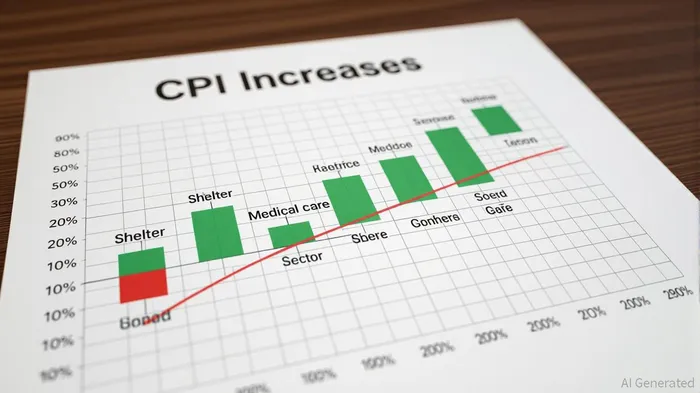
The Federal Reserve's May 2025 CPI report highlights a critical divergence: while energy prices declined 3.5% year-over-year due to falling gasoline costs, core inflation—excluding food and energy—rose 2.8%. Key drivers included:
- Shelter costs: Up 3.9% annually, reflecting persistent housing market pressures.
- Medical care: Increased 2.5%, driven by tariffs on imported medical supplies and equipment.
- Tariff-affected goods: Furniture, toys, and appliances saw sharp price hikes, with analysts projecting further upward pressure in Q3 2025.
The Budget Lab at Yale estimates that tariffs have already contributed a 1.5% short-term increase in consumer prices, with long-term impacts pushing prices 1.3% higher. Motor vehicles, for instance, are now 10.5% costlier due to tariffs on imported steel and copper—a trend likely to intensify as pre-tariff stockpiles dwindle.
Defensive Sectors: Anchoring Growth in Volatile Markets
Defensive sectors—healthcare, utilities, and consumer staples—are proving resilient to tariff-driven inflation. These industries often have pricing power, inelastic demand, and minimal exposure to trade conflicts.
- Healthcare:
Medical services and pharmaceuticals are critical to daily life, making them less sensitive to economic cycles. The medical care index rose 0.3% in May alone, driven by rising costs for imported medical devices.
XLV has outperformed the broader market by 5% year-to-date, benefiting from steady demand and limited tariff exposure.
Utilities:
Regulated utilities offer stable cash flows, insulated from trade wars. Rising energy prices have also boosted demand for alternative energy providers.Consumer Staples:
Companies like Procter & Gamble (PG) and Coca-ColaKO-- (KO) thrive in inflationary environments by passing costs to consumers. Their low volatility makes them a safe haven.
Short-Term Treasury Bonds: A Hedge Against Uncertainty
While the Federal Reserve has maintained its 4.25%-4.50% federal funds rate, bond markets now price a 60% chance of a September 2025 rate cut if inflation moderates. Short-term Treasury bonds (e.g., 2- to 5-year notes) offer two key advantages:
- Lower interest rate risk: Unlike long-term bonds, they're less sensitive to rate hikes.
- Liquidity: They provide ready capitalRC-- to pivot to other opportunities if inflation eases.
The flattening yield curve—driven by expectations of slower economic growth—supports the case for short-term bonds.
Investment Strategy: A Balanced Approach
Investors should adopt a dual-pronged strategy:
1. Allocate 30%-40% to defensive equities: Focus on healthcare ETFs (e.g., XLV), utility stocks (XLU), and consumer staples giants.
2. Hold 20%-30% in short-term Treasuries: Use ETFs like SHY (iShares 1-3 Year Treasury Bond ETF) to preserve capital and hedge against market volatility.
3. Monitor inflation metrics: Track the CPI's core components and tariff-affected sectors. A sustained drop in shelter costs or energy prices could signal a Fed pivot, reshaping bond dynamics.
Risks and Considerations
- Fed Policy Uncertainty: A September rate cut could boost equities but reduce Treasury yields. Stay nimble by rebalancing as data evolves.
- Sector Overvaluation: Defensive stocks may face profit-taking if inflation declines faster than expected.
- Tariff Escalation: New trade disputes could amplify inflation, requiring further portfolio adjustments.
Conclusion
The era of tariff-driven inflation demands a cautious yet opportunistic stance. Defensive sectors and short-term Treasuries offer a buffer against volatility while positioning investors to capitalize on market shifts. As the Fed balances its dual mandate of price stability and employment, portfolios should remain diversified, with a focus on resilience over speculation.
For now, the playbook is clear: anchor in stability, hedge with bonds, and let data guide the next move.







Comentarios
Aún no hay comentarios