
The Inevitability of Tariff-Driven Inflation in 2026 and Its Impact on Consumer Goods Stocks
The global economic landscape in 2026 is poised for a seismic shift as tariff policies enacted in 2025 continue to reverberate through markets. With the average effective U.S. tariff rate projected to reach 18% by 2026-up from 15.8% in 2025-the inflationary pressures on consumer goods are no longer speculative but inevitable according to the Tax Foundation. These tariffs, part of a broader strategy to reshape global trade dynamics, are already manifesting in retail price increases, with imported goods up 5.4% and domestic goods in import-intensive sectors rising 3% since their implementation as research shows. For investors, the challenge lies in navigating this shifting terrain while mitigating the regressive impacts of inflation on consumer demand and corporate margins.
The Inflationary Imperative: Tariffs as a Double-Edged Sword
Tariffs have historically served as tools for protecting domestic industries, but their inflationary consequences are increasingly difficult to ignore. According to a report by the Tax Foundation, the Trump administration's 2025 tariff actions have already imposed a $3,800 average annual burden on U.S. households, with lower-income households bearing a disproportionate share of the cost. This regressive impact is compounded by the slow, persistent nature of tariff pass-through, which ensures that price increases accumulate over time rather than materializing immediately as research indicates.
The Federal Reserve's task of returning inflation to its 2% target is further complicated by these policies. Deloitte Insights projects that core PCE inflation will remain above 3% through 2026, with tariffs contributing 0.7 percentage points to overall inflation. This dynamic creates a K-shaped economy, where high-income households continue to drive consumption while middle- and lower-income households face affordability crises according to RBC analysis. For consumer goods stocks, this means divergent performance across sectors, with import-intensive categories like electronics and household furnishings facing steeper headwinds.
Strategic Positioning: Navigating Tariff-Driven Volatility
Investors must adopt a dual strategy to thrive in this environment: hedging against inflationary pressures while capitalizing on sectors poised to benefit from the energy transition and supply chain reconfiguration.
1. Sector Rotations and Pricing Power
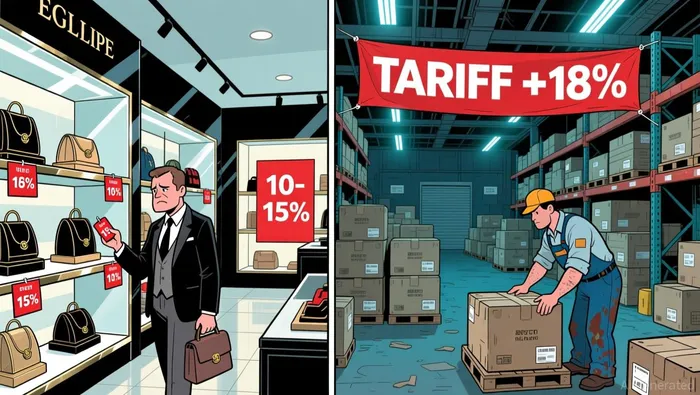 The consumer goods sector is experiencing a structural shift as companies adapt to tariff-driven inflation. Traditional pricing strategies are giving way to precision-based approaches, with firms focusing on volume growth, portfolio clarity, and value creation as research shows. For example, companies like ConagraCAG-- and General MillsGIS-- are leveraging AI-driven analytics to optimize pricing while maintaining consumer trust according to Food Navigator. Investors should prioritize firms with strong regional supply chain strategies and technology integration, as these are critical to mitigating tariff risks.
2. Energy Transition and Infrastructure
The energy transition is another key theme for 2026, with renewable energy and electrification driving demand for industrial metals like copper and aluminum as reported by Yahoo Finance. ETFs such as the iShares Global Clean Energy ETF (ICLN) and Invesco Solar ETF (TAN) offer exposure to this growing sector, which is expected to benefit from falling solar installation costs and favorable policy tailwinds according to Homaio. Additionally, infrastructure-focused funds like the Neuberger Berman Energy Transition & Infrastructure ETF (NBET) provide access to stable cash flows from midstream projects according to Neuberger Berman.
3. Hedging Against Geopolitical Risks
Given the U.S.-China trade tensions and the potential for retaliatory tariffs, diversification across global markets is essential. PIMCO recommends allocating to value-oriented stocks and emerging markets like Korea and Taiwan, where tech valuations are more attractive. Precious metals, particularly gold, also serve as a hedge against macroeconomic uncertainty, with central bank purchases driving record prices according to CBIZ.
The Road Ahead: Preparing for a Tariff-Resilient Portfolio
As 2026 unfolds, the interplay of tariffs, inflation, and energy transition will define investment outcomes. For consumer goods stocks, success hinges on supply chain resilience, pricing agility, and alignment with decarbonization trends. Retailers accelerating nearshoring and supplier diversification-77% have shifted sourcing away from China-are better positioned to withstand tariff shocks. Meanwhile, AI and blockchain technologies are becoming critical for supply chain visibility, enabling firms to absorb costs without eroding margins according to Thomson Reuters.
Investors must also remain vigilant about macroeconomic risks, including a potential stock market correction and evolving monetary policy. While the S&P 500 is projected to rise 11% in 2026, driven by AI-related capital expenditures and corporate earnings, stretched valuations in the tech sector necessitate a balanced approach according to Supply Chain 24/7.
Conclusion
The inevitability of tariff-driven inflation in 2026 demands a proactive, strategic mindset. By prioritizing sectors with pricing power, investing in energy transition ETFs, and hedging against geopolitical risks, investors can navigate the turbulence while capitalizing on long-term growth opportunities. As the global economy reconfigures itself in response to trade policies and technological shifts, preparedness-rather than speculation-will be the hallmark of successful portfolios.





Comentarios
Aún no hay comentarios