
Industrial Manufacturing Volatility: Decoding Durable Goods Data for Aerospace and Capital Goods Investment
The industrial manufacturing sector is experiencing a dramatic recalibration in 2025 as durable goods data reveals both explosive growth and deep-seated uncertainties. For investors, the aerospace and capital goods industries present a paradoxical landscape: record-breaking aircraft orders coexist with macroeconomic headwinds that could swiftly reverse recent gains. The May 2025 durable goods report, showing a 16.4% surge in orders, offers a compelling case study in how shifting demand patterns and policy-driven volatility are reshaping industrial investment fundamentals.
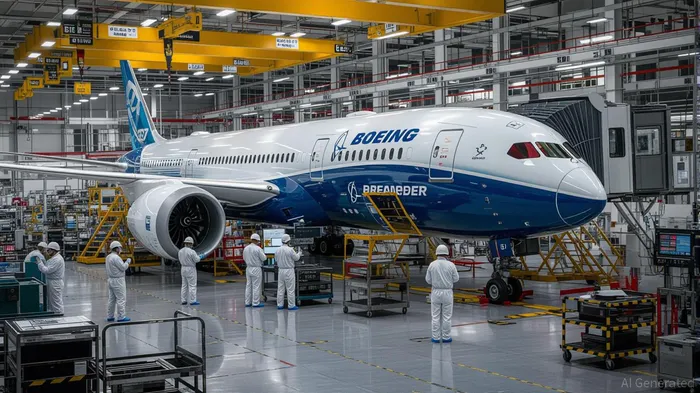
The most striking development in Q2 2025 was the aerospace sector's extraordinary rebound, driven by a 230.8% surge in commercial aircraft orders. Boeing's May performance was particularly noteworthy, with 303 aircraft orders compared to just eight in April - a 1,769% increase. This meteoric rise was catalyzed by a landmark deal with Qatar Airways during President Trump's Gulf visit, but the underlying dynamics are more complex. The spike appears to reflect front-running behavior as companies anticipate further tariff hikes under the current administration, rather than a fundamental shift in long-term demand.
While the aerospace surge is dramatic, the broader capital goods sector tells a more nuanced story. Non-defense capital goods orders excluding aircraft rose 1.7% in May after a 1.4% decline in April, suggesting tentative stabilization. Core capital goods orders, which exclude defense and aircraft, saw a 49.4% rebound in May following a 19.1% drop in April. These figures indicate that while the aerospace sector is experiencing a brief but intense upsurge, the rest of the capital goods market is still navigating a fragile recovery.
The volatility in these data points reflects a deeper structural challenge: the industry's exposure to policy-driven uncertainty. Trump's trade policies have created a highly unpredictable environment, with tariffs on steel, aluminum, and other critical inputs creating a cost shock for manufacturers. The KBRA report estimates that these tariffs could raise U.S. aerospace industry costs by up to $5 billion annually, with potential price increases for aircraft exceeding 10%. This cost pressure is compounded by retaliatory measures from key trading partners, creating a multi-layered risk environment.
For investors, these dynamics create a high-stakes investment calculus. The May data suggests that certain aerospace companies could benefit from near-term order surges, particularly those with strong international order books. However, the sustainability of these gains remains questionable. The front-loading of orders to avoid anticipated tariff increases means that a portion of this demand may not be repeatable. Moreover, the broader economic environment - with the Fed monitoring inflationary pressures from trade policies and global machine tool markets declining 3-4% in 2025 - suggests that the industrial sector's recovery may be short-lived.
The capital goods sector faces additional headwinds from global competition. Western manufacturers are struggling to maintain market share against Chinese competitors, particularly in electric vehicle-related technologies. This competitive pressure is exacerbated by the lack of localized development in the U.S. market, exposing domestic producers to supply chain vulnerabilities. For investors, this means that while some aerospace stocks may experience short-term gains from order surges, the long-term outlook for capital goods manufacturers depends heavily on their ability to innovate and adapt to shifting trade dynamics.
Looking ahead, the industrial manufacturing sector will likely remain in a state of flux. The durability of the current rebound will depend on the resolution of trade policy uncertainties and the pace of economic recovery. Investors should monitor several key indicators: the trajectory of core capital goods orders, the impact of tariffs on production costs, and the evolution of global supply chain strategies. The Federal Reserve's response to inflationary pressures from trade policies will also play a critical role in shaping the investment landscape.
For those considering exposure to this sector, a balanced approach is warranted. High-conviction investors might focus on aerospace companies with strong international order books and pricing power, while more conservative investors could look for opportunities in capital goods manufacturers that are diversifying their supply chains and investing in automation technologies. Given the sector's volatility, hedging strategies and position sizing will be crucial components of any investment approach.
The industrial manufacturing sector stands at a crossroads in 2025. While the May durable goods data provides a glimpse of resilience, the broader picture remains one of cautious optimism. For investors, the key will be to differentiate between temporary demand surges and sustainable growth opportunities. By closely monitoring durable goods trends, trade policy developments, and global competitive dynamics, investors can position themselves to navigate this volatile sector with greater confidence.





Comentarios
Aún no hay comentarios