
Indonesia's Unsubsidized Fuel Policy: Navigating Risks and Opportunities in Energy and Retail Markets
The Policy Shift and Its Objectives
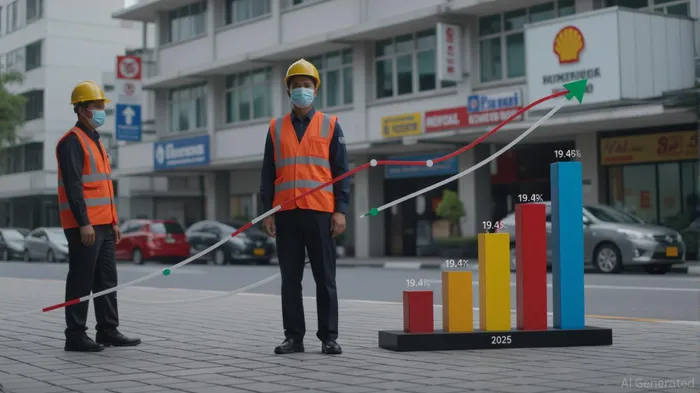
Indonesia's 2025 fuel subsidy reduction marks a pivotal step in its energy transition strategy. The government aims to cut subsidized fuel volumes by 0.17 million kiloliters, targeting 19.41 million kiloliters for kerosene and diesel [1]. This aligns with Coordinating Minister Luhut's 2027 phase-out plan, emphasizing fiscal efficiency and environmental sustainability [5]. By introducing QR code tracking and stricter eligibility criteria for subsidized fuels, the state seeks to redirect resources to direct cash transfers for low-income households [2].
However, the policy's implementation faces hurdles. For instance, the shift to a semiannual import permit cycle for non-subsidized fuels has created bottlenecks, disadvantaging private retailers like ShellSHEL-- and BP-AKR while reinforcing Pertamina's dominance [3]. This regulatory asymmetry raises concerns about anticompetitive practices, with the Business Competition Supervisory Commission (KPPU) now investigating Pertamina's market influence [3].
Consumer Behavior: Adaptation and Resistance
Consumer responses to the policy are mixed. Urban households, historically reliant on subsidized Pertalite and Solar, are increasingly adopting non-subsidized alternatives like Pertamax and Shell Super, driven by brand trust and perceived quality [6]. Yet, the May 2025 price cuts—Pertamax dropped to Rp12,400/liter—have temporarily eased pressure, though analysts warn of future volatility as biofuel mandates escalate [5].
Meanwhile, broader consumer trends reveal a shift toward value-conscious spending. A 2025 report by NielsenIQ notes that 71% of Indonesians are willing to pay premiums for high-quality technology products, while 70% prioritize health and wellness in purchasing decisions [6]. These behaviors suggest that while fuel price hikes may curb discretionary spending, demand for durable goods and services remains resilient.
Market Dynamics: Energy and Retail Sector Implications
The energy sector's transition is fraught with contradictions. While the government targets 23% renewable energy in the national mix by 2025, coal still dominates at 63% of the power supply [7]. PLN's 92% market share in electricity distribution further complicates the integration of renewables, as grid infrastructure struggles to accommodate intermittent sources like solar and wind [7].
For investors, opportunities lie in biofuels and decentralized energy solutions. Indonesia's biofuel roadmap—B40 (40% biodiesel) in 2025 and E5 (5% bioethanol) mandates—positions the country to leverage its palm oil exports. However, bioethanol's lack of subsidies and reliance on imported feedstock pose risks [4]. Conversely, decentralized solar projects and village-owned enterprises could thrive under the 2025 policy, offering scalable solutions for rural electrification [8].
Retailers, meanwhile, face a dual challenge. Private fuel stations are squeezed by Pertamina's control over distribution terminals and pricing, while e-commerce platforms like Tokopedia and Shopee capitalize on shifting consumer preferences for premium products [3]. The rise of AI-driven inventory systems, as seen in Walmart's operations, highlights the need for Indonesian retailers to adopt digital tools to remain competitive [9].
Investment Risks and Strategic Opportunities
Risks:
1. Regulatory Uncertainty: Frequent policy revisions, such as the dissolution of Kemenkomarves and fragmented governance under Prabowo's administration, create instability for long-term investments [7].
2. Market Concentration: Pertamina's dominance in fuel distribution and PLN's monopoly in electricity limit competition, deterring private-sector participation [3].
3. Financing Barriers: High interest rates and the absence of guaranteed offtake agreements for renewables increase project costs, deterring foreign investors [7].
Opportunities:
1. Biofuel Innovation: Companies that secure palm oil supply chains or develop cost-effective bioethanol blends could benefit from government mandates and export demand [4].
2. Renewable Infrastructure: Investments in smart grids and decentralized solar projects align with the 2030 44% renewable target, particularly in underserved rural areas [8].
3. Consumer-Centric Retail: Brands that integrate digital finance solutions and premium product lines—such as AI-powered inventory systems or health-focused FMCG—can capture growing middle-class demand [6][9].
Conclusion
Indonesia's unsubsidized fuel policy represents a high-stakes gamble for investors. While the government's fiscal and environmental goals are clear, execution risks—ranging from regulatory fragmentation to market concentration—demand careful navigation. For those willing to bet on the transition, biofuels, decentralized energy, and digitally enabled retail present compelling opportunities. However, success hinges on aligning with Indonesia's evolving consumer priorities and policy landscape.





Comentarios
Aún no hay comentarios