
Indonesia Scraps Policy That Led to Long Queues for Cooking Gas
Generado por agente de IACyrus Cole
miércoles, 5 de febrero de 2025, 2:09 am ET2 min de lectura
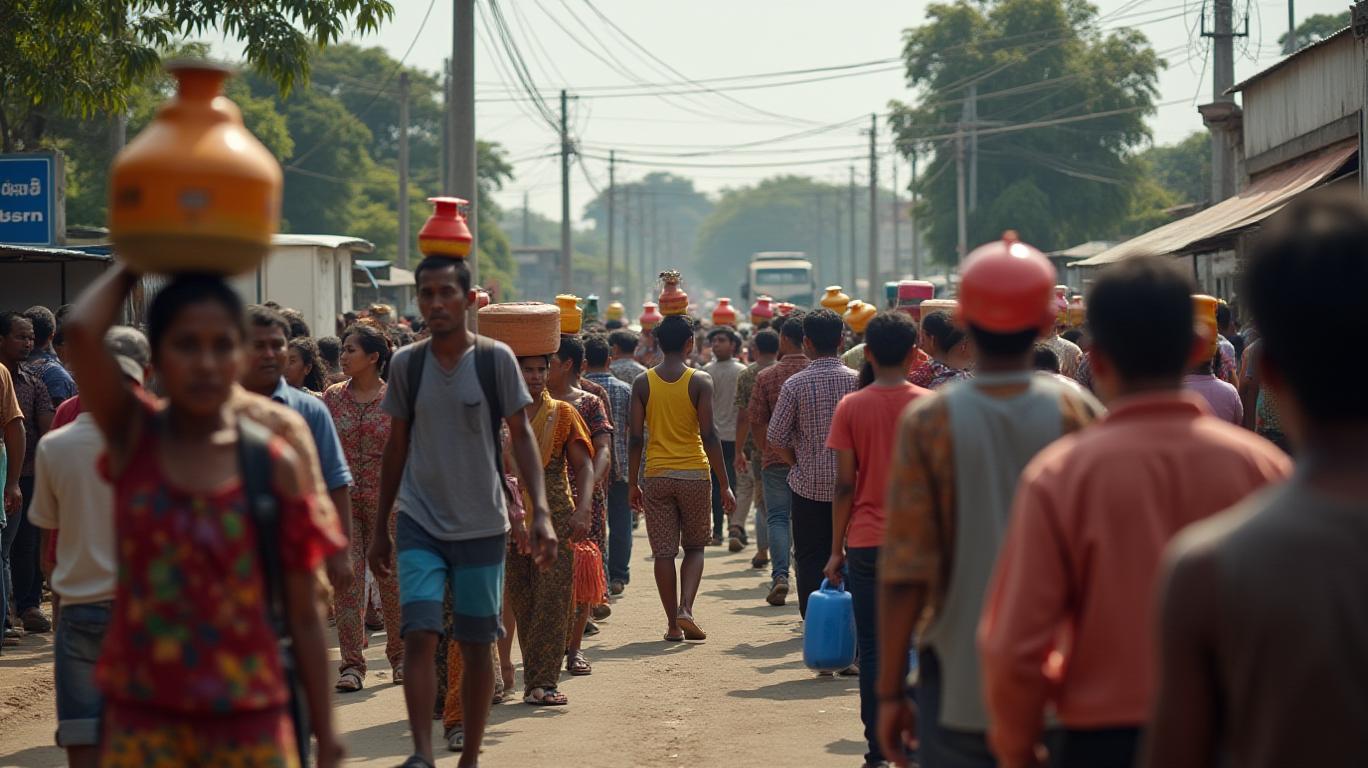
Indonesia has reversed a policy that led to long queues and shortages of cooking gas, also known as LPG, in the country. The policy, implemented on February 1, 2025, restricted the distribution of subsidized LPG to official distribution outlets, causing a significant shortage of 3kg LPG, commonly known as "gas melon." This led to long queues and public outcry, with many residents struggling to find cooking gas. The tragic death of a housewife in Pamulang Barat, South Tangerang, due to exhaustion from searching for LPG highlighted the severity of the situation and intensified public scrutiny of the new policy.
The reversal of the policy, announced by President Prabowo Subianto, allows small retailers to become official distributors and resume selling LPG. This decision aims to stabilize the supply chain and mitigate the current bottleneck, ensuring that households have access to cooking gas. The government's move aligns with its broader energy and economic objectives, including ensuring energy security, maintaining social stability, and supporting economic growth.
The policy change is expected to have significant impacts on the supply chain and distribution of LPG in Indonesia, affecting both availability and affordability for consumers. The reintroduction of small retailers as official distributors will help to increase the number of points of sale, making LPG more accessible to consumers, especially in remote or rural areas. This is because small retailers are often more numerous and better distributed geographically than larger outlets. The increased availability will help to alleviate the current shortage, reducing the need for consumers to queue for long periods or travel far to find LPG.
The reintroduction of small retailers will likely increase competition among distributors, potentially driving down prices. This is because more players in the market can lead to better price competition. The government's decision to allow more small retailers to become official distributors may also help to stabilize prices by increasing the supply of LPG in the market. However, the government is also considering raising the highest retail price (HET) of LPG from Rp16,000 to Rp19,000 per canister, which could offset some of the potential price reductions from increased competition.
The reversal of the policy will help to streamline the distribution process by allowing more players to participate in the market, potentially reducing bottlenecks and improving efficiency. This could lead to better management of supply and demand, reducing the risk of shortages and stockpiling.
However, the government must also ensure that the new system is well-regulated and monitored to prevent misuse of subsidies and ensure that the intended recipients receive the benefits. The government must also ensure that the new system is sustainable and does not lead to a resurgence of the problems that plagued the previous distribution model.
In conclusion, the Indonesian government's decision to scrap the policy that led to long queues for cooking gas was primarily driven by public outcry, economic concerns, and political pressure. The reversal of the policy aligns with the government's broader energy and economic objectives of ensuring energy security, maintaining social stability, and supporting economic growth. The policy change is expected to have significant impacts on the supply chain and distribution of LPG in Indonesia, affecting both availability and affordability for consumers. However, the government must ensure that the new system is well-regulated and sustainable to prevent misuse of subsidies and ensure the intended recipients receive the benefits.



Divulgación editorial y transparencia de la IA: Ainvest News utiliza tecnología avanzada de Modelos de Lenguaje Largo (LLM) para sintetizar y analizar datos de mercado en tiempo real. Para garantizar los más altos estándares de integridad, cada artículo se somete a un riguroso proceso de verificación con participación humana.
Mientras la IA asiste en el procesamiento de datos y la redacción inicial, un miembro editorial profesional de Ainvest revisa, verifica y aprueba de forma independiente todo el contenido para garantizar su precisión y cumplimiento con los estándares editoriales de Ainvest Fintech Inc. Esta supervisión humana está diseñada para mitigar las alucinaciones de la IA y garantizar el contexto financiero.
Advertencia sobre inversiones: Este contenido se proporciona únicamente con fines informativos y no constituye asesoramiento profesional de inversión, legal o financiero. Los mercados conllevan riesgos inherentes. Se recomienda a los usuarios que realicen una investigación independiente o consulten a un asesor financiero certificado antes de tomar cualquier decisión. Ainvest Fintech Inc. se exime de toda responsabilidad por las acciones tomadas con base en esta información. ¿Encontró un error? Reportar un problema


SOBRE NOSOTROS
Nuestra historiaAutores de noticiasBase de conocimientosPolítica de privacidadTérmino de usoDescargo de responsabilidad de corretaje de tercerosTérminos de uso de AIMEDivulgaciones de riesgos de AInvest AICarrerasCONTÁCTENOS
Email: support@ainvest.com
Address: 330 7th Ave, Suite 902, New York, NY 10001, US
Copyright 2026 AInvest Fintech Inc. All rights reserved.


Comentarios
Aún no hay comentarios