
Indonesia's Nickel Nationalization and Its Strategic Implications for Global EV Supply Chains
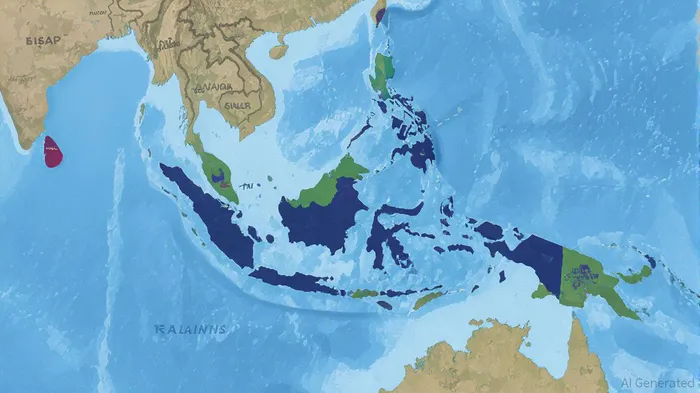
The global electric vehicle (EV) industry is at a crossroads, with Indonesia's nickel policies reshaping the landscape of critical mineral supply chains. As the world's largest nickel producer, Indonesia's strategic decisions—ranging from production quotas to export regulations—have become a focal point for investors seeking to navigate geopolitical risk as an opportunity. The interplay between policy-driven oversupply, shifting demand dynamics, and international responses underscores a complex but fertile terrain for investment in critical minerals.
The Quota Conundrum: Oversupply and Structural Weakness
Indonesia's 2025 Work Plan and Budget (RKAB) quota for nickel ore—364 million tons—far exceeds its actual production capacity of 120 million tons, creating a theoretical oversupply of 203% [1]. This disconnect between policy and reality has been exacerbated by seasonal disruptions, such as the rainy season, which limits mining accessibility and increases logistical bottlenecks [1]. While short-term supply constraints have emerged, the market remains structurally oversupplied. S&P Global Commodity Insights forecasts an annual surplus of 198,000 metric tons through Q3 2025, driven by weak demand from stainless steel and battery sectors [4].
The decline in demand is not merely cyclical but structural. Stainless steel accounts for over two-thirds of global primary nickel demand, yet its growth has stagnated amid economic uncertainties [3]. Meanwhile, the EV industry's pivot from nickel-based NMC (nickel-manganese-cobalt) batteries to LFP (lithium-iron-phosphate) technology has further eroded nickel's long-term demand potential [4]. These trends highlight a critical inflection point: Indonesia's oversupply is no longer just a domestic issue but a global supply chain challenge.
Policy Adjustments and Producer Adaptation
In response to volatility, Indonesia has shortened mining production quotas from three years to one year, aiming to align supply with market realities [4]. Producers, in turn, are shifting toward high-grade nickel matte production and reducing utilization rates at older NPI (Nickel Pig Iron) facilities [1]. These adjustments signal a strategic pivot toward quality over quantity, but they also expose the fragility of a sector reliant on policy-driven outputs.
The government's regulatory overreach—exemplified by the inflated RKAB quota—has drawn international scrutiny. Critics argue that such policies distort market signals and create dependencies for countries reliant on Indonesian nickel. Yet, for investors, this volatility represents an opportunity to capitalize on mispriced assets and underappreciated resilience in the sector.
Geopolitical Risk as a Catalyst for Diversification
Indonesia's dominance in nickel has spurred geopolitical strategies aimed at reducing supply chain vulnerabilities. The U.S. and EU, for instance, are accelerating investments in alternative mineral sources and recycling technologies to mitigate reliance on a single supplier [2]. These efforts, while laudable, are unlikely to offset Indonesia's scale in the near term. However, they create a parallel investment opportunity: funding innovation in battery chemistries (e.g., LFP) and circular economy models that reduce nickel dependency.
Meanwhile, China's role as a key processor of Indonesian nickel into battery-grade materials adds another layer of complexity. The country's ability to absorb oversupply through its refining infrastructure has kept prices afloat, but this dynamic is vulnerable to regulatory shifts or trade tensions. Investors must weigh these risks against the potential for long-term gains in diversified supply chains.
Investment Opportunities in Critical Minerals
The oversupply crisis in nickel has exposed broader weaknesses in the critical mineral ecosystem. For investors, this presents two pathways:
1. Resilient Producers: Companies with flexible production models (e.g., those pivoting to high-grade matte) or access to alternative markets (e.g., stainless steel) may outperform peers.
2. Diversification Plays: Firms developing lithium, cobalt, or rare earth element (REE) alternatives to nickel—such as LFP battery manufacturers—stand to benefit from structural shifts in demand.
A would illustrate the disconnect between policy and market fundamentals, while a could highlight emerging opportunities.
Conclusion
Indonesia's nickel nationalization policies are a double-edged sword: they amplify geopolitical risks but also create openings for investors who can navigate volatility. As the EV industry recalibrates its supply chains, the key to success lies in balancing short-term exposure to oversupply with long-term bets on diversification and innovation. For those willing to look beyond the noise, critical minerals offer a compelling case study in turning geopolitical risk into reward.







Comentarios
Aún no hay comentarios