
Indonesia's Nickel Dominance Amid Cost Pressures: High-Value Processing as the Pathway to Profitability
Indonesia's rise as a global nickel powerhouse is undeniable. With 42% of the world's nickel reserves and production surging to 2.2 million tonnes in 2024—accounting for 50% of global output—the nation is rapidly transitioning from a raw material exporter to a leader in high-value processing. However, this ascendancy faces headwinds: rising operational costs, environmental scrutiny, and market volatility. For investors, the question is clear: Can firms leverage advanced technologies like High-Pressure Acid Leaching (HPAL) and strategic partnerships to mitigate these challenges and capitalize on the $300 billion EV battery market?
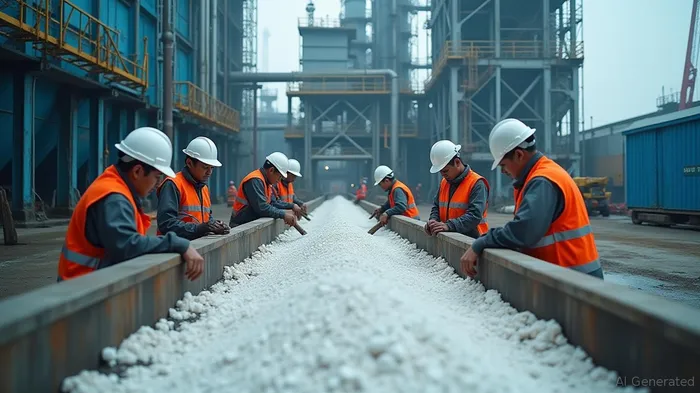
The Strategic Opportunity: HPALHPAI-- as the Catalyst for Value Capture
Indonesia's regulatory pivot—from banning raw ore exports in 2014 to mandating domestic processing—has driven a boom in HPAL facilities. These plants convert low-grade nickel laterite into battery-grade materials like mixed hydroxide precipitate (MHP), which commands premiums over bulk nickel. By 2025, HPAL output is projected to triple to 800,000–900,000 tonnes, with Indonesia's largest facility, Vale Indonesia's $4.29 billion HPAL plant, expected to produce 120,000 tonnes annually by year-end.
This shift is critical: While raw nickel ore sells for ~$400/tonne, battery-grade nickel (e.g., nickel sulfate) fetches $15,000/tonne. HPAL operators like Tsingshan Holding and Harita Nickel are thus positioned to capture 90%+ of the value chain. Yet success hinges on overcoming two core challenges:
1. Sulfuric Acid Constraints
HPAL requires vast quantities of sulfuric acid—7.12 million tonnes by 2025—to dissolve laterite ores. Domestic production via sulfur-burning smelters (e.g., Freeport McMoRan's Manyar plant) and imports are bridging the gap, but cost fluctuations remain a risk. Firms like Halmahera Persada Lygend, which now import 60% of their sulfur, face volatility.
2. Environmental and ESG Pressures
HPAL generates 1.4–1.6 tonnes of tailings per tonne of nickel, requiring sustainable disposal. The government's push for dry-stacking—a safer, but costlier method—adds ~$100/tonne to operating costs. Meanwhile, coal-fired power plants contribute 57–70 tonnes of CO2 per tonne of nickel, spurring demands for renewable energy integration.
Mitigating Costs: Partnerships and Policy Leverage
Firms are countering these headwinds through three strategies:
- Vertical Integration with EV Manufacturers
- Example: Indonesia's Battery Corporation (IBC) is partnering with Tesla and CATL to secure long-term MHP contracts. This locks in demand, reducing price risk.
Impact: Firms tied to EV giants gain pricing power and access to advanced recycling tech, further cutting costs.
Regulatory Tailwinds
- Production Quotas: The 2025 quota cut (reducing output by 40%) aims to stabilize prices, benefiting high-margin HPAL operators.
Tax Incentives: Foreign firms (up to 70% ownership) enjoy 15–20-year tax holidays, easing capital expenditure burdens.
Technological Innovation
- Renewables: Harita Nickel's 300 MW solar plant reduces coal dependency, lowering emissions and operational costs.
- Closed-Loop Systems: New smelters like Vale's QMB project recirculate 90% of water, slashing freshwater use and waste.
Data-Driven Investment Insights
- Key Players to Watch:
- PT Vale Indonesia (VLI:IDX): Operator of the world's largest HPAL plant.
- Tsingshan Holding (THG:SH): Major investor in Indonesia's nickel infrastructure.
United Tractors (TRAK:IDX): Partnering with Toyota on EV battery ventures.
Critical Metrics:
- Nickel Price Dynamics:
- HPAL Capacity Growth:
Conclusion: Navigating the Nickel Frontier
Indonesia's nickel sector is a high-reward, high-risk bet. While operational costs and environmental hurdles loom, firms adopting HPAL, securing EV partnerships, and leveraging policy support are well-positioned to dominate the battery supply chain. Investors should prioritize companies with:
1. Strong offtake agreements with EV manufacturers.
2. Low-cost sulfuric acid access (e.g., via sulfur imports or captive smelters).
3. ESG-compliant waste management and renewable energy integration.
The path to profitability is clear: Indonesia's untapped reserves and regulatory resolve make it the epicenter of the EV revolution. For the bold, the rewards of processing dominance—not just mining—are within reach.







Comentarios
Aún no hay comentarios