
Indonesia's LNG Export Delay: A Domestic Energy Priority
Generado por agente de IACyrus Cole
jueves, 23 de enero de 2025, 4:46 am ET1 min de lectura
IPA--
Indonesia, the world's sixth-largest LNG exporter, is considering delaying some of its liquefied natural gas (LNG) exports to prioritize domestic energy needs. This move, driven by increasing domestic demand and a desire to balance local consumption and export commitments, has significant implications for the country's energy sector and long-term energy security.
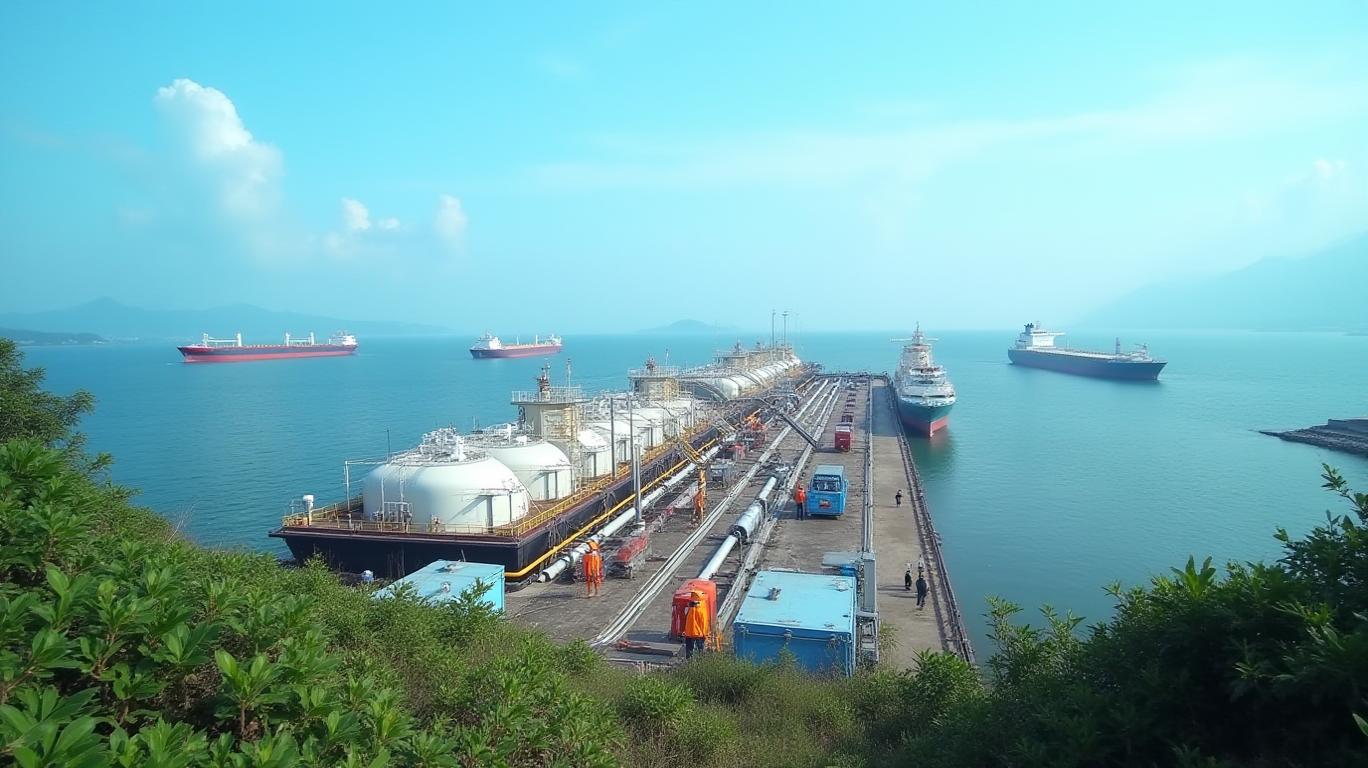
Indonesia's domestic energy demand is growing rapidly, driven by a booming economy and increasing power consumption. The country aims to double or triple its natural gas consumption by 2025 compared to 2013 levels (PwC, 2014). To meet this growing demand, Indonesia is prioritizing domestic gas supply and considering limiting LNG exports. This decision is supported by the government's target to increase the share of natural gas in the national energy mix to 22% by 2025 (MEMR, 2015).
The delay in LNG exports may have economic and political implications for Indonesia. On the one hand, prioritizing domestic gas supply can support economic growth, reduce reliance on oil subsidies, and enhance energy security. On the other hand, limiting LNG exports may lead to a decrease in export revenues and potential resistance from international partners. To mitigate these challenges, Indonesia can attract investment for future gas infrastructure, upstream gas exploration, and exploitation of new gas fields (OIES, 2014a, OIES, 2014b). This will create job opportunities, stimulate economic growth, and help Indonesia meet its energy needs.
Moreover, the government must navigate potential revenue losses, diplomatic challenges, and regulatory hurdles to successfully implement these changes. Ongoing changes to oil and gas law may also impact the country's energy sector (IPA, 2014). By balancing domestic gas demand with exports and limited gas infrastructure, Indonesia can enhance its energy security and reduce vulnerability to global price fluctuations and supply disruptions.
In conclusion, Indonesia's move to delay some LNG exports to meet domestic energy needs has significant economic and political implications for the country's domestic energy sector and long-term energy security. By increasing domestic gas supply, developing infrastructure, and shifting the energy mix, Indonesia can support economic growth, reduce oil subsidies, and enhance energy security. However, the government must navigate potential revenue losses, diplomatic challenges, and regulatory hurdles to successfully implement these changes.
Indonesia, the world's sixth-largest LNG exporter, is considering delaying some of its liquefied natural gas (LNG) exports to prioritize domestic energy needs. This move, driven by increasing domestic demand and a desire to balance local consumption and export commitments, has significant implications for the country's energy sector and long-term energy security.
Indonesia's domestic energy demand is growing rapidly, driven by a booming economy and increasing power consumption. The country aims to double or triple its natural gas consumption by 2025 compared to 2013 levels (PwC, 2014). To meet this growing demand, Indonesia is prioritizing domestic gas supply and considering limiting LNG exports. This decision is supported by the government's target to increase the share of natural gas in the national energy mix to 22% by 2025 (MEMR, 2015).
The delay in LNG exports may have economic and political implications for Indonesia. On the one hand, prioritizing domestic gas supply can support economic growth, reduce reliance on oil subsidies, and enhance energy security. On the other hand, limiting LNG exports may lead to a decrease in export revenues and potential resistance from international partners. To mitigate these challenges, Indonesia can attract investment for future gas infrastructure, upstream gas exploration, and exploitation of new gas fields (OIES, 2014a, OIES, 2014b). This will create job opportunities, stimulate economic growth, and help Indonesia meet its energy needs.
Moreover, the government must navigate potential revenue losses, diplomatic challenges, and regulatory hurdles to successfully implement these changes. Ongoing changes to oil and gas law may also impact the country's energy sector (IPA, 2014). By balancing domestic gas demand with exports and limited gas infrastructure, Indonesia can enhance its energy security and reduce vulnerability to global price fluctuations and supply disruptions.
In conclusion, Indonesia's move to delay some LNG exports to meet domestic energy needs has significant economic and political implications for the country's domestic energy sector and long-term energy security. By increasing domestic gas supply, developing infrastructure, and shifting the energy mix, Indonesia can support economic growth, reduce oil subsidies, and enhance energy security. However, the government must navigate potential revenue losses, diplomatic challenges, and regulatory hurdles to successfully implement these changes.

Divulgación editorial y transparencia de la IA: Ainvest News utiliza tecnología avanzada de Modelos de Lenguaje Largo (LLM) para sintetizar y analizar datos de mercado en tiempo real. Para garantizar los más altos estándares de integridad, cada artículo se somete a un riguroso proceso de verificación con participación humana.
Mientras la IA asiste en el procesamiento de datos y la redacción inicial, un miembro editorial profesional de Ainvest revisa, verifica y aprueba de forma independiente todo el contenido para garantizar su precisión y cumplimiento con los estándares editoriales de Ainvest Fintech Inc. Esta supervisión humana está diseñada para mitigar las alucinaciones de la IA y garantizar el contexto financiero.
Advertencia sobre inversiones: Este contenido se proporciona únicamente con fines informativos y no constituye asesoramiento profesional de inversión, legal o financiero. Los mercados conllevan riesgos inherentes. Se recomienda a los usuarios que realicen una investigación independiente o consulten a un asesor financiero certificado antes de tomar cualquier decisión. Ainvest Fintech Inc. se exime de toda responsabilidad por las acciones tomadas con base en esta información. ¿Encontró un error? Reportar un problema




Comentarios
Aún no hay comentarios