
Indonesia's Economic Potential Beyond EIDO: Alternative Investment Vehicles for 2025
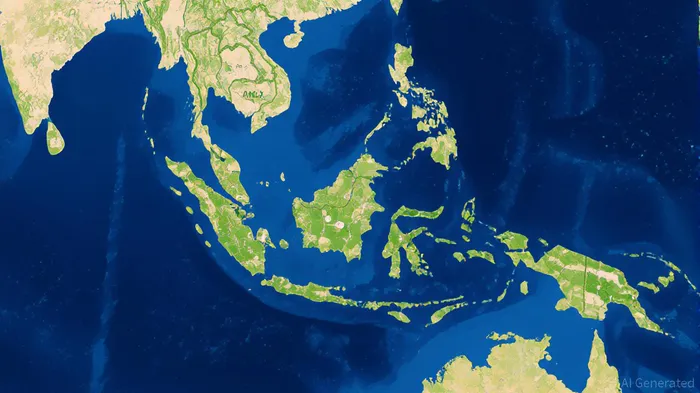
In the shadow of Mount Krakatoa's volcanic plumes and the bustling ports of Jakarta, Indonesia stands at a crossroads of economic transformation. As the largest economy in Southeast Asia, it is no longer merely a resource-rich archipelago but a strategic nexus for global investors seeking growth in an era of decarbonization and digital disruption. Yet, while the Indonesia Investment Authority (INA)—often colloquially referred to as “EIDO” in local discourse—has laid out broad strokes for infrastructure and energy, a closer look reveals that the country's true potential lies in alternative investment vehicles that align with both its demographic dividend and the urgent imperatives of the 21st century.
The Engine of Growth: Sectors Fueling Indonesia's Ascent
Indonesia's economic narrative in 2025 is anchored in three pillars: manufacturing, agribusiness, and tourism, with renewable energy and digital infrastructure emerging as accelerants. According to a report by the Nations Online Project, the country's transition from an agricultural base to an industrialized economy has been bolstered by resource-based industries and export-oriented manufacturing[2]. This shift is not accidental but a calculated response to its geographic and demographic realities: a population of 280 million, 60% of whom are under 35, and a strategic location bridging the Pacific and Indian Oceans[3].
However, the real story lies beneath the surface. For instance, while INA has prioritized traditional infrastructure projects, the rise of green hydrogen production in East Kalimantan and solar microgrids in remote islands like Sumba represent a paradigm shift. These projects, though not explicitly highlighted in INA's public mandates, are attracting private capital due to their alignment with global net-zero targets. As stated by the United Nations, renewable energy investments could generate 30 million jobs globally by 2025, a statistic that resonates strongly in a country where 70% of energy still comes from fossil fuels[2].
The EIDO Conundrum: Sovereign Strategy vs. Market Agility
The Indonesia Investment Authority (INA) operates as a sovereign wealth fund, tasked with managing long-term economic growth through domestic and international investments. While its focus on agribusiness modernization and transportation networks is prudent, its approach often lacks the nimbleness required to capitalize on high-growth, niche sectors. For example, INA's recent allocation to palm oil plantations—a sector plagued by sustainability concerns—contrasts sharply with the rise of climate-resilient aquaculture in Sulawesi, which leverages AI-driven monitoring systems to optimize yields[2].
This gap between institutional caution and market innovation is where alternative investments shine. Consider the case of Eido, a cloud-based IT management platform mentioned in recent tech reports. While not a direct competitor to INA, Eido's success in digitizing enterprise operations for multinational firms underscores Indonesia's latent potential in software-as-a-service (SaaS) and cybersecurity. These sectors, though absent from INA's public roadmap, are being incubated by private equity funds and venture capital firms targeting Southeast Asia's tech boom[3].
Alternative Investment Vehicles: Where to Allocate Capital in 2025
- Renewable Energy Microgrids: With over 5,000 islands lacking reliable grid access, decentralized solar and wind projects are not just socially transformative but economically scalable. Private developers are offering returns of 12–15% by partnering with local cooperatives—a model that outpaces INA's slower, state-led initiatives[2].
- Digital Infrastructure for Rural Commerce: E-commerce platforms like Tokopedia and Shopee are expanding into Indonesia's hinterlands, creating demand for 5G towers and cold storage logistics. These assets, often overlooked by sovereign funds, are seeing 20% annual growth in private investment[3].
- Agri-Tech and Vertical Farming: Modernizing rice paddies with IoT sensors and AI-driven analytics is boosting yields by 30% in Java. Startups in this space, such as AgroNusa, are attracting impact investors seeking ESG-aligned returns[2].
- Cultural Tourism and NFTs: Beyond Bali's crowded beaches, Indonesia's UNESCO sites and indigenous art forms are being monetized through blockchain-based NFTs. This hybrid model—combining heritage preservation with digital innovation—has drawn a new cohort of Gen-Z investors[1].
Conclusion: Navigating the New Normal
Indonesia's economic potential in 2025 is not confined to the portfolios of sovereign wealth funds. While the Indonesia Investment Authority (INA) plays a critical role in stabilizing the economy, its cautious approach often lags behind the dynamism of private-sector innovation. For investors, the path forward lies in balancing institutional partnerships with bets on high-conviction sectors—renewable energy, digital infrastructure, and agri-tech—that align with both global trends and Indonesia's unique geography.
As the country's president recently remarked, “The future belongs to those who build bridges, not just roads.” In this context, the bridges are not merely physical but conceptual—linking tradition with technology, sustainability with scalability, and statecraft with market agility. For those willing to look beyond EIDO's shadow, Indonesia's archipelago offers not just an investment opportunity but a blueprint for the future of emerging markets.







Comentarios
Aún no hay comentarios